Key Takeaways
- Outdoor tiles for patio spaces should be dense, slip-resistant, weather-rated, and suitable for exterior use.
- Porcelain tile is the overall best choice for an outdoor patio due to its extreme durability, frost resistance, and low maintenance needs.
- Natural stone options such as travertine, slate, limestone, and quartzite offer character, comfort, and design versatility.
- Slip resistance matters most in wet areas, so look for textured surfaces and an R-value of R11 or higher.
- Proper installation over concrete, with the right thickness, mortar, drainage, and sub-base, protects the long-term life of the patio.
Outdoor tiles for patio spaces offer one of the most effective ways to transform an underused outdoor area into a functional extension of your home. Whether you are updating a poolside retreat, planning a balcony, creating an outdoor entertainment space, or designing new terraces, the right tile choice can improve durability, safety, comfort, and value.
At Cavastone, we help clients throughout Boca Raton and South Florida select premium porcelain, pavers, and natural stone materials that perform beautifully in demanding outdoor environments. Book a Free Consultation today.
Why Outdoor Tiles Are the Best Upgrade for Patios
A patio experiences far more wear than most indoor rooms. Sun, rain, humidity, dirt, furniture movement, and summer foot traffic all place demands on the surface.
This is why outdoor patio tile continues to grow in popularity among homeowners, architects, and contractors.
Key benefits include:
- Excellent durability in high-traffic areas
- Resistance to fading and weather exposure
- Easy maintenance compared to wood decking
- Wide color options, including warm naturals and sleek greys
- Better long-term performance in Florida’s climate
- Use across patios, walkways, dining areas, and garden zones
Outdoor tiles are designed to withstand various weather conditions, making them suitable for patios, walkways, and dining areas. For busy areas, select outdoor tiles with a PEI rating of 4 or 5 for high-traffic performance.
Choosing the Right Outdoor Tile Material
Not all tiles work outdoors. Outdoor tiles must be highly dense and non-porous to prevent cracking during freezing temperatures. The water absorption rate for outdoor tiles should be below 0.5% to prevent cracking during freeze-thaw cycles, a standard commonly tested under methods such as ASTM C373.
Porcelain and natural stone tiles are popular choices for outdoor spaces due to their durability and low maintenance requirements.
Outdoor Porcelain Tiles
Outdoor porcelain tile remains one of the most reliable choices for modern patios. Porcelain is fired at extremely high temperatures, making it exceptionally dense and non-porous, while also mimicking stone or wood.
Porcelain offers:
- Extremely low water absorption
- Excellent frost resistance
- UV resistance
- Strong stain resistance
- Minimal maintenance requirements
- Modern finishes including concrete-look, limestone-look, slate-look, and wood-look
Large-format outdoor porcelain tile, such as 24″ x 24″ or 24″ x 36″, creates a refined finish with fewer grout lines. For traditional mortar-set installation on a concrete slab, 10mm thickness is standard. For dry-laid or pedestal applications, 20mm thick porcelain pavers offer superior load-bearing performance.
Outdoor Travertine Tiles
Outdoor travertine tile remains a favourite for luxury patios, covered patios, poolside areas, and courtyards. It offers warm beige tones, natural texture, and a comfortable feel under bare feet.
Travertine is especially loved in South Florida because lighter stone can feel cooler than darker materials. It does, however, need periodic sealing to protect against stains and moisture.
Outdoor Stone vs Porcelain
Both natural stone and porcelain have their place.
Porcelain may be the better choice when:
- Low maintenance is the top priority
- Consistent color and pattern are important to the design
- A modern concrete or wood look is the goal
- The project requires exact dimensional tolerances
Natural stone may be the better choice when:
- Authentic character and natural variation are part of the design intent
- A timeless look that improves with age is preferred
- Warmth underfoot matters, especially for pool areas
- The project calls for visual depth you cannot replicate with porcelain
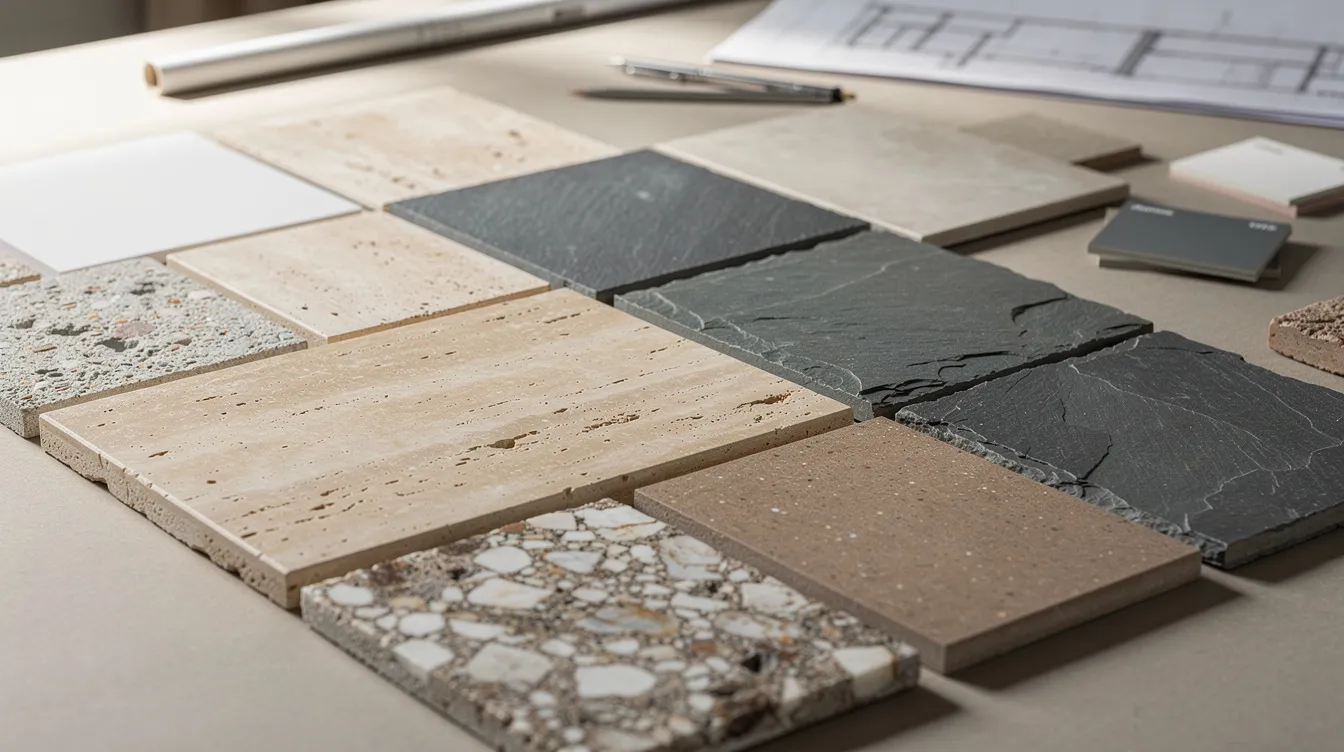
Natural stone outdoor tiles, such as travertine and slate, offer exceptional design versatility with a variety of colors and shapes suitable for different outdoor spaces. Slate adds texture and grip, quartzite brings strength, and limestone creates a soft, classic look. If selecting tiles for freezing climates, avoid porous stones to prevent frost damage; opt for non-porous porcelain instead.
Related: Natural Stone vs. Stone-Look Porcelain: What Designers Are Choosing Today
Safety First: Slip-Resistant Patio Tiles
One of the most important considerations for any outdoor project is safety. Slip-resistant surfaces are essential for outdoor tiles to ensure safety, especially in wet conditions.
The R-scale is used to rate outdoor tiles; aiming for an R-value of R11 or higher maximizes slip resistance in wet conditions. This is especially important for pool surrounds, outdoor kitchens, walkway entrances, and shaded spaces that stay damp.
Look for:
- Textured finishes
- Outdoor-rated porcelain products
- Higher slip resistance ratings
- Materials designed for wet environments
- Manufacturer guidance for pool or spa areas
Avoid polished or glossy finishes on outdoor floors. They may look elegant on a showroom page, but they can become unsafe when wet.
For pool areas: Top Tiles for Swimming Pools
Installing Outdoor Tiles Over Concrete
Many renovation projects already have an existing concrete slab. In many cases, outdoor tiles for patio spaces can be installed over concrete if the surface is sound, properly sloped, and free from major cracks.
Before installation, contractors should evaluate:
- Surface condition
- Drainage
- Cracks or movement
- Slope away from the home
- Waterproofing needs
- Expansion and movement joints
Traditional porcelain and stone installations generally require mortar and a solid concrete sub-base. Proper drainage matters because standing water can weaken grout, stain surfaces, and increase slip risk.
While DIY work may be possible on small areas, large-format tiles, natural stone, and elevated terraces usually benefit from professional installation.
Not sure what your slab needs? Contact our team before you buy.
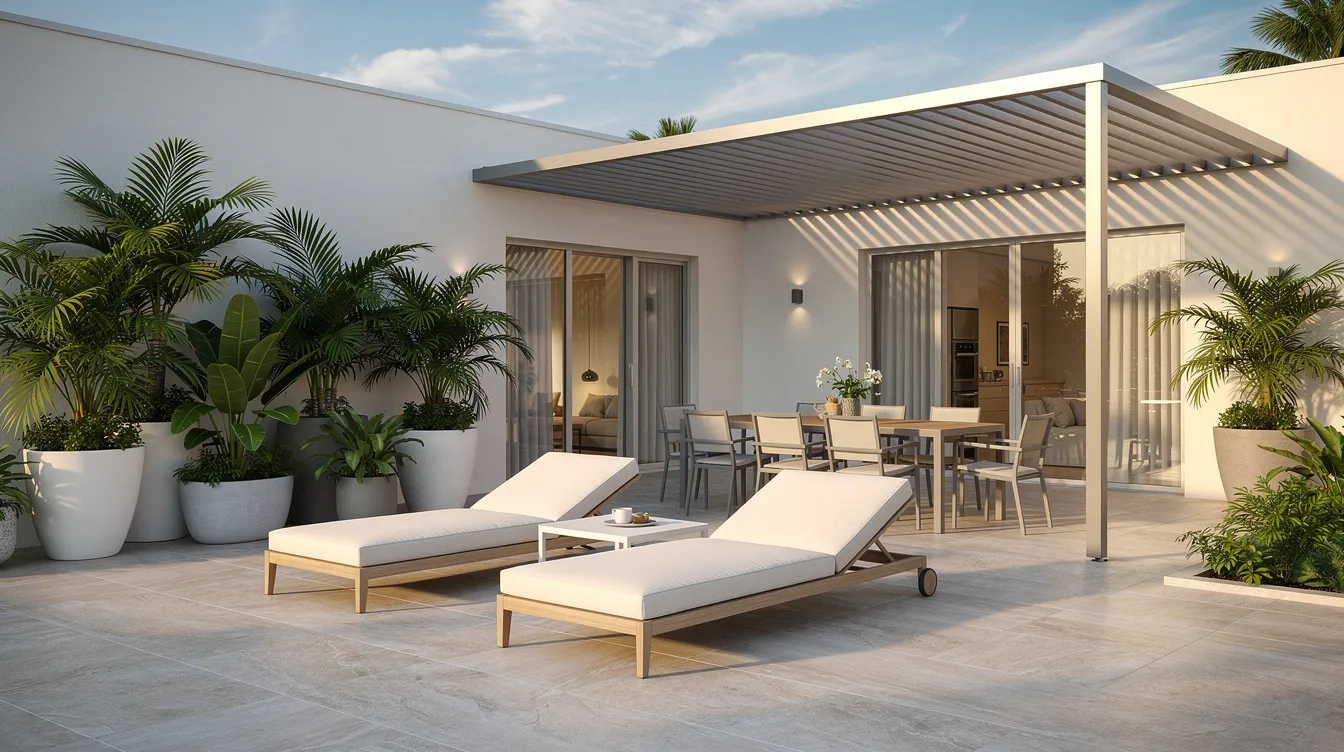
Patio Tile Design Ideas for Modern Outdoor Spaces
Outdoor spaces increasingly function as extensions of the home. The best designs balance performance with the way people actually use the space.
Popular design approaches include:
Large-Format Tiles for a Modern Look
Large-format outdoor porcelain tile can make a patio feel wider and cleaner. Sizes such as 24” x 24” or 24” x 36” reduce grout lines and create a modern finish.
See also: Tile Layout Patterns That Bring Spaces to Life
Seamless Indoor-Outdoor Transitions
Using similar materials inside and outside can create visual continuity from living room to patio. Wood-look porcelain is a practical option when you want the warmth of decking without the upkeep of real wood.
Related: Indoor-Outdoor Tile Design
Neutral Color Palettes
Outdoor tiles are available in a wide range of colors, including warm naturals and sleek greys, allowing for diverse aesthetic choices. Lighter colored tiles reflect heat and are preferable in arid and hot climates, while darker tiles absorb heat.
Textures and Patterns
Design options for outdoor tiles include various textures and patterns, catering to both modern and traditional aesthetics. Herringbone, modular stone layouts, and large-format concrete looks can all upgrade the experience of the patio.
More ideas: Top Outdoor Floor Tiles for South Florida Projects
Outdoor Wall Tiles for Patios and Feature Areas
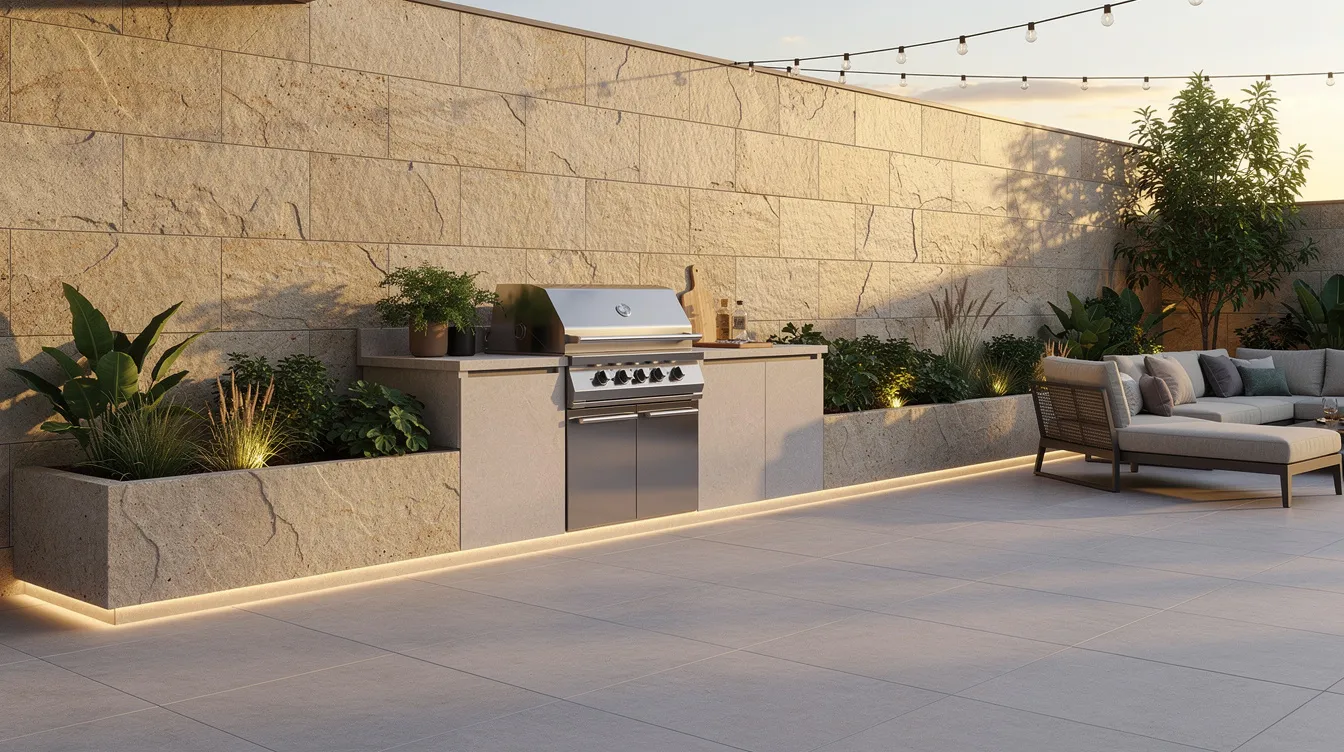
Patios are no longer limited to flooring. Outdoor wall tile can create depth around kitchens, fire features, garden walls, and water features.
Textured surfaces work especially well because they add shadow and movement without overwhelming the design. Coordinating wall materials with floor tiles helps create a more complete outdoor room.
How to Choose the Right Tile for Your Project
The best outdoor tile depends on how the space will be used.
For homeowners, priorities often include comfort, maintenance, durability, and visual appeal. For designers and architects, attention often goes to material performance, slip resistance, and project specifications. For contractors, reliability and long-term workability matter most.
Before making a final decision, consider:
- Climate exposure
- Pool proximity
- Traffic levels
- Maintenance expectations
- Budget
- Desired style
- Required strength
- Whether the area is a patio, balcony, walkway, or dining zone
Cleaning outdoor tiles can be done easily with a mild, soapy solution and a dry cloth, ensuring they maintain their appearance over time. Regular maintenance of outdoor tiles includes ensuring they are kept free of debris and dirt, which can help prevent staining and damage.
Explore Outdoor Tiles at Cavastone
Whether you are planning a luxury residential patio, a poolside renovation, or a large commercial outdoor project, the right material can make all the difference.
At Cavastone, we offer a curated range of premium outdoor porcelain tile, outdoor travertine tile, natural stone, pavers, and large-format materials designed for modern outdoor living.
Visit our Boca Raton showroom to compare options in person, learn which materials fit your project, and find surfaces you will love for years.
Frequently Asked Questions
What are the best outdoor tiles for patios?
Porcelain is usually the best overall choice because it is dense, frost-resistant, durable, and low maintenance. Travertine, slate, limestone, quartzite, and granite are also excellent when the finish, climate, and sealing needs are matched to the project.
Can outdoor tiles be installed over concrete?
Yes. Outdoor patio tiles can often be installed over an existing concrete slab if the slab is stable, properly sloped, clean, and free from major movement. A professional should inspect cracks and drainage before installation.
Are porcelain tiles good for outdoor use?
Yes. Exterior-grade porcelain tiles are excellent for outdoor use because they resist water absorption, stains, fading, and everyday wear. For patios exposed to rain, choose textured porcelain with an outdoor slip rating.
What makes outdoor tiles slip-resistant?
Texture, surface finish, and technical ratings all affect slip resistance. For wet outdoor areas, look for tiles with an R11 or higher rating and avoid polished surfaces.
How long does outdoor tile flooring last?
Quality outdoor tile flooring can last for decades when installed correctly and maintained well. Longevity depends on the tile material, sub-base, drainage, climate, grout condition, and routine care.