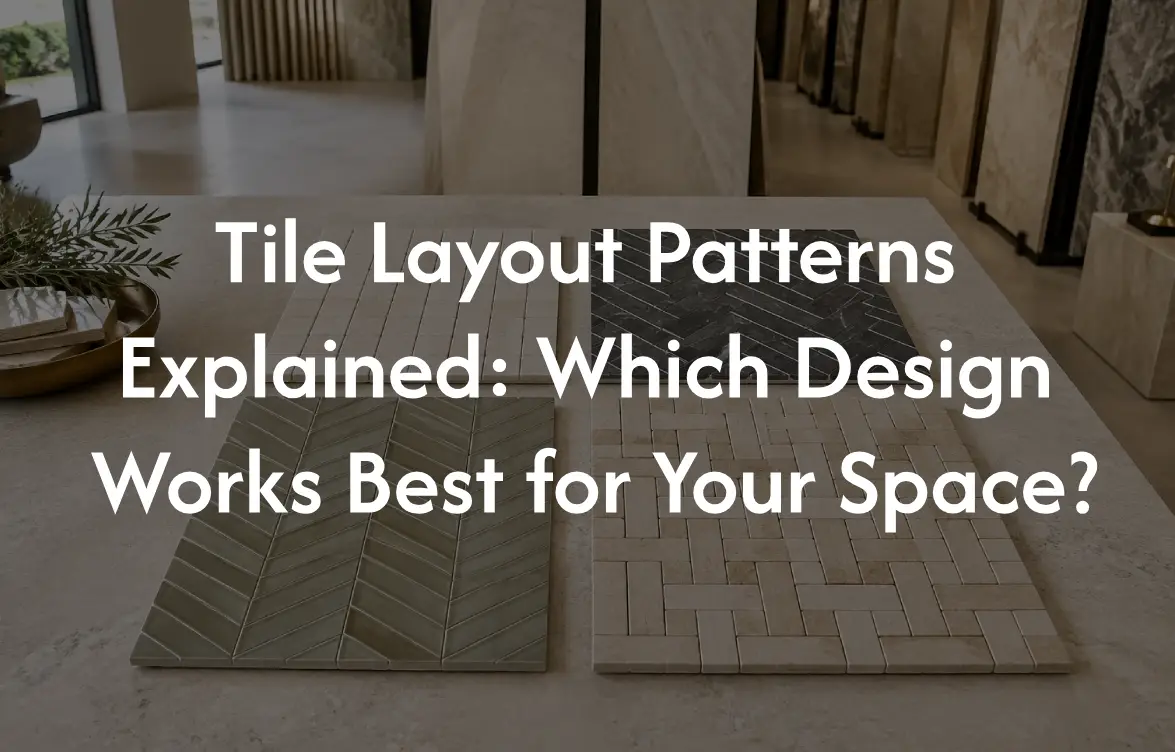
Tile layout patterns shape how a room feels before you choose a single color or finish. Pair the right pattern with a well-chosen tile from our porcelain collection, and a small bathroom can feel twice its size, or a plain kitchen wall can become the room’s best feature. Cavastone has spent nearly two decades helping architects, designers, and homeowners across South Florida match pattern to purpose, and this guide shares exactly what we have learned.
Quick Answer: How to Choose a Tile Layout Pattern
The best tile layout pattern depends on your tile size, the proportions of the room, and the visual effect you want to create. A grid or running bond layout suits nearly any room. Herringbone, chevron, and Versailles patterns turn a floor into the focal point of the space, and vertical layouts stretch a room with low ceilings.
This guide walks through twelve tile layout patterns, where each one belongs, and how to choose with confidence.
Not sure which layout fits your space? Our team can help you choose.
What You Should Know Before You Start
 How Do I Choose a Tile Layout Pattern for My Space?
 How Do I Choose a Tile Layout Pattern for My Space?
- Start with the room’s proportions. Long, narrow rooms benefit from patterns that redirect the eye, such as diagonal or vertical layouts.
- Consider how much foot traffic the space gets. Busy hallways and kitchens hold up better with simpler patterns and fewer cut edges.
- Think about upkeep. Patterns with more grout lines need more maintenance than a large-format grid with minimal joints.
Does Tile Size Change Which Layout Pattern Will Work?
- Tile 18 inches or longer on any side needs a tighter offset. Guidance from the Tile Council of North America recommends limiting the offset to about one third of the tile’s length on pieces this size, which helps prevent lippage, the uneven edges that show up between tiles of different heights.
- Smaller tiles, including mosaics and subway-format pieces, handle a half offset or a full herringbone with far less risk.
- Large-format tile paired with a simple grid keeps grout lines to a minimum and reads as one continuous surface.
Can I Mix More Than One Layout Pattern in the Same Room?
- Yes, and many of our favorite projects do exactly that. A herringbone or basketweave accent wall paired with a straight-set floor keeps the eye moving without competing for attention.
- Keep the material and color palette consistent between patterns so the mix reads as intentional rather than accidental.
- Reserve the boldest pattern for one surface. Two competing focal points tend to cancel each other out.
How Much Extra Tile Should I Order for a Patterned Layout?
- Plan for a material surplus of 5 to 15 percent, depending on the pattern’s complexity and how many angled cuts it requires.
- Herringbone, chevron, and Versailles layouts sit at the higher end of that range because of the angled and mixed-size cuts involved.
- Our tile calculator can help you estimate the right quantity before you place an order.
In this guide
- Why Tile Layout Patterns Matter in Interior Design
- Popular Tile Layout Patterns Designers Use
- Herringbone vs Stacked Tile Layouts
- Tile Layout Patterns That Make Rooms Look Bigger
- Best Tile Patterns for Bathrooms and Kitchens
- Large Format Tiles and Minimal Layout Designs
- Choosing the Right Layout for Your Design Style
- Final Thoughts on Tile Layout Patterns
- Why Cavastone?
- FAQ: Common Tile Layout Pattern Questions
Why Tile Layout Patterns Matter in Interior Design
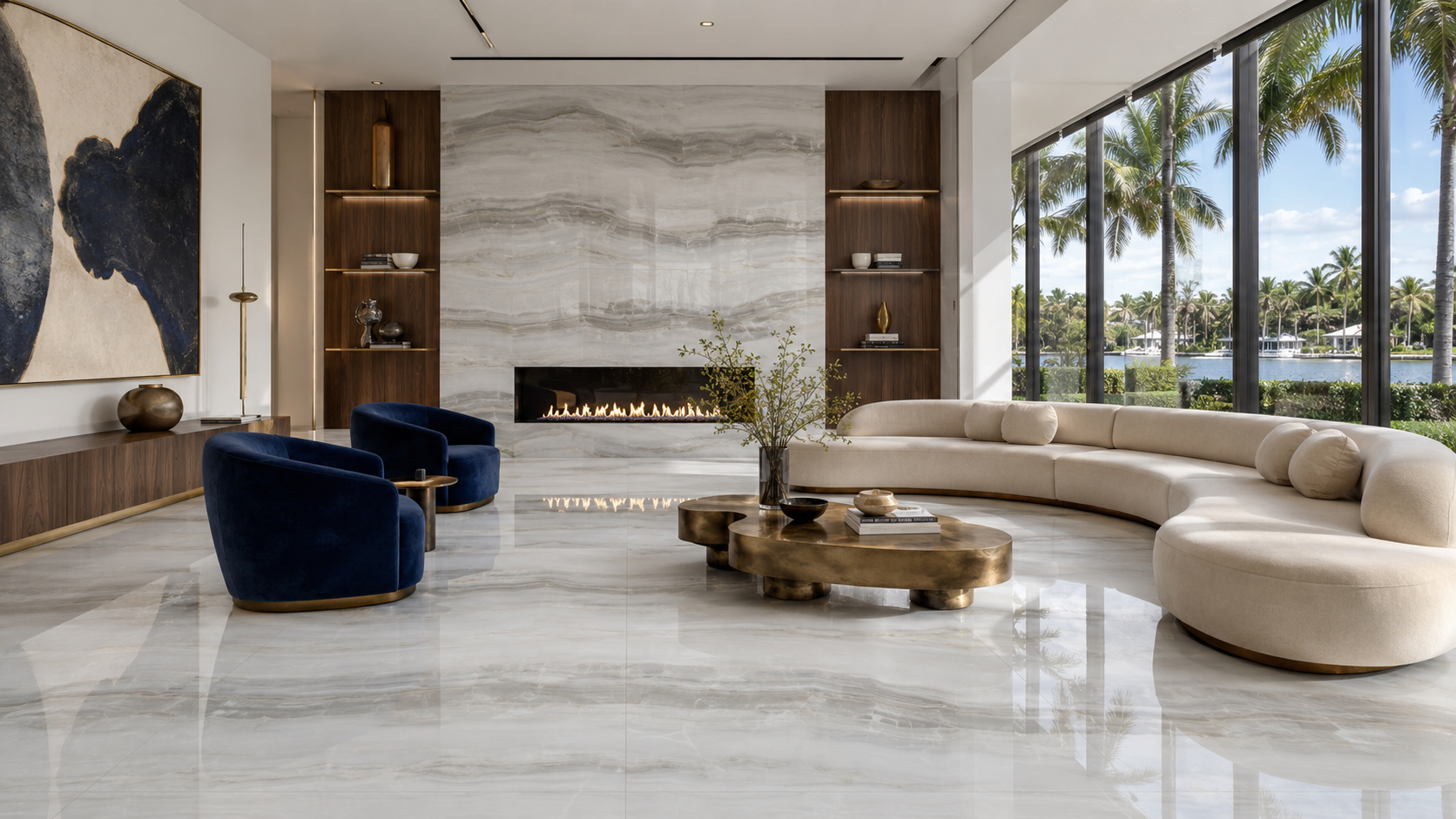 Two rooms can use the identical tile and still look nothing alike. Set that tile in a simple grid, and the room reads calm and orderly. Set the same tile on a diagonal or in herringbone, and the floor pulls your eye across the entire space. That difference comes down entirely to layout.
Tile layout patterns control three things a swatch alone never can: scale, direction, and rhythm. A vertical stack draws the eye upward in a room with low ceilings. A horizontal run widens a narrow galley kitchen. A staggered brick pattern softens straight grout lines and hides small variations in an older subfloor.
For architects and designers specifying material across a full project, layout is often the highest-leverage decision on the plan. It costs nothing extra in material and changes how the finished space performs for the people using it every day.
Popular Tile Layout Patterns Designers Use
Every layout pattern has its own personality, and the names can get confusing fast. Here are the patterns our design team specifies most often for South Florida homes and commercial projects, along with where each one earns its place.
Stacked or Grid Pattern
A stacked or grid layout lines up every tile edge to edge, both vertically and horizontally. This tile pattern name gets used constantly for good reason: the simplicity lets the material itself, whether that is a bold marble vein or a quiet matte porcelain, carry the room. Grout lines run in a clean, repeating rhythm that never competes for attention.
Best for: bathroom walls, large-format floors, minimalist kitchens, and modern interiors.
Running Bond (Brick) Pattern
The running bond, or brick pattern, staggers each row so the joints break up in a repeating offset. It remains one of the most forgiving tile layouts for a renovation, since the staggered joints hide minor unevenness in an older floor or wall.
Best for: bathroom walls, kitchen backsplashes, shower surrounds, and any floor where an uneven subfloor needs a forgiving pattern.
Watch Out: A 50 percent offset on tile 18 inches or longer is one of the most common installation mistakes we see. It can look fine on a sample board and still create visible lippage once the full floor goes down.
Herringbone Pattern
Herringbone sets rectangular tiles at a 45-degree angle in a repeating V, and few patterns bring more movement to a floor or wall. The eye follows the zigzag, which makes entryways feel grander and fireplace surrounds feel custom-built.
Best for: entryways, fireplace surrounds, bathroom floors, and feature walls.
Design tip: Larger tile in herringbone reads modern and architectural. Smaller tile in the same pattern reads more traditional, closer to a hand-laid European floor.
Chevron Pattern
Chevron looks like herringbone’s more polished cousin. Instead of a broken zigzag, the tile ends meet at a point, creating one continuous V that runs the length of the room.
Best for: kitchen backsplashes, accent walls, and entryways that want a bold, directional statement.
Checkerboard Pattern
Checkerboard alternates two contrasting tile colors across a grid, and the pattern has stayed in rotation for over a century for good reason. A softer, tone-on-tone checkerboard, rather than stark black and white, feels current while keeping the classic structure intact.
Best for: entryways, galley kitchens, powder rooms, and any small space that wants personality without adding another material. See our full guide to checkerboard tile for color pairing ideas.
Basketweave Pattern
Basketweave alternates pairs of rectangular tiles, often in mosaic form, to create a woven texture that reads as detailed without feeling busy.
Best for: shower niches, smaller bathrooms, and traditional entryways where a sense of craftsmanship matters.
Versailles (French) Pattern
The Versailles pattern, sometimes called the French pattern, combines four tile sizes into a repeating, non-linear module. Natural stone such as travertine or limestone suits this layout especially well, since the pattern mimics the irregular, quarried look those materials already carry. For outdoor applications like patios and pool decks, the Natural Stone Institute recommends confirming a stone’s slip resistance rating before installation, since finish and porosity affect how a wet surface performs underfoot.
Best for: large living areas, open floor plans, and outdoor spaces including patios and pool decks.
Design tip: Keep the color palette quiet. The size variation already carries the visual interest, so a busy tile color competes with the pattern instead of supporting it.
Vertical and Horizontal Stack
The direction of a straight stack changes a room more than most people expect. Vertical tile draws the eye upward, which helps a room with low ceilings feel taller. Horizontal tile widens a narrow space, which makes it a natural fit for galley kitchens and slim powder rooms.
Design tip: Before committing, tape off the tile’s proportions on the wall or floor at full scale. The direction that looks right on a small sample does not always read the same way across an entire wall.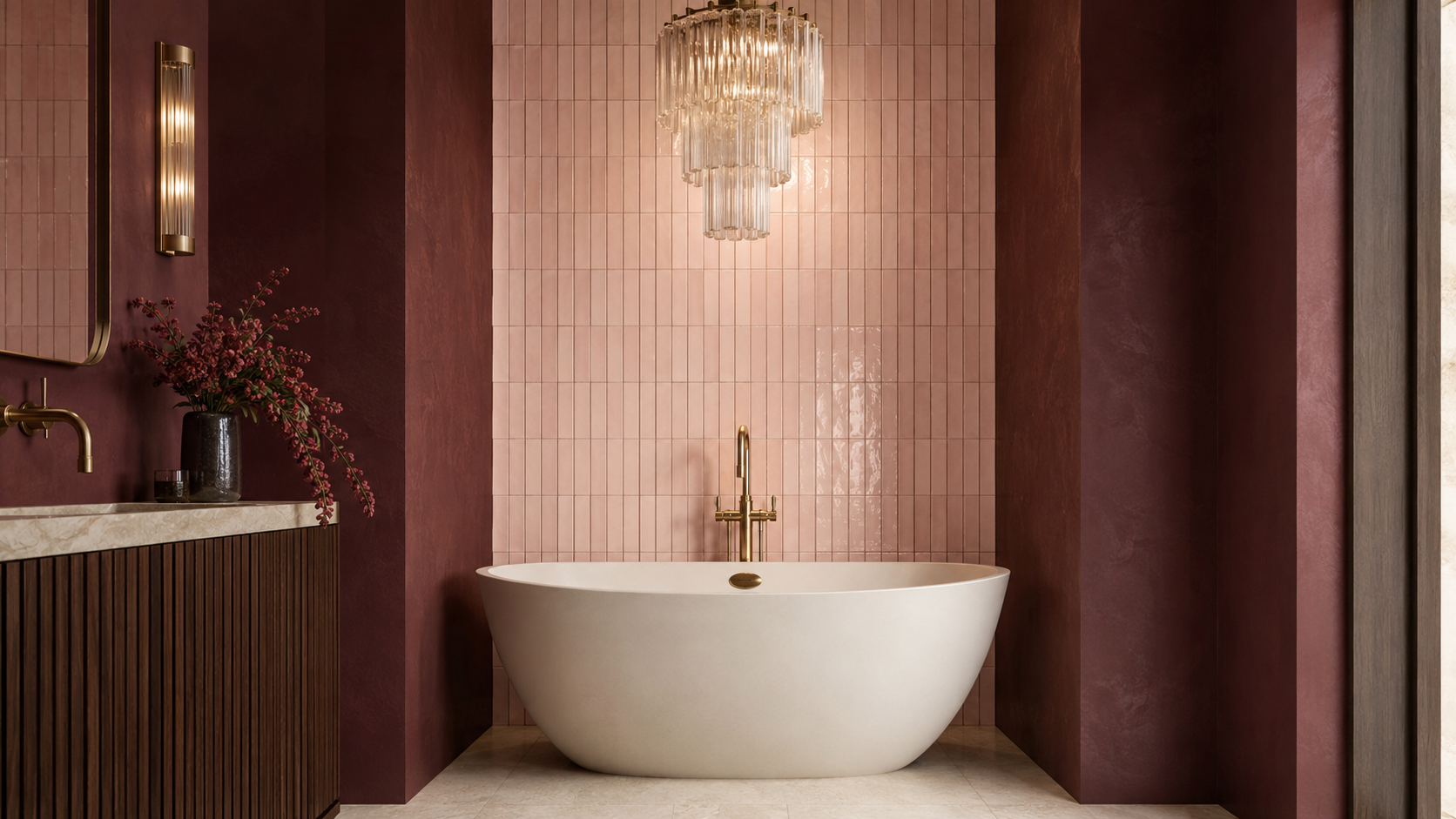
Pro Tip: Grout joint width should scale with your tile’s size variation, not just personal taste. According to the Tile Council of North America, tile with more size variation from piece to piece needs a wider joint, or the pattern can start to look crooked or uneven.
Herringbone vs Stacked Tile Layouts
Herringbone and stacked layouts sit at opposite ends of the same spectrum, and the choice between them usually comes down to how much movement a room can handle.
A stacked or grid layout keeps every joint aligned, creating a calm, orderly surface that never competes with furniture, art, or a statement countertop. Herringbone does the opposite. The angled tiles create constant visual motion, which turns an ordinary hallway or bathroom floor into a room’s most memorable feature.
Neither pattern wins in every room. A grid layout suits a busy family kitchen where the eye needs somewhere quiet to land. Herringbone suits an entryway or a primary bathroom where a homeowner wants the floor itself to feel like a design choice, not just a surface.
Tile Layout Patterns That Make Rooms Look Bigger
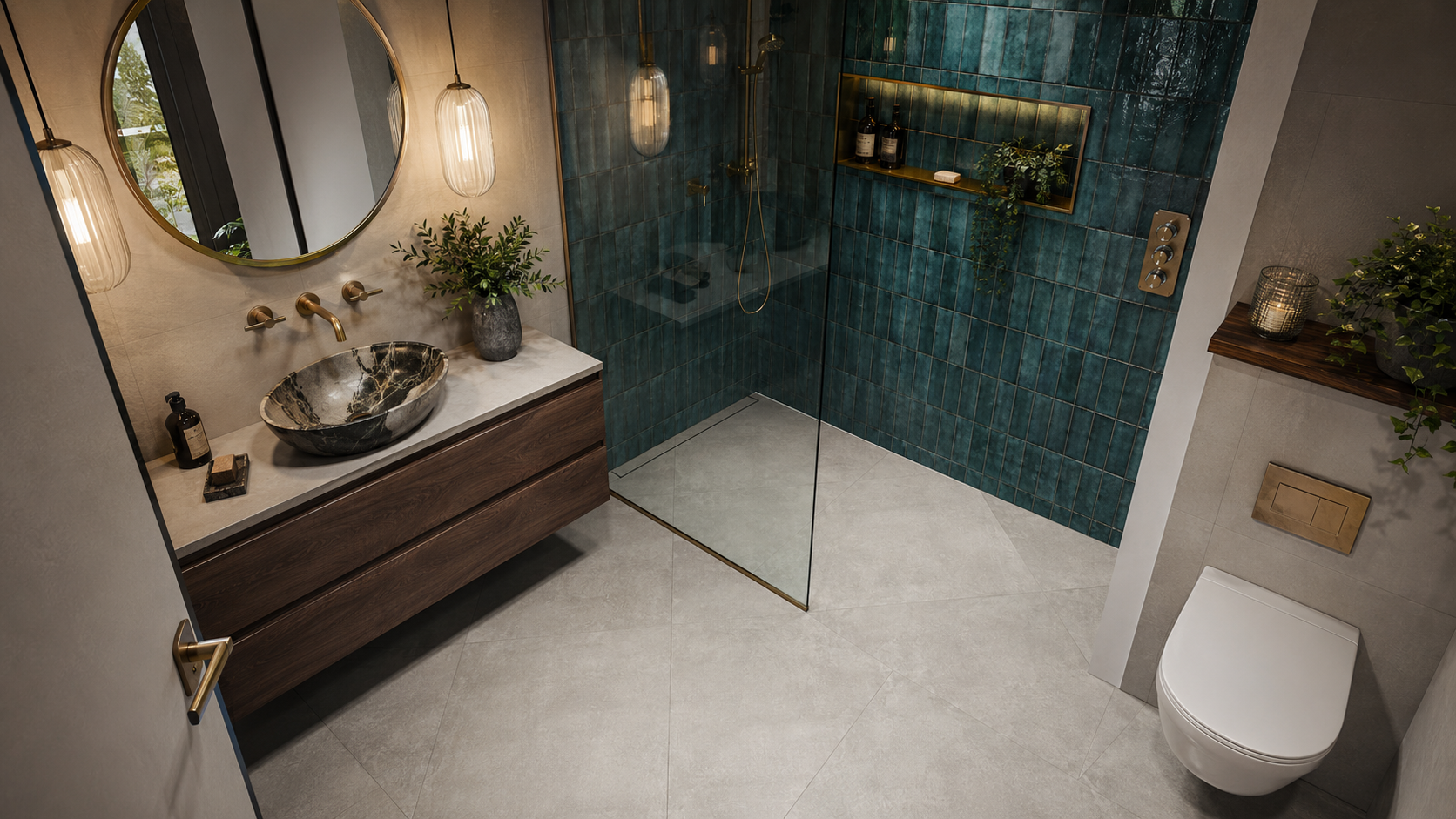 Layout changes how large a room appears well before square footage enters the conversation.
Large-format tile set in a simple grid, with grout lines kept as thin as the tile allows, reads as one continuous plane and makes a small bathroom or galley kitchen feel considerably more open. Diagonal layouts work through a different trick: turning the grid 45 degrees hides an off-square wall and pushes the eye toward the corners of the room, which reads as more space than a straight layout of the same tile.
Vertical layouts help rooms with low ceilings feel taller, while horizontal layouts widen narrow spaces such as galley kitchens and small bathrooms.
Diagonal and large-format layouts share one requirement: careful planning. A diagonal cut wastes more material at the perimeter than a straight layout, so it is worth confirming waste estimates with your installer before you order tile.
Best Tile Patterns for Bathrooms and Kitchens
Bathrooms and kitchens carry the heaviest wear of any room in the house, which narrows the list of layouts that perform as well as they look.
For bathroom floors, a running bond pattern with a one-third offset handles moisture and daily traffic without showing every small variation in the subfloor. Basketweave and hexagon layouts work well in a smaller bathroom or a shower niche, where a bold pattern on a limited surface reads as a design choice rather than visual clutter. Installation guidance from the Ceramic Tile Education Foundation notes that grout joint width should scale with the size variation between tiles, since a joint that is too narrow exaggerates every inconsistency in the material.
For kitchens, a stacked or grid backsplash in a large-format tile keeps grout lines to a minimum and simplifies cleanup around the range and sink. A herringbone or chevron backsplash works as a feature behind open shelving or a range hood, where the pattern has room to stand out without fighting the rest of the kitchen for attention. For more on choosing floors that hold up to daily use, see our guide to durable flooring for busy homes and commercial spaces.
Good to Know: Rectified tile, cut to a precise, uniform edge, allows for the tightest grout joints, often 1/16 to 1/8 inch. That narrow joint is what creates the continuous, expansive look large-format layouts are known for.
Large Format Tiles and Minimal Layout Designs
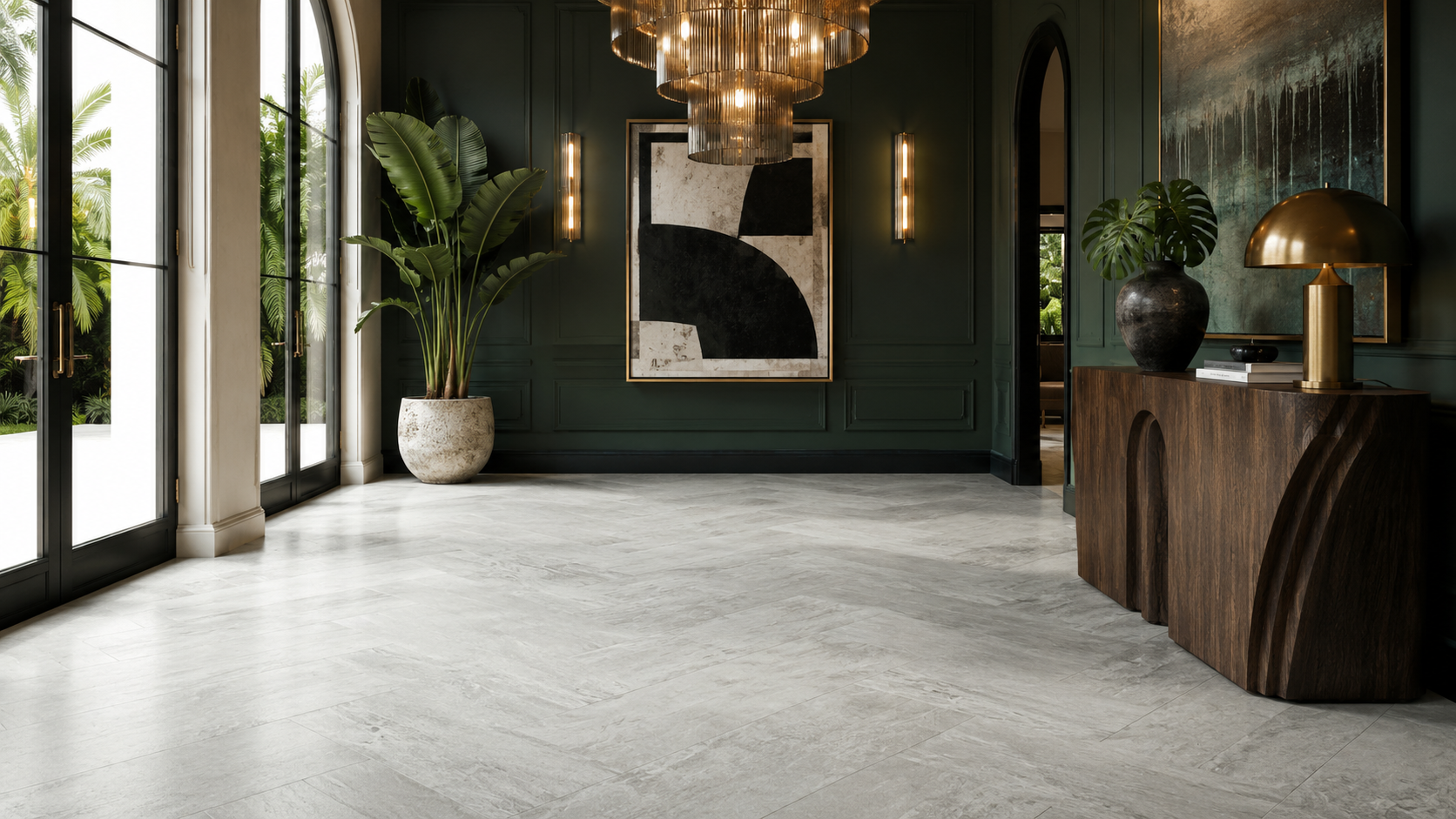 Large-format tile, generally anything 15 inches or longer on one side, has become the layout of choice for architects who want a room to read as one continuous surface rather than a collection of individual pieces.
A simple grid with narrow grout joints turns a floor or shower wall into a near-monolithic plane, which works especially well with large-format porcelain slabs in open living areas and commercial lobbies. Because large tile carries more visible warpage than small tile, the Tile Council of North America recommends capping any offset pattern at about one third of the tile’s length on pieces 18 inches or longer, which keeps the surface flat and avoids lippage at the edges.
For a project that wants the calm of a minimal layout without sacrificing texture, pair a large-format grid on the floor with a single patterned accent, such as a herringbone shower niche or a mosaic backsplash. Extending that same large-format grid outdoors is one of the fastest ways to blur the line between a living room and a lanai. Our guide to indoor-outdoor flooring transitions covers how to keep that sight line consistent.
Choosing the Right Layout for Your Design Style
Layout should follow the same design language as everything else in the room, from cabinetry to lighting to hardware finishes.
Traditional spaces favor herringbone, basketweave, and Versailles layouts, all patterns rooted in centuries of European stonework. Modern and minimalist interiors lean toward a stacked grid or a large-format layout with thin, matching grout, since matching grout keeps the eye on form rather than pattern. Transitional spaces often split the difference: a grid floor paired with one patterned accent, like a chevron backsplash, gives a room texture without tipping fully traditional or fully modern.
Material plays a role too. Natural stone and quartzite and granite tend to suit patterns that echo their quarried origin, such as Versailles, while porcelain handles nearly any layout with consistent results from tile to tile. The finish you choose matters as much as the pattern itself. Our comparison of matte, glossy, and textured tile finishes is a useful next stop once you have a layout in mind.
Checklist Before You Finalize a Tile Layout Pattern
- ✓ Confirm tile size and whether it qualifies as large format (15 inches or longer)
- ✓ Choose an offset or joint width appropriate for that size
- ✓ Decide whether grout should match or contrast
- ✓ Order 5 to 15 percent extra material based on pattern complexity
- ✓ Review a full-scale layout with your installer before tile is set
Final Thoughts on Tile Layout Patterns
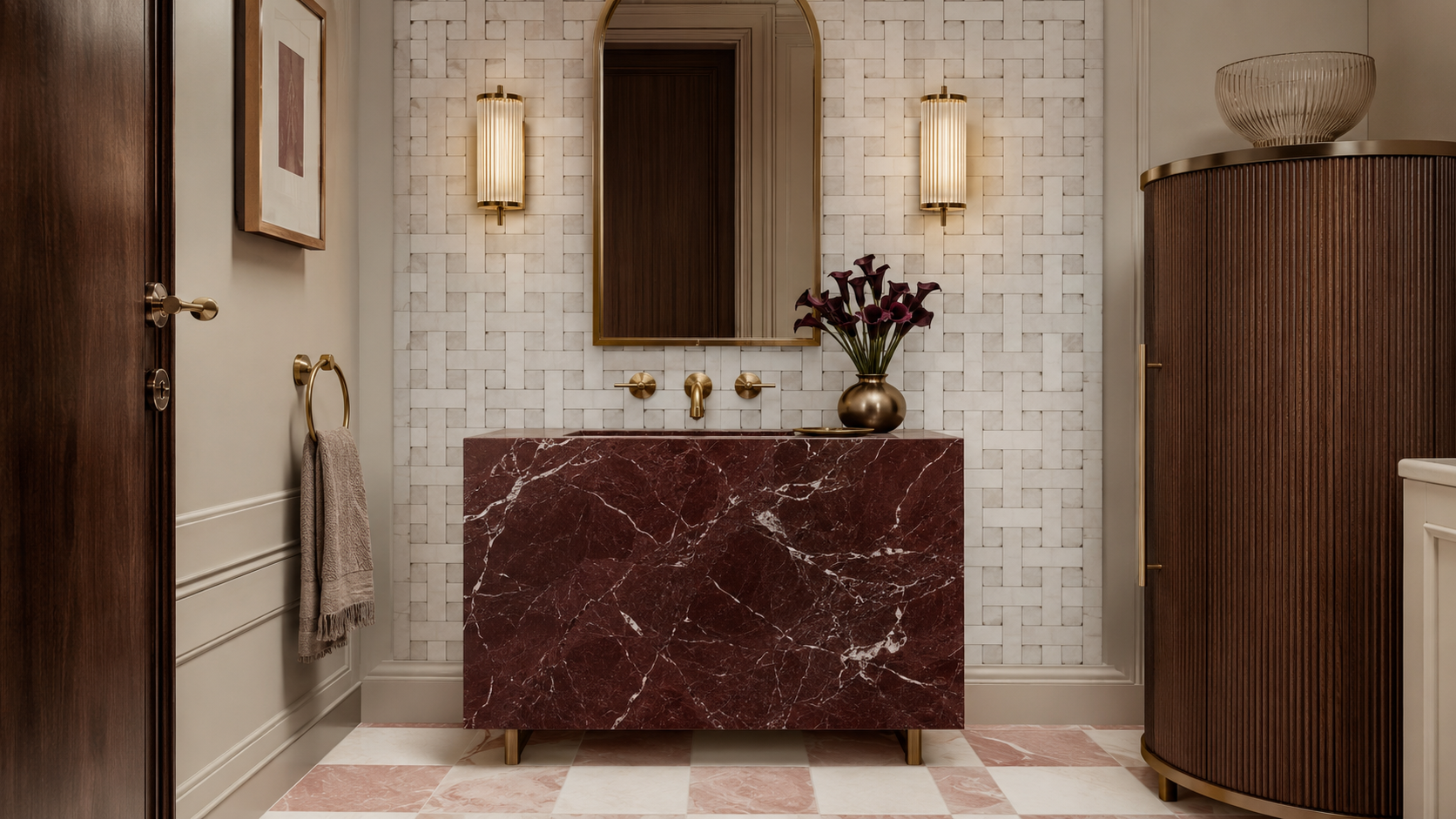 The best tile layout patterns work with a room instead of against it. Start with the proportions of the space, account for the tile size you have chosen, and let the pattern support the mood you want the room to have, whether that is calm and orderly or bold and directional.
Cavastone’s design team has walked hundreds of South Florida homeowners, architects, and contractors through exactly this decision. If a project is underway or still taking shape, our team can help match the right layout pattern to the right material before a single tile gets ordered.
Why Cavastone?
Great tile layout patterns still depend on the material underneath them, which is where a supplier’s depth of stock and depth of service actually matters.
Connie Davalos founded Cavastone in 2006, and nearly two decades later, the company still sources exclusive porcelain, marble, and natural stone directly from Spain and Italy, materials many South Florida suppliers cannot offer. Two warehouses carry more than 600 SKUs in stock, so a project ready to move forward with a large-format grid or a Versailles pattern in travertine can typically get tile in 24 to 48 hours rather than the 10 to 12 week lead times common elsewhere in the industry.
The Cavastone design team, with 20+ years serving South Florida
Every client, whether an architect specifying material across a commercial build or a homeowner planning one bathroom, works with the same team and the same access to samples and trade pricing. Our team also visits job sites directly to help resolve layout questions once tile is on the ground, a level of hands-on support that is rare in this industry.
See these layouts in person. Visit our showroom at 646 Park of Commerce Way, Boca Raton, Florida 33487.
Ask AI about this guide
FAQ: Common Tile Layout Pattern Questions
What is the most popular tile layout pattern right now?
Large-format grid layouts and updated checkerboard patterns are the two most requested tile layout patterns among Cavastone clients this year. The grid layout stays popular because it keeps grout lines minimal and works with almost any porcelain or natural stone tile. Checkerboard has come back in softer, tone-on-tone colors rather than the stark black and white of decades past, which reads as current in a modern kitchen or entryway.
How do I know if my tile is too large for a brick or offset pattern?
Any tile with one side measuring 18 inches or longer needs a modified offset to avoid lippage, the small height differences that show up between adjacent tiles. Industry guidance recommends limiting the offset to about one third of the tile’s length on pieces this size, rather than the traditional half offset used on smaller subway tile. Your installer can confirm the right offset once your tile size and format are finalized.
Should grout lines match the tile color or contrast with it?
Matching grout keeps the focus on the tile itself and creates a calmer, more expansive surface, which works well with large-format tile and minimalist layouts. Contrasting grout highlights the geometry of the pattern and works especially well with grid, herringbone, and checkerboard layouts where the lines themselves are part of the design. The right choice usually comes down to whether you want the pattern or the material to lead the room.
What tile layout pattern works best for a small bathroom?
Diagonal layouts and vertical stacks both help a small bathroom read larger by directing the eye toward the corners or upward toward the ceiling. Large-format tile with minimal grout lines also reads as more expansive than the same square footage in small tile with many joints. A basketweave or checkerboard accent on one wall or niche adds personality without overwhelming a limited footprint.
Can I use the same tile layout pattern indoors and outdoors?
Many layout patterns, including grid, running bond, and Versailles, transfer well between indoor and outdoor spaces, though the tile itself needs to be rated for exterior use and slip resistance. Natural stone in a Versailles pattern works especially well for extending a patio or pool deck sight line from an adjacent indoor room. Our guide on indoor-outdoor flooring transitions covers how to keep sight lines consistent between the two spaces.
How much does tile layout pattern affect installation?
More intricate patterns, including herringbone, chevron, and Versailles, generally require more cuts, more layout time, and a higher material surplus than a straight grid. A simple grid or running bond pattern keeps installation more straightforward without sacrificing a considered, finished look. Your installer can provide an accurate quote once the pattern and tile size are confirmed.
What is the difference between herringbone and chevron tile patterns?
Herringbone uses rectangular tiles set at an angle so the ends form a broken zigzag, while chevron uses tiles pre-cut at an angle so the ends meet at a single continuous point. Chevron reads as more polished and directional, while herringbone reads as slightly more textured and traditional. Both patterns work well in entryways, backsplashes, and feature walls, and the choice usually comes down to whether a room wants a crisper line or a bit more visual texture.
How do I choose a tile layout pattern that will not go out of style?
Grid, running bond, and herringbone patterns have stayed in consistent use for well over a century, which makes them a dependable choice for a homeowner who wants a floor or wall to age well. Choosing a quiet, neutral tile color in one of these classic layouts extends that timeless quality even further. If a bolder pattern like chevron or a bright checkerboard appeals to you, consider reserving it for a smaller, easier-to-update surface such as a backsplash or powder room, so a future refresh does not require replacing every tile layout pattern in the home.
Keep exploring
- Checkerboard Tiles Are Back, and More Versatile Than Ever
- Choosing the Best Grout Color for Your Tile
- Fireplace Tile Design Ideas
- Durable Flooring Tiles: Best Options for Busy Homes and Commercial Spaces
- Create Transitions with Indoor-Outdoor Flooring
- Matte Tile vs Glossy Tile vs Textured Tile: Which Finish Is Best?
- Indoor vs Outdoor Tiles: What Works Best for Each Space?
Ready to choose the right tile layout pattern for your space? Book a consultation with the Cavastone team and we will help you match pattern, material, and layout before you order a single tile. Explore more at cavastone.com.

Owner, Cavastone Group
With years of perseverance and pride in what we do we have become a very well known and positioned company in the Architectural and Design industry. The same perseverance, pride and attention to detail that made us become who we are, are the same qualities we strive to provide to all our customers.