Key Takeaways
- Durable flooring tiles are engineered for high-traffic areas, moisture exposure, scratches, stains, and physical impact over the long term.
- Porcelain tile delivers the strongest balance of durability, low maintenance, water resistance, and design flexibility across most project types.
- Natural stone offers timeless luxury character, though it requires periodic sealing and a more considered maintenance plan than porcelain.
- Installation quality, subfloor preparation, grout selection, and tile thickness each play a measurable role in whether a floor performs for decades or fails within years.
- High-quality tile floors contribute a premium, enduring aesthetic that supports property value and long-term return on investment.
When choosing flooring, appearance matters, but performance matters just as much. A floor that scratches easily, absorbs stains, or degrades under daily pressure becomes an expensive problem over time, regardless of how beautiful it looked at installation. That is why durable flooring tiles remain one of the most consistently specified materials across luxury residential construction, commercial interiors, and hospitality design.
Whether you are renovating a luxury home in Boca Raton, specifying materials for a retail build-out, or planning a large commercial project, Cavastone carries a curated collection of porcelain and natural stone tiles designed to perform in demanding environments without sacrificing design quality.
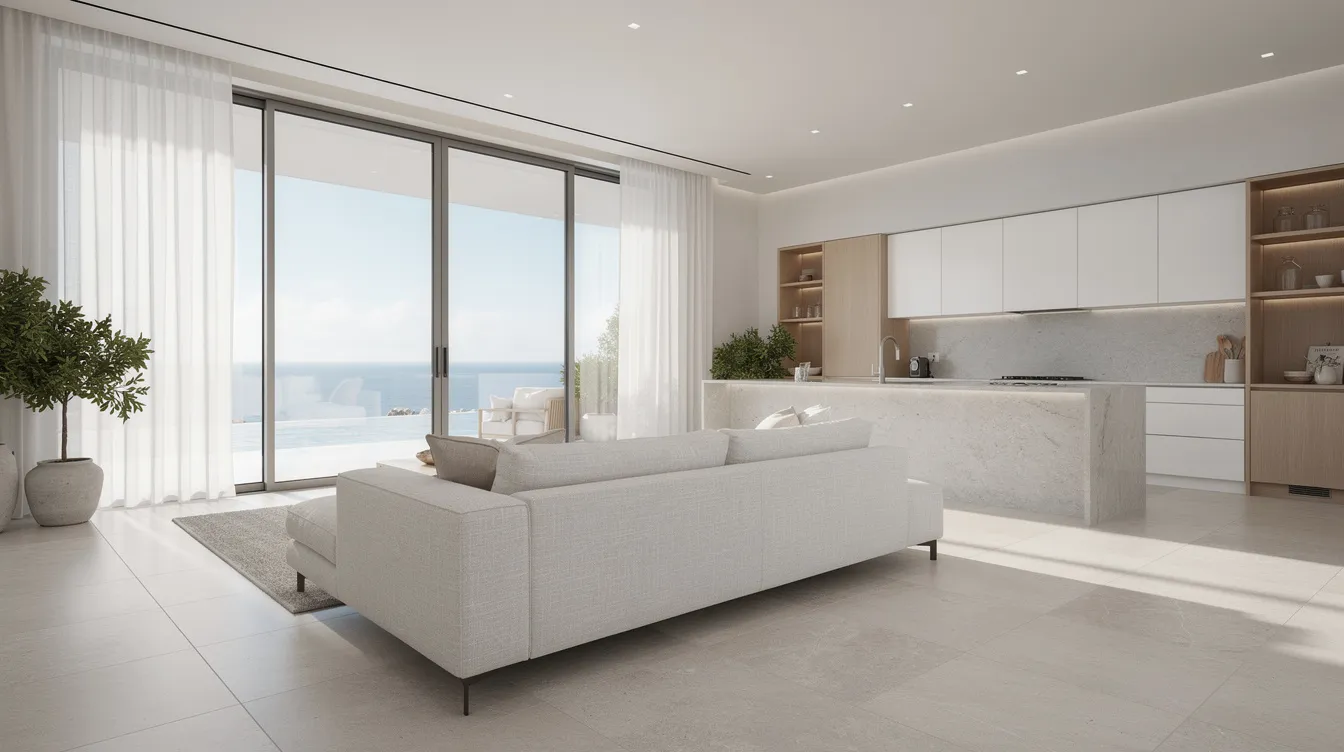
What Makes a Flooring Tile Durable?
Not all tiles perform the same way, and durability is not a single characteristic, it is the sum of several material and installation variables working together.
A durable flooring tile must be able to manage:
- Sustained heavy foot traffic without surface degradation
- Scratch and scuff resistance from furniture movement, foot traffic, and everyday use
- Moisture exposure without warping, cracking, or requiring constant resealing
- Physical impact resistance for dropped objects, commercial equipment, or pet claws
- Long-term wear without color loss, surface breakdown, or structural compromise
The durability of a given tile depends on its base composition. Porcelain is produced from refined clay and fired in a kiln at very high temperatures, which results in a dense, low-porosity body that outperforms standard ceramic in almost every durability category. Natural stone materials, including marble, travertine, limestone, quartzite, and granite, each carry their own density, porosity, and strength profile, and those differences determine where each material performs best.
Durable flooring tiles are most often specified for kitchens, bathrooms, entryways, mudrooms, and commercial environments where moisture, traffic, and wear are ongoing realities rather than occasional concerns.
Porcelain Tile: The Benchmark for Durable Flooring
Porcelain continues to set the standard for flooring durability across residential, commercial, and hospitality applications. Its manufacturing process, fired at temperatures between 2,300 and 2,550 degrees Fahrenheit, produces a tile that is denser and less porous than most competing hard floor materials.
The Ceramic Tile Education Foundation (CTEF) classifies porcelain tile under the PEI (Porcelain Enamel Institute) wear rating system, with Ratings 4 and 5 recommended for heavy residential and commercial floor applications. Porcelain at these ratings resists scratching, staining, and moisture penetration at a level that few other materials can match at the same price-to-performance ratio.
The practical advantages of porcelain for flooring include:
- High scratch resistance from foot traffic, furniture, and everyday objects
- Low water absorption, typically below 0.5%, which qualifies most porcelain as impervious under ANSI standards
- Stain resistance without periodic resealing, unlike natural stone
- Temperature stability for both indoor and outdoor installations
- Maintenance limited to regular sweeping and occasional mopping with a mild cleaner
- Wide design range, from large-format concrete looks and marble-inspired formats to wood-look planks and textured outdoor finishes
For most projects, porcelain tile flooring offers the most dependable combination of performance, design flexibility, and long-term cost efficiency. That is why it appears in luxury residences, hotel lobbies, restaurant dining rooms, and retail interiors across South Florida and beyond.
Natural Stone Flooring: Timeless and Long-Lasting
Natural stone occupies a distinct position in the flooring material hierarchy. It delivers authenticity, material depth, and visual variation that no engineered product fully replicates, and it remains one of the most sought-after specifications in luxury residential and high-end commercial interiors.
The most commonly specified stone flooring materials include:
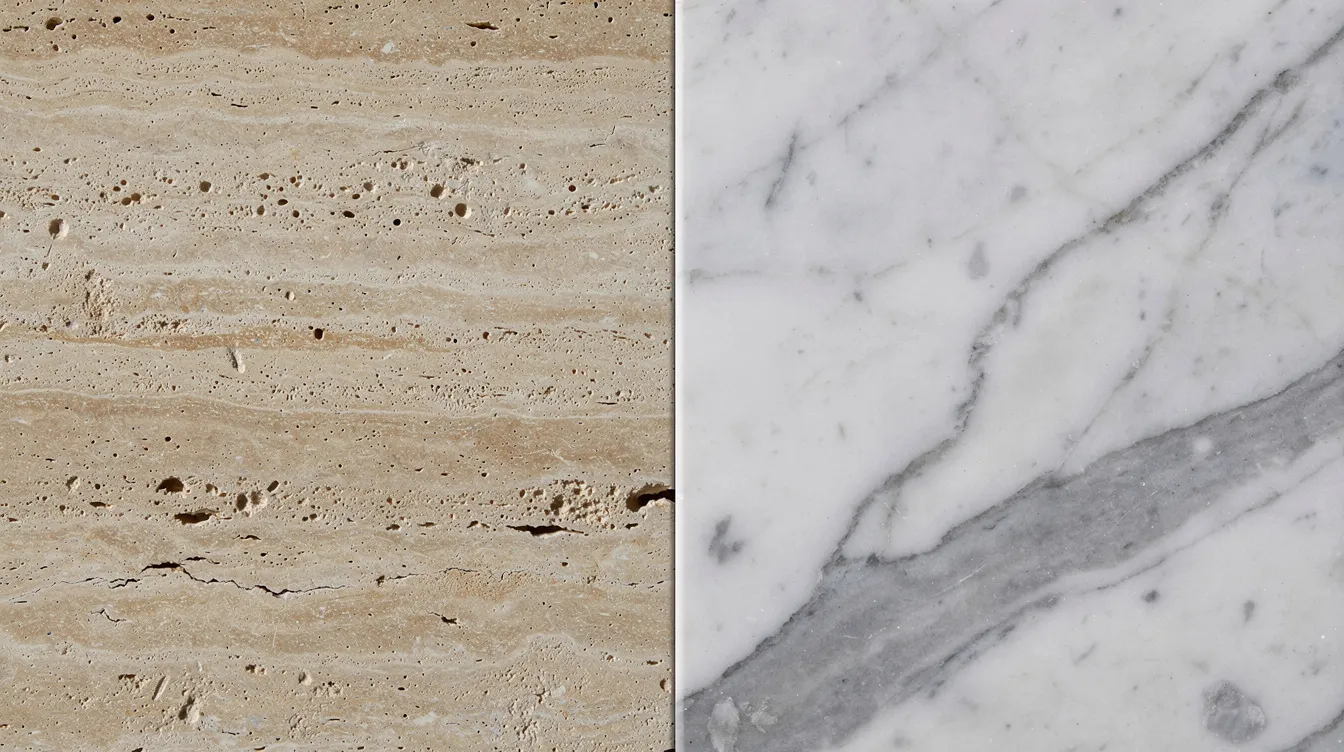
- Marble, valued for its refined veining, soft luster, and timeless association with luxury architecture
- Travertine, favored for its warm, porous character and strong performance in South Florida’s residential and hospitality contexts
- Limestone, offering a muted, understated palette that suits contemporary and transitional interiors equally well
- Quartzite, one of the hardest natural stones available, well-suited to high-wear floor applications and outdoor terraces
- Granite, extremely dense and scratch-resistant, frequently specified for commercial countertops and high-traffic floor areas
According to the Natural Stone Institute, most natural stone floor surfaces used in wet or high-traffic environments require periodic sealing to protect against water penetration, staining, and surface etching. Marble and travertine are more porous than quartzite or granite, which means they demand a more considered maintenance commitment. Selecting the right stone for the right environment, rather than choosing on aesthetics alone, is the most important decision in a natural stone specification.
Natural stone performs beautifully in luxury residences, hotel lobbies, feature walls, high-end bathrooms, and open-plan living areas where material authenticity is part of the design brief. Our resource on natural stone flooring covers the case for each material type across different application contexts.
Best Durable Flooring Tiles for High-Traffic Areas
High-traffic spaces place demands on flooring that expose weaknesses in lower-quality materials quickly. Hallways, entryways, restaurant dining rooms, retail floors, and hospitality environments see continuous foot pressure, cleaning cycles, and physical impact that a floor must manage without visible degradation over years of use.
The most reliable material specifications for high-traffic floors are:
Porcelain Tile
Dense, durable, and easy to clean with no sealing requirement. Porcelain at PEI Rating 4 or 5 handles heavy residential and commercial traffic reliably over the long term. A large-format matte porcelain floor in a busy kitchen creates a visually clean surface that resists spills, scuffs, and daily foot traffic for decades without fading or surface breakdown.
Textured Porcelain
A textured surface finish improves grip underfoot in wet or high-traffic zones, making it the correct specification for entries, covered outdoor areas, pool surrounds, and any floor where slip resistance is a safety requirement alongside durability.
Quartzite
Among natural stones, quartzite carries exceptional hardness and surface resistance, making it a strong choice for premium residential floors and high-end commercial interiors where natural material character is part of the design intent. For a real-world example of quartzite in a demanding residential space, see our feature on quartzite kitchen applications.
Water-Resistant Flooring for Demanding Environments
Moisture management is one of the most important performance criteria for any floor specification in a residential or commercial setting. Spills, wet footwear, steam, cleaning cycles, and high-humidity environments all place continuous pressure on a floor’s water resistance.
Porcelain is among the most water-resistant flooring materials available. Its low porosity means it does not need to be resealed periodically to maintain moisture resistance, which makes it the practical specification for bathrooms, laundry rooms, kitchens, mudrooms, and commercial washrooms. Natural stone can perform equally well in wet environments when properly sealed and maintained, but the resealing cycle introduces a maintenance obligation that porcelain does not carry.
One important qualification: the tile itself may be impervious, but the grout, waterproofing membrane, and overall installation quality all contribute to how the floor system performs over time. A correctly installed porcelain floor with the right grout and membrane will outperform a higher-cost tile installed over an inadequate substrate.
Large-Format Tiles: Durability Meets Design Impact
Large-format porcelain slabs have become one of the dominant tile specifications across luxury residential and hospitality interiors over the past several years, and the reasons extend beyond aesthetics. Fewer grout joints mean fewer points of potential moisture infiltration, easier cleaning routines, and a floor plane that reads as more continuous and architecturally unified.
The design advantages of large-format tile include:
- Reduced grout line frequency for a cleaner, more expansive visual result
- Lower maintenance burden over time compared to smaller formats with more grout to manage
- A modern, minimal aesthetic that suits open-plan living, hospitality lobbies, and luxury retail environments
- Better visual flow between adjacent spaces when the same format runs across a threshold
The installation demands are proportionally higher. According to the TCNA Handbook standards for large-format tile installation, a flat, properly prepared substrate is essential to prevent lippage, hollow spots, and edge cracking. Mortar coverage requirements increase with tile size, and skilled installation is not optional for large-format specifications.
Durable Flooring Tiles for Commercial Spaces
Commercial environments require flooring that performs under continuous use, repeated professional cleaning, and operational demands that residential specifications rarely match. The right material selection for a commercial floor is a long-term investment decision, not a cost-minimization exercise.
Commercial applications that demand durable flooring tile include:
- Retail stores and showrooms where appearance and underfoot performance must both hold up across thousands of daily visitors
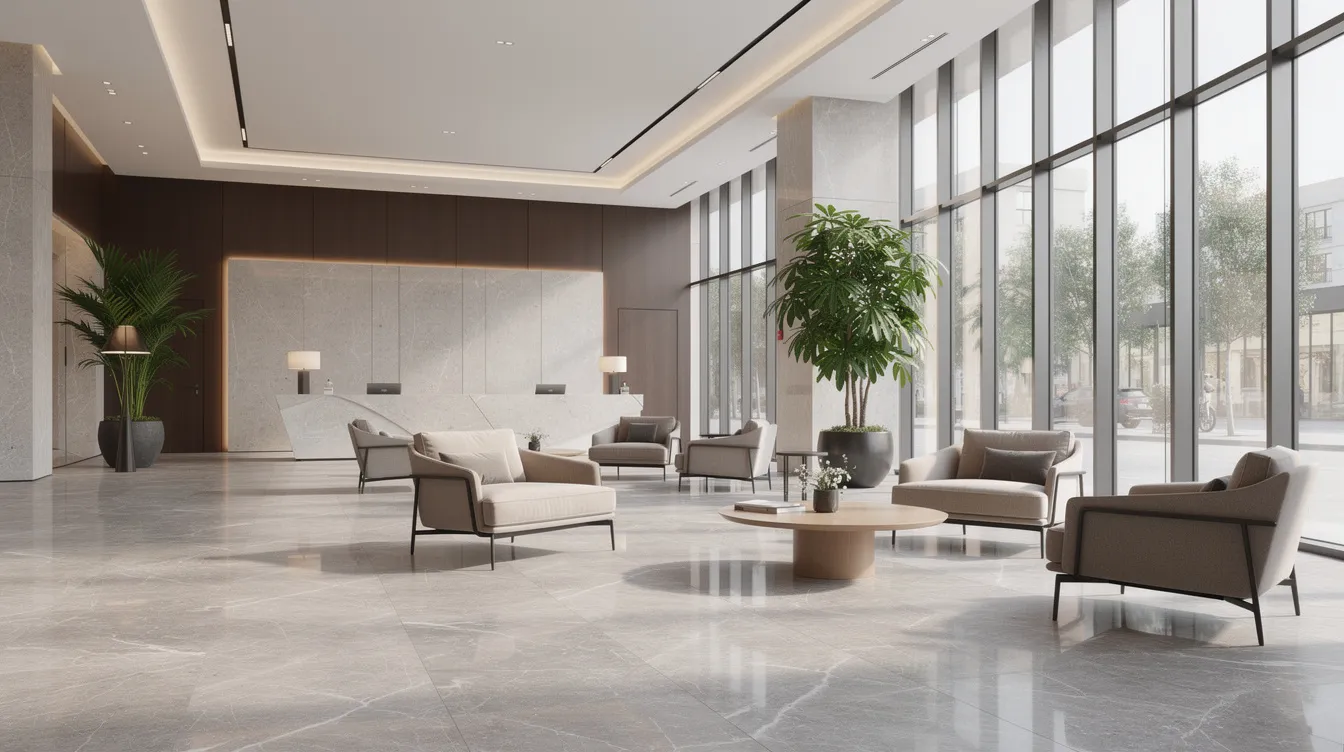
- Corporate offices and lobbies where durability must be maintained alongside a premium brand aesthetic
- Restaurants and food service environments where slip resistance, moisture management, and daily cleaning with commercial products are all specification requirements
- Hotels and hospitality interiors where appearance standards are high and downtime for floor replacement is not acceptable
- Healthcare facilities where non-porous, hygienic, and chemically resistant surfaces are often required
- Mixed-use developments where a single floor specification must perform across multiple occupancy types
For commercial tile specifications, porcelain is consistently the leading material choice because it delivers excellent durability without the maintenance overhead of natural stone, and it can be sourced in formats and finishes suited to the most demanding commercial aesthetic briefs. For food service environments in particular, our guide to restaurant tile covers slip resistance ratings, grease resistance, and material selection by area of the dining operation.
The lowest unit cost per square foot is rarely the best commercial decision. A tile that requires replacement in five years costs more over a ten-year ownership period than a better-specified material that holds its appearance and performance across the full decade.
How to Choose the Right Durable Flooring Tile
The correct tile for any floor depends on the demands of the space, not on a universal ranking of materials. Working through a short set of questions before specification begins prevents the most common and costly mismatches.
- Will the floor be exposed to moisture, steam, or standing water regularly?
- Is this a residential, commercial, or hospitality specification, and what are the traffic levels?
- What is the maintenance plan for the installed floor, and what maintenance frequency is realistic for the occupant?
- What aesthetic is the project working toward: a natural stone character, a large-format concrete or wood-look, or a patterned decorative surface?
- Are there slip resistance requirements driven by safety codes, insurance, or the intended use of the space?
Understanding how different tile material types compare on density, porosity, wear ratings, and maintenance requirements is the foundation of a well-resolved flooring specification. The Cavastone team works through exactly these questions with every client before making a material recommendation.
One note on alternative flooring categories: Luxury Vinyl Tile (LVT), laminate, and linoleum each serve a role in certain residential and light commercial contexts, but none of them carry the long-term durability, design permanence, or premium aesthetic of porcelain or natural stone in high-end applications. For any project where longevity, material character, and design authority are priorities, tile and stone remain the professional standard.
Invest in Flooring That Lasts
Flooring represents one of the largest surface investments in any residence or commercial space, and the material decisions made at specification determine whether that investment holds its value or demands costly replacement within a decade. Durable flooring tiles do not need to be replaced with the frequency of softer materials, and their maintenance costs over time are typically lower than alternatives that require refinishing, waxing, or periodic replacement.
At Cavastone, our work has always been to help homeowners, designers, architects, and contractors source premium porcelain and natural stone tile that performs in the environments it is specified for, without compromise on quality or design. Visit our Boca Raton showroom to explore our full range of durable flooring collections in person, or contact our team for material guidance and project recommendations suited to the brief.
Related Reading
- A broader comparison of premium flooring materials for luxury residential and commercial projects: Best High-End Flooring Options.
- Design-focused guidance on tile selection for floors across residential and commercial applications: Best Floor Tile Ideas.
- Maintenance guidance for porcelain tile floors in both residential and commercial settings: How to Clean Porcelain Tiles.
- How designers are approaching the choice between natural stone and stone-look porcelain in 2025 and 2026: Natural Stone vs. Stone-Look Porcelain.
- The design and material directions shaping residential and commercial tile projects this year: 2026 Tile Trends.
Frequently Asked Questions About Durable Flooring Tiles
What is the most durable tile for flooring?
Porcelain tile is the most consistently durable hard flooring material across residential and commercial applications. It resists moisture, scratching, staining, and heavy wear without requiring periodic resealing, and it maintains its surface integrity under the kind of sustained pressure that reveals weaknesses in softer flooring materials. Dense natural stone materials, particularly quartzite and granite, can also perform for decades in the right application when properly sealed and maintained from installation.
Is porcelain better than ceramic tile for durability?
Porcelain is denser, less porous, and more wear-resistant than standard ceramic tile in virtually every performance category. Ceramic tile remains appropriate for walls, decorative applications, and light residential floor use, but for kitchens, bathrooms, entryways, and any commercial or high-traffic environment, porcelain is the stronger specification. For a detailed side-by-side comparison, our guide on porcelain vs. ceramic tile covers the performance and application differences in full.
Are large-format tiles more likely to crack?
Large-format tiles are not inherently more fragile, but they are less forgiving of installation errors. A flat, well-prepared substrate is essential, mortar coverage requirements increase with tile size, and movement joints must be correctly spaced to accommodate thermal expansion. When installed correctly by a qualified installer following TCNA guidelines, large-format tile performs reliably and the installation typically reads as more refined than a comparable smaller-format floor.
How do I test whether natural stone needs sealing?
The standard field test is straightforward: place a few drops of water on the stone surface and observe the result over several minutes. If the surface darkens where the water sits, the stone is absorbing moisture and resealing is recommended. For grout sealing, a related test applies. Our detailed guide on sealing grout and tile covers the full process, including how to identify when sealing is actually necessary and when it is not.
Are durable flooring tiles worth the higher upfront cost?
Consistently, yes, particularly in high-traffic homes and commercial properties where flooring failure is both disruptive and expensive. Porcelain and natural stone floors carry a significantly longer service life than softer alternatives, require less maintenance over time, and retain their design quality across the full lifecycle of the installation. The total cost of ownership, accounting for maintenance, replacement frequency, and long-term appearance, almost always favors tile over lower-cost alternatives in demanding environments.