Matte Tile vs Glossy Tile vs Textured Tile: Which Finish Is Best?
Key Takeaways
- Tile finish types affect more than visual appeal; they shape slip resistance, ease of cleaning, durability, and how a space handles everyday wear.
- Matte tiles are often best for floors, wet areas, busy homes, and high-traffic areas because they offer better traction and hide dirt.
- Glossy tiles reflect light and can make small bathrooms or walls feel brighter, but they can be slippery when wet.
- Textured tiles are ideal for outdoor areas, shower floor designs, pool decks, and commercial spaces where safety matters.
- Porcelain tile is usually the strongest, low-maintenance choice for high-traffic spaces, while natural stone offers a refined look with more upkeep.
Choosing tile color is usually straightforward. Choosing the right finish is where the real decision begins.
The same porcelain, ceramic, or stone tile can feel completely different depending on the surface treatment applied to it. A glossy finish creates a bright, polished mood. A matte finish reads as understated and grounded. A textured surface adds visual depth and helps prevent slips in wet conditions. Understanding what each finish does, and where each one belongs, is how architects, designers, and homeowners avoid costly specification mistakes.
What Are the Different Tile Finishes?
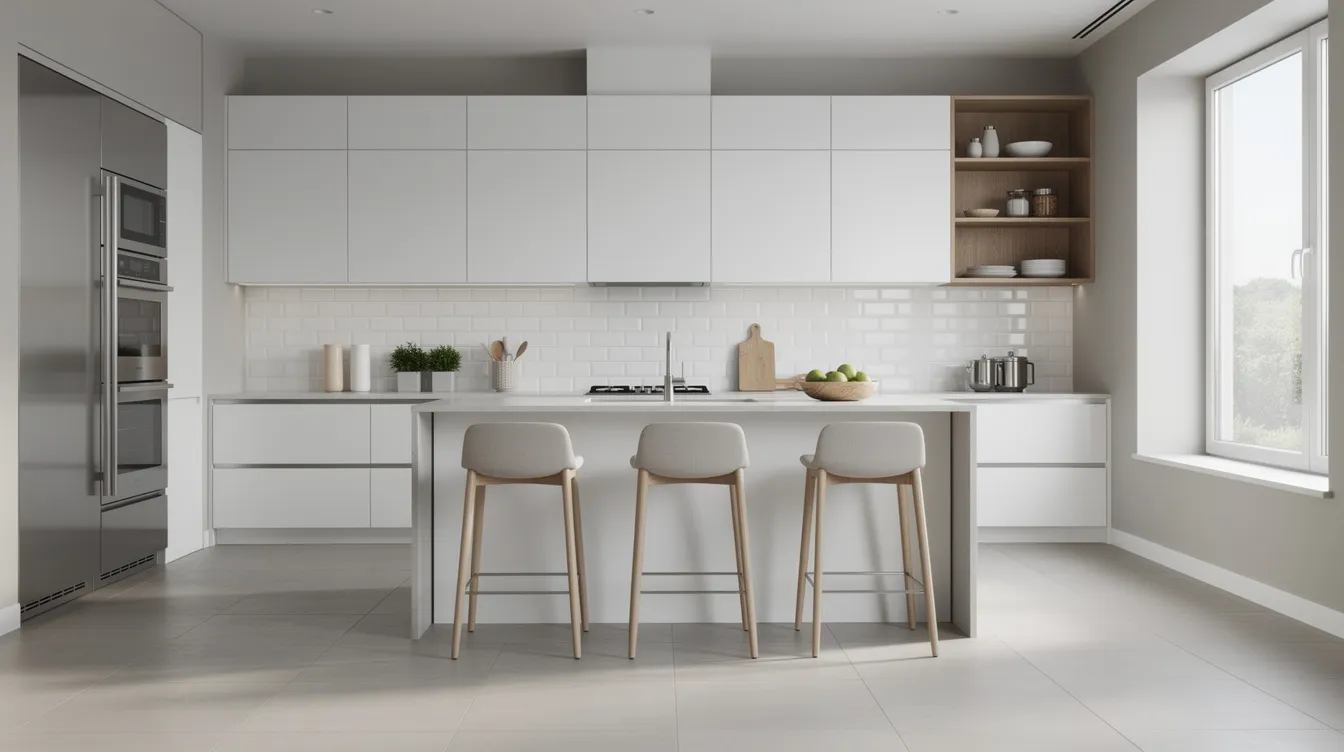
Most tile finishes fall into one of these categories: matte, glossy, polished, satin, honed, semi-polished, and textured. Each one controls a distinct set of visual and practical characteristics.
In practical terms, the finish determines shine, grip, cleanability, and how a tile responds to dirt, stains, moisture, and foot traffic over time.
- Matte tiles have a non-reflective surface that absorbs light and produces a soft, organic quality. They suit natural, minimalist, and rustic design directions well and are ideal for low-maintenance applications.
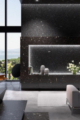
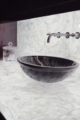
- Glossy tiles have a smooth, high-shine surface that reflects light and creates a bright, modern aesthetic. They work well on walls, backsplashes, and decorative applications where the reflective quality serves the design.
- Textured tiles have a surface designed to mimic natural materials, such as stone, slate, concrete, or wood, while delivering measurably better grip underfoot. They are built for wet areas and high-traffic zones where safety is the specification priority.
- Satin tiles offer a low-to-medium sheen that sits between matte and glossy. They work well on interior walls where a degree of warmth and light reflection is desirable without the full mirror quality of a gloss surface.
- Honed and semi-polished finishes create a dual-texture effect by polishing selected areas of the tile surface while leaving others matte. The result is a play of light and shadow that suits larger-format floors and architectural interiors.
- Lappato tiles are produced through a light polishing process that creates a mix of glossy and matte zones within a single tile, adding visual complexity without sacrificing too much grip.
Matte Tile: Where It Works Best
Matte tile is one of the most reliable finish choices across both residential and commercial floor applications. Because the surface does not reflect light, it does not amplify wet conditions the way a polished or glossy tile does, which makes it notably safer underfoot in spaces that see moisture regularly.
Matte tiles are recommended for wet areas precisely because they maintain grip where glossy finishes can become hazardous. For floor specifications in bathrooms, entryways, or any area adjacent to water, a matte or textured finish is the starting point.
Matte works well across:
- Kitchen floor projects where durability and low maintenance matter as much as style
- Bathrooms and laundry rooms where moisture resistance and safe footing are non-negotiable
- Hallways, entryways, and mudrooms that take daily foot traffic from multiple users
- Commercial applications including office lobbies, restaurant floors, and healthcare corridors
- High-traffic floors in family homes where scratches, footprints, and scuffs are routine
Matte tiles hide dirt and surface marks better than glossy ones, which is a real advantage in busy spaces. The trade-off is that textured matte surfaces may require occasional scrubbing to clear grime from the surface grain. For most high-traffic applications, that trade-off is straightforward to accept.
For a kitchen floor, matte porcelain tile delivers the right combination of low maintenance, water resistance, and everyday durability. Porcelain carries a low water absorption rate and resists staining in ways that most other tile materials do not match at the same price-to-performance ratio.
Glossy Tile: Where It Works Best
Glossy tile is a tool for light and visual expansion. Because the surface reflects both natural and artificial light, it makes a space feel brighter and larger than it physically is. That quality makes glossy tile particularly useful in spaces that are compact, low-lit, or designed to create a strong first impression.
Glossy tiles suit these applications well:
- Small bathrooms and powder rooms where light reflection makes a genuine visual difference
- Shower walls, where the sheen creates a clean, hotel-quality finish
- Backsplashes in kitchens and butler’s pantries where the surface is vertical and easy to wipe clean
- Feature and accent walls in living rooms, dining rooms, and commercial reception areas
- Decorative applications where the tile’s color and pattern are meant to command attention
Polished porcelain achieves its high-gloss surface through a mechanical grinding process that enhances color depth and pattern clarity. That same process, producing a smooth and dense face, is why polished finishes are not recommended for wet floor areas. The surface offers very little grip when wet.
Glossy tiles also show water spots, fingerprints, and smudges more readily than matte surfaces. On a vertical installation like a shower wall or backsplash, that is easy to manage. On a floor in a high-traffic zone, the constant cleaning demand becomes a maintenance burden that most clients do not anticipate until it is too late to change the specification.
A polished marble or glossy porcelain foyer may photograph beautifully, but for any entry point exposed to rain, humidity, or wet footwear, a honed or matte finish of the same material is almost always the smarter long-term call.
Textured Tile: Where It Works Best
Textured tile is specified first for safety. The surface relief, whether through raised patterns, micro-ridges, abrasive grains, or a stone-like profile, creates grip that neither matte nor glossy finishes can match in the most demanding wet and outdoor environments.
Textured finishes are the correct specification for:
- Shower floors in both residential and hospitality settings
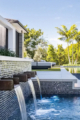
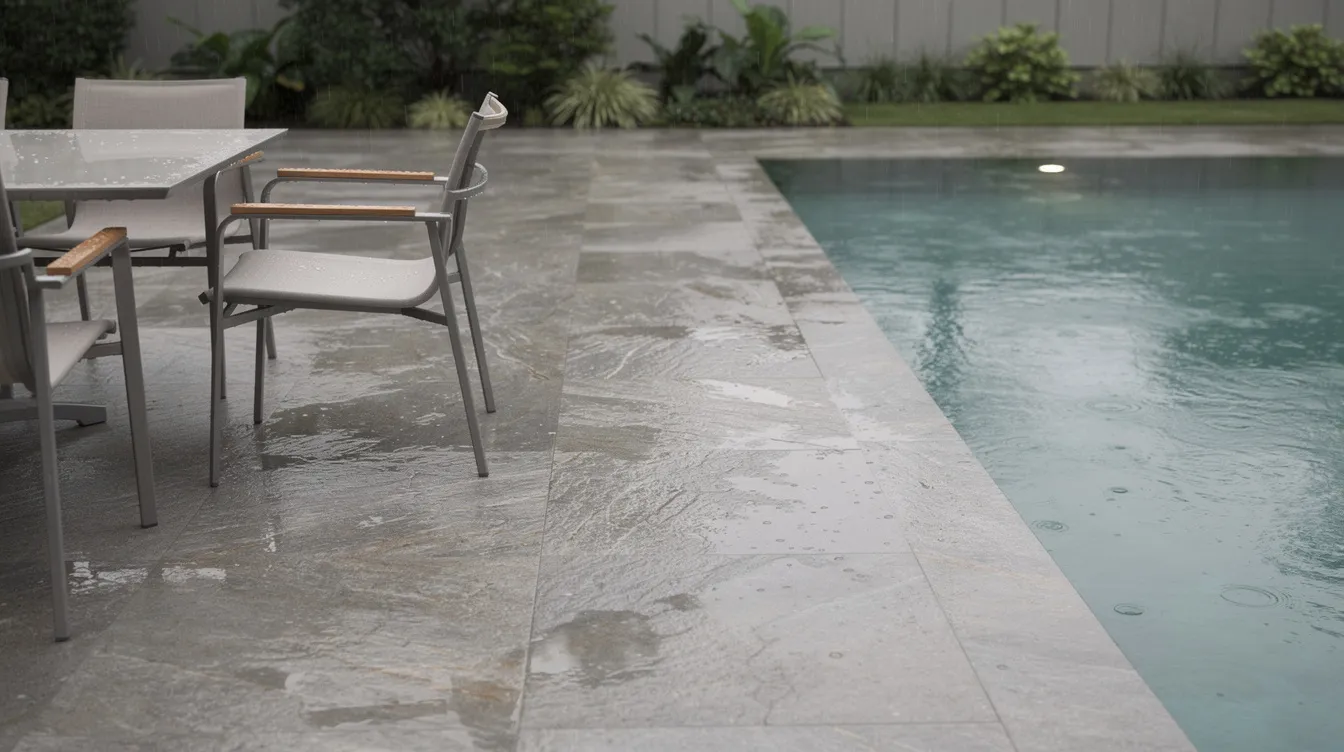
- Pool decks, spa surrounds, and wet areas adjacent to water features
- Outdoor patios, terraces, and entrance steps
- Restaurant entries and commercial tile applications where moisture and heavy foot traffic converge
- Any public space where health and safety standards require a documented slip resistance rating
For outdoor and wet floor applications, the Tile Council of North America (TCNA) recommends a DCOF (Coefficient of Friction) rating of 0.42 or higher for general floor use, and 0.60 or higher for pool decks, outdoor patios, and surfaces regularly exposed to standing water. These thresholds are governed by the ANSI A326.3 test method, which provides the industry standard for wet surface slip resistance measurement.
The Ceramic Tile Education Foundation (CTEF) recommends a PEI (Porcelain Enamel Institute) rating of 4 or 5 for any outdoor or heavy commercial floor application. Porcelain tiles at this rating deliver the density, frost resistance, and abrasion resistance that exposed outdoor surfaces demand.
The one maintenance consideration with deeply textured surfaces is that the surface relief traps sand, dirt, and soap residue. Regular cleaning with an appropriate brush and cleaner keeps textured tile performing well, but it does require slightly more effort than a smooth matte or glossy surface.
Matte vs Glossy vs Textured Tiles: Key Differences
| Feature | Matte | Glossy | Textured |
|---|---|---|---|
| Best use | Floors, high traffic areas | Walls, backsplashes | Wet, outdoor, commercial spaces |
| Slip resistance | Good | Lower unless slip rated | Best |
| Cleaning | Hides marks, may need scrubbing | Easy wipe-down, shows smudges | Needs deeper brushing |
| Style | Natural, rustic, understated | Bright, polished, modern | Tactile, architectural |
| Materials | Porcelain, ceramic, stone | Ceramic, porcelain, stone | Porcelain, slate, stone |
Each finish has a role. The best choice is not always the most glossy or the most textured. It is the finish that matches the space, safety needs, and maintenance expectations.
How to Choose the Right Tile Finish for Your Space
For High-Traffic Areas
High-traffic floors in commercial and residential settings need a tile finish that does not deteriorate under pressure, repeated cleaning, or consistent foot traffic. Matte porcelain is the standard specification for these environments because it holds its appearance over time, resists staining, and does not show wear the way a polished surface does after heavy use.
When specifying for a high-traffic commercial floor, confirm the tile’s abrasion rating alongside its slip resistance. A PEI 4 or 5 tile in a matte or textured finish gives you durability and safety in a single specification decision. Porcelain at this level can hold its performance for decades with proper installation and routine maintenance.
For Bathrooms and Wet Areas
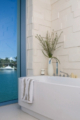
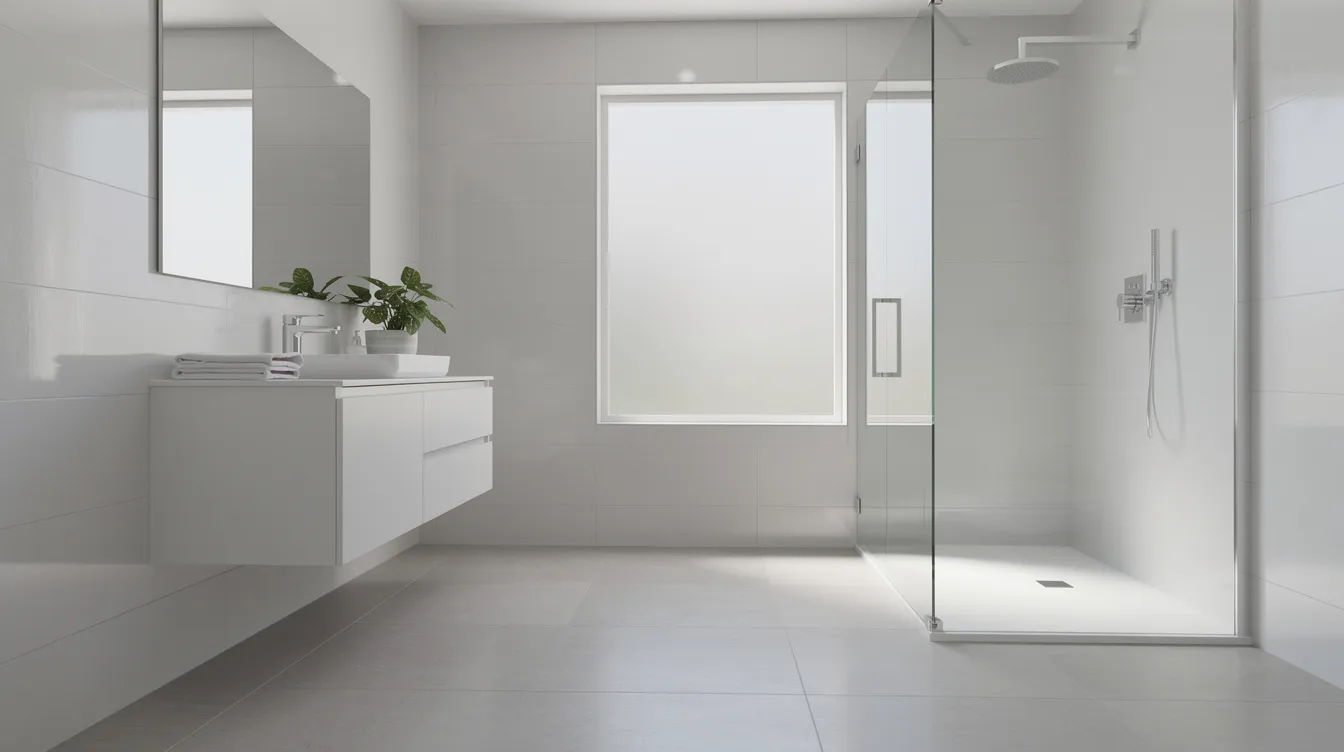
The most effective bathroom tile specification uses matte or textured porcelain on the floor and reserves the glossy finish for walls. This division is not just a design choice; it is a safety one. The floor carries the slip risk. The wall carries the visual potential. Giving each surface the finish it is suited for produces both a better-looking and safer bathroom.
When natural stone is the design direction for a bathroom, the maintenance picture changes. According to the Natural Stone Institute, most natural stone surfaces used in wet areas require periodic sealing to prevent water penetration, staining, and surface degradation. Porcelain tile that replicates marble, travertine, or slate in a matte or honed finish delivers a comparable aesthetic with significantly less upkeep, which is a practical advantage in both residential and hospitality contexts.
For Outdoor Spaces
Outdoor floor specifications require water resistance, UV stability, and measurable slip resistance. None of those requirements are optional.
Textured porcelain is the standard choice for patios, pool surrounds, entrance steps, and covered terraces because it manages moisture, handles climate variation, and maintains grip in wet conditions. Our full guide to outdoor tiles covers the ratings and installation considerations that apply to South Florida’s climate and conditions.
For Feature Walls and Design Impact
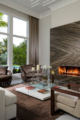
Glossy and polished finishes serve their most compelling purpose on vertical surfaces. A glossy ceramic or porcelain wall tile on a fireplace wall, powder room, or hotel reception feature reflects light in a way that adds depth and drama to the architecture around it.
In those applications, slip resistance is irrelevant and visual performance is everything. This is where the full range of gloss finishes, from high-shine polished porcelain to lappato and satin surfaces, gives designers the tools to create an installation that reads as intentional, precise, and refined.
Choosing Tile Finishes for Commercial vs. Residential Projects
The priorities differ meaningfully between these two contexts, and finish selection should reflect that difference.
Residential projects balance comfort, style, and low maintenance. The finish choices can be more personal, and the performance requirements, while still important, are generally lower than in commercial environments.
Commercial projects prioritize documented safety ratings, durability under volume foot traffic, compatibility with professional cleaning schedules, and long-term cost of ownership. In these settings, matte and textured porcelain floor tiles are the consistent specification across hospitality, healthcare, retail, and corporate environments.
For projects that require both high performance and design distinction, engineered materials offer certified technical performance alongside the aesthetic versatility of natural stone and wood-look finishes. These are particularly well-suited to commercial interiors where the tile must pass both a technical specification review and a design approval.
For any commercial project, verify the slip rating, abrasion rating, and cleaning requirements before the finish is finalized. For residential projects, always view samples in the actual space before committing. How a tile reads in a showroom under track lighting is not the same as how it reads in a north-facing bathroom at 7 a.m.
Which Tile Finish Is Best?
There is no single answer, and any guidance that offers one should be treated with skepticism. The right tile finish depends entirely on where the tile is going, who will be using the space, how the surface will be maintained, and what the design is trying to achieve.
Matte is the dependable choice for floors, high-traffic interiors, and wet areas. Glossy belongs on walls, backsplashes, and vertical features where light reflection serves the design. Textured is the correct specification for outdoor areas, pool environments, and commercial floors where grip is a documented safety requirement.
Start with the function of the space. Then choose the finish that supports it.
At Cavastone, Cavastone’s approach has always been consultative: understanding the project before recommending the material. If you are working through a finish specification for a residential renovation, commercial build-out, or hospitality project and want guidance from a team with nearly 20 years of experience in luxury tile and natural stone, reach out to our team at the Boca Raton showroom.
Related Reading
These resources from Cavastone support the finish decisions covered in this guide:
- Once you have settled on a finish, grout color is the next specification decision: Best Grout Color for Tile.
- How current finish preferences align with broader design movements this year: 2026 Tile Trends.
- Understanding which finish works on which surface starts with knowing how floor and wall tiles differ: Floor Tile vs. Wall Tile: What’s the Difference.
- For designers working with textured surfaces in a high-design context: Why Designers Are Falling in Love with Textile Tiles.
- A broader review of premium material and finish options for luxury residential and commercial projects: Best High-End Flooring Options.
Frequently Asked Questions
What is the best tile finish for a shower floor?
A matte or textured porcelain tile is the correct specification for a shower floor. Both finishes provide measurably better grip than a glossy surface when wet, and porcelain’s non-porous composition resists moisture penetration without sealing. Always confirm that the product carries a DCOF rating of 0.42 or higher before specifying it for a wet floor application, and verify that the rating applies to wet conditions, not just dry surface testing.
Can I mix matte and glossy tiles in one room?
Yes, and in many cases it is the right approach. The most common and effective combination is matte or textured tile on the floor paired with a glossy finish on the walls. This keeps the floor safe underfoot while allowing the walls to reflect light and contribute to the visual quality of the space. The same logic applies in commercial environments: a matte floor with a high-gloss feature wall or reception panel gives the space both function and presence.
Are textured tiles harder to clean?
Textured tiles require slightly more effort than smooth surfaces because the surface relief can trap fine particles, soap residue, and grime in grooves. That said, modern textured porcelain tiles are still low-maintenance materials when cleaned on a regular schedule. For guidance on technique and frequency, our cleaning porcelain tiles guide covers both smooth and textured surface care in detail.
Is natural stone better than porcelain?
Neither is categorically superior; they serve different design intentions. Natural stone delivers an authenticity and variation that no engineered surface fully replicates, and it carries genuine prestige in luxury residential and high-end hospitality contexts. Porcelain, on the other hand, is more consistent, more resistant to water and staining, and requires less ongoing maintenance. For a detailed comparison of how designers are approaching this choice today, our guide to natural stone vs. porcelain covers the trade-offs by application and project type.
What finish is best for resale value?
Neutral matte or satin porcelain performs consistently well in resale contexts because it reads as timeless rather than trend-driven, suits a wide range of buyer preferences, and holds its appearance in high-traffic areas without obvious wear. Highly polished or bold glossy finishes can appeal strongly to some buyers while narrowing appeal for others. When specifying tile for a property that will be sold, a matte large-format porcelain in a warm neutral is the safest long-term investment in both performance and market appeal.