Quick Answer: What Is Tile Shade Variation?
Tile shade variation is the range of color, tone, and texture you can expect between individual tiles in one collection. Manufacturers grade that range from V0, where pieces look very uniform, through V4, where one tile can look nothing like the next. The rating describes appearance only. It tells you nothing about quality, so review a real sample range under your own lighting and approve the full spread before you order.
Want to see the full range before you commit? Bring your finishes to our Boca Raton showroom.
Tile shade variation is the reason a finished floor can look different from the sample that sold it, and our porcelain tile collections span the full range from near uniform to boldly varied. We work with architects, designers, builders, and homeowners across South Florida. The same question comes up on nearly every project. How much difference should you expect once the whole room is down?
This guide answers that. It covers what the V ratings mean, how to review samples properly, and what to check on a delivery before anything gets set.
What You Should Know Before You Start
Does A Higher V Rating Mean A Better Tile?
- No. The rating covers appearance. It is not a grade for quality, strength, or wear.
- Check slip resistance, water absorption, and the rated use for floors or walls as separate line items.
- Pick the visual range that suits the room. A quiet floor and a bold feature wall are both correct answers.
Can One Sample Tell You What The Room Will Look Like?
- Rarely. A single cut piece shows one face out of many.
- CTEF puts it plainly. One piece “cannot adequately represent the overall effect of a roomful” of that tile installed.
- Ask to see the palest pieces, the darkest pieces, and the busiest pattern together.
Will Ordering One Batch Remove The Variation?
- No. A shared production run does not erase variation the designer built into the collection.
- Kiln conditions shift between runs, so a later top up order may not match what you approved.
- Order the full project quantity at once when rooms are being phased.
When Should The Layout Be Approved?
- Before anything is set permanently, with the owner and the design team present.
- Review the grout color, the joint size, and the pattern at the same time.
- Write down who signed off, so your installer has one clear reference.
In This Guide
- 1. What Tile Shade Variation Means In Porcelain And Ceramic Tile
- 2. Tile Shade Variation Ratings From V0 To V4
- 3. Choosing A Variation Level Room By Room
- 4. Approving Samples Under Your Project Lighting
- 5. Checking Shade Codes, Calibers, And Production Runs
- 6. Blending Tiles Before Installation
- 7. Writing A Clear Shade Variation Specification
- 8. How Natural Stone Variation Works Differently
- 9. Why South Florida Designers Work With Cavastone
- 10. FAQ: Common Tile Shade Variation Questions
- 11. Sources
What Tile Shade Variation Means In Porcelain And Ceramic Tile
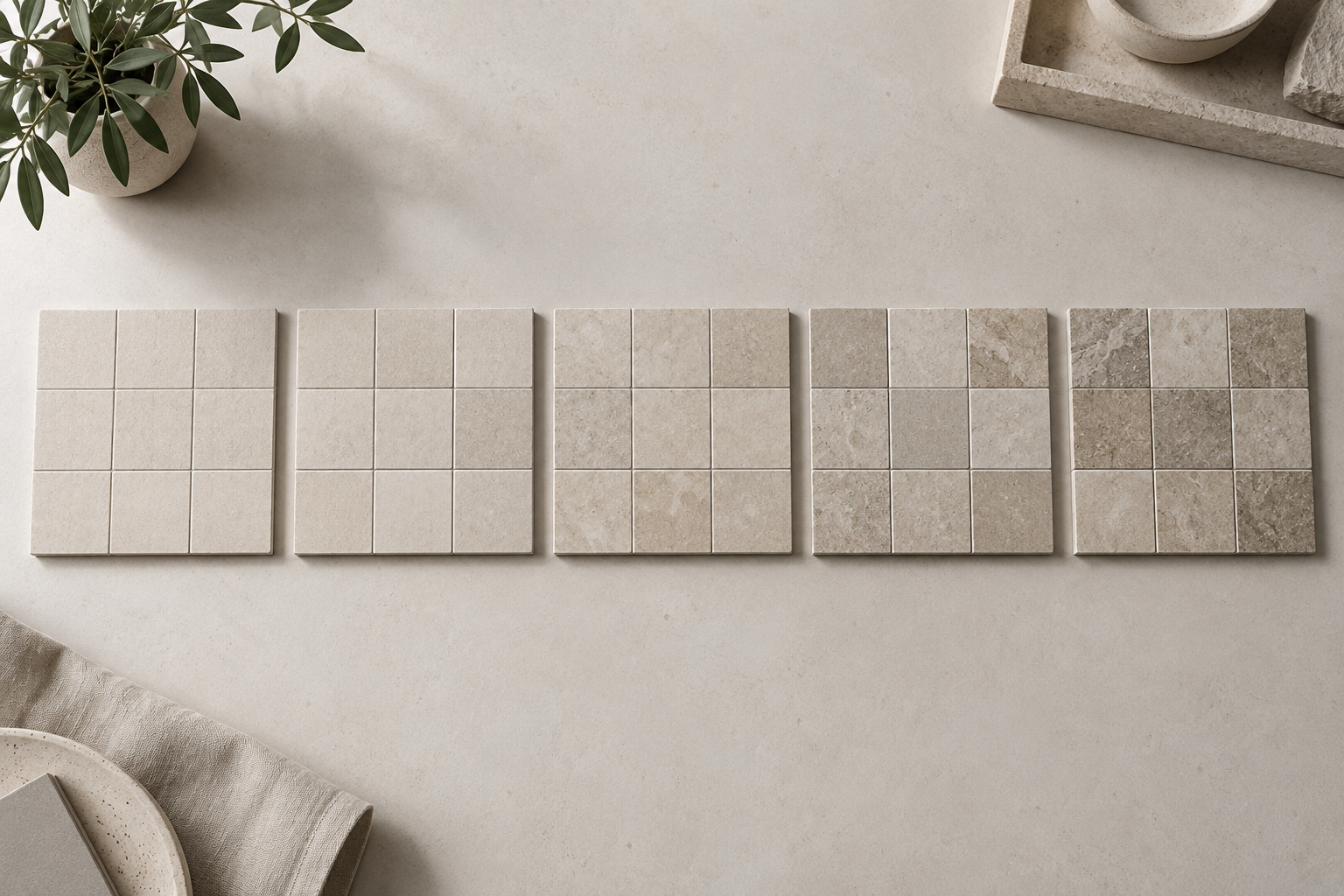
Two tiles can carry the same collection name and still look different. That is often the point. Designers build the range in on purpose, especially in stone looks and wood looks.
It helps to split the idea in two.
- Designed variation belongs to the product. The manufacturer chose how far the color, tone, and pattern should travel across the collection.
- Production variation belongs to the batch. Clay and kiln conditions shift, so one run can read warmer or cooler than the next.
Both matter, and they call for different checks. You judge designed variation in the showroom. You catch production variation on the delivery labels.
Ask two questions when you first see a tile you like. How wide is this collection meant to look? And how closely does the material in stock match these samples?
Good To Know: The Rating Is Not A Quality Score
A V rating describes how much the faces differ. It says nothing about strength, stain resistance, or whether the tile suits a floor. Confirm those separately against the product data, as CTEF advises in its guidance on specifying tile for kitchens and baths.
Tile Shade Variation Ratings From V0 To V4
Most sample boards and product sheets now carry a shade range drawn from the TCNA Handbook and the ANSI A137.1 specification. The scale runs from V0, where no shade range is visible to the average eye, up to V4. Category definitions below follow the CTEF shade variation categories.
Read the label first. Then let the tiles themselves settle the decision.
| Rating | What To Expect | Our Selection Advice |
|---|---|---|
| V0 Very Uniform | Pieces of the same shade value look very uniform and smooth in texture. | Good where the floor has to disappear under bolder finishes. |
| V1 Uniform | Differences between pieces from the same production run are minimal. | Still worth viewing several pieces if the room is large. |
| V2 Slight | Clearly distinguishable differences in texture or pattern within similar colors. | Ask which details repeat and which change from tile to tile. |
| V3 Moderate | The colors on one piece show what to expect, but the amount of each can vary widely. | View the range before you select. Compare the quietest and busiest faces. |
| V4 Substantial | Color and texture differ at random, so one tile can look completely different from another. | View the widest spread you can. Judge it as one surface, not one tile. |
Reading V2 And V3 Past The Label
V2 does not promise matching faces. It promises similar colors with visible shifts in texture or pattern.
V3 is where most people get caught out. The colors stay familiar, but how much of each shows up can swing hard from piece to piece. CTEF recommends viewing the range before you select at both V3 and V4.
Lay the quietest face next to the busiest one. If either extreme bothers you, move to another collection now rather than after delivery.
Reading V4 As One Surface
At V4, color and texture differ at random. One tile can look completely unlike its neighbor, and the finished floor becomes one of a kind.
Judge it from the doorway as well as up close. Up close you see tiles. From the doorway you see the room, and that is the view you live with.
Choosing A Variation Level Room By Room
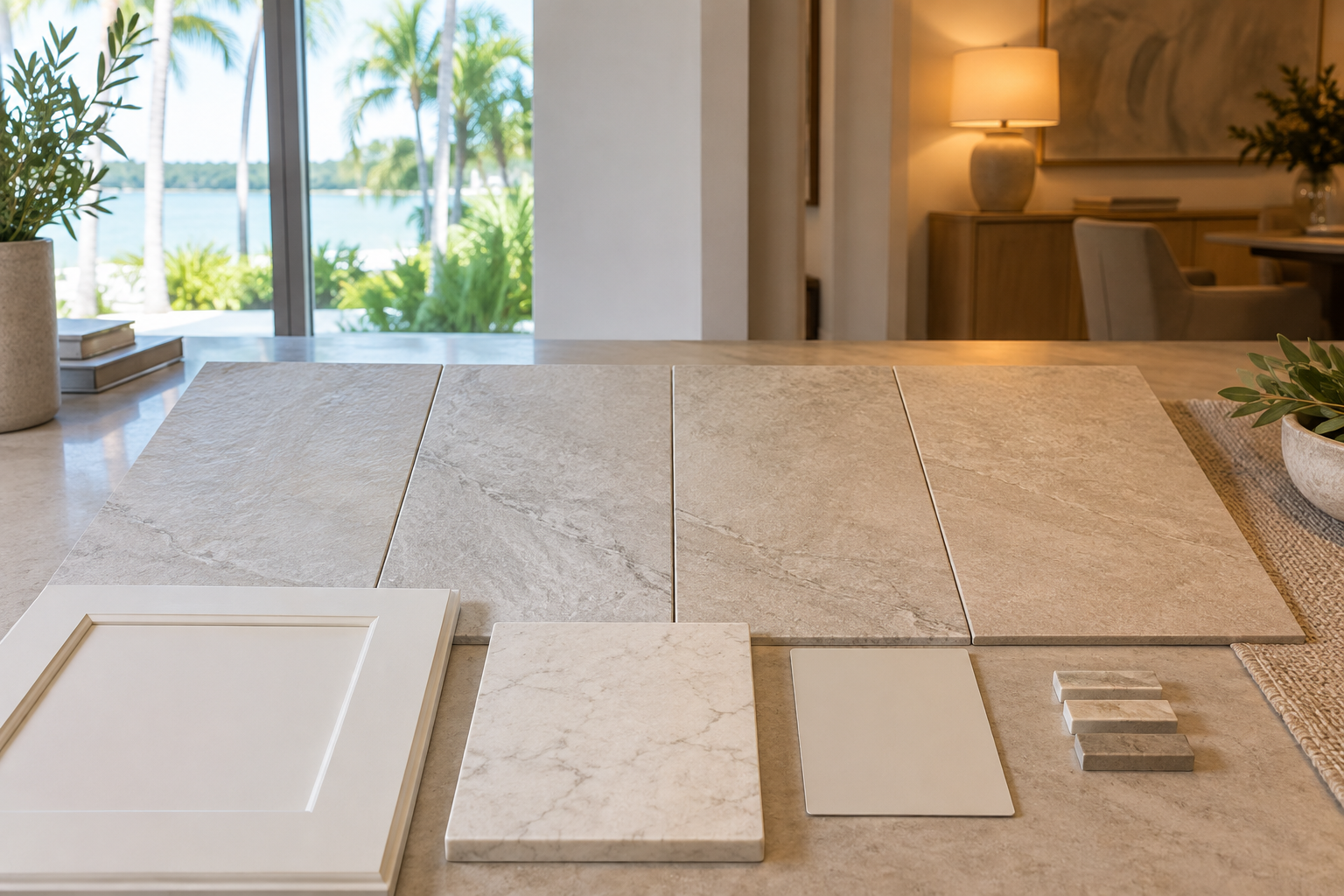
Start with the job the surface has to do. Should it support the other materials, or should it lead?
That question gets you further than asking which rating is best.
- Under a heavily veined island, compare V0 and V1 first. You want a backdrop, not a competitor.
- For a wood look floor, check the grain and the light to dark spread across six or seven planks, not two.
- For a feature wall, higher variation earns its keep. Keep the nearby finishes calm while you compare.
- In a small bathroom, lower variation reads as more space. Fewer interruptions, less visual noise.
- In an open plan living area, test the boldest option along your longest sightline before it runs into the next room.
Here is a test we use in the showroom. Lay the proposed blend out the way the entry faces the kitchen, and leave the darkest pieces in. If the contrast pulls more attention than you want, step down a level.
Pattern and shade also work on each other. Review the mix alongside your tile layout pattern, because a herringbone set will scatter a V3 range differently than a straight stack.
Finish matters too. A polished face bounces light and flattens some of the variation, while a matte face holds it. Our guide to matte, glossy, and textured tile covers how each one behaves.
Approving Samples Under Your Project Lighting
Light changes color. A tile that reads warm under showroom lighting can read gray under a north facing window.
So treat sample approval as a short scheduled meeting, not a decision made from a phone photo. CTEF warns against selecting from a single online image, partly because no two screens render color the same way.
Sample Approval Checklist
- ✓Bring the neighbors. Cabinet doors, countertop offcuts, paint chips, and grout samples.
- ✓Bring the whole range, including the pieces you are unsure about.
- ✓Lay floor samples flat on the floor. Stand wall samples upright against the wall.
- ✓Compare in daylight and again under the planned fixtures.
- ✓Photograph the approved spread, then write down what was agreed and who agreed it.
Grout is part of this decision, not a detail to settle later. A pale grout can lift a dark blend, while a matching grout lets the field read as one plane. Our guide on how to choose grout color walks through the comparison.
Pro Tip: Keep The Approved Samples On Site
Photos are useful for the record. The physical pieces are what you hold against a delivery. Keep them labeled with the room, the collection, and the order number until the job is signed off.
For a wide range, ask your installer whether a mounted and grouted panel is worth building. CTEF calls the signed mockup the safest way to avoid a nasty surprise at the end of the job. The panel shows the shade range, the pattern, and the grout joint in one place.
Checking Shade Codes, Calibers, And Production Runs
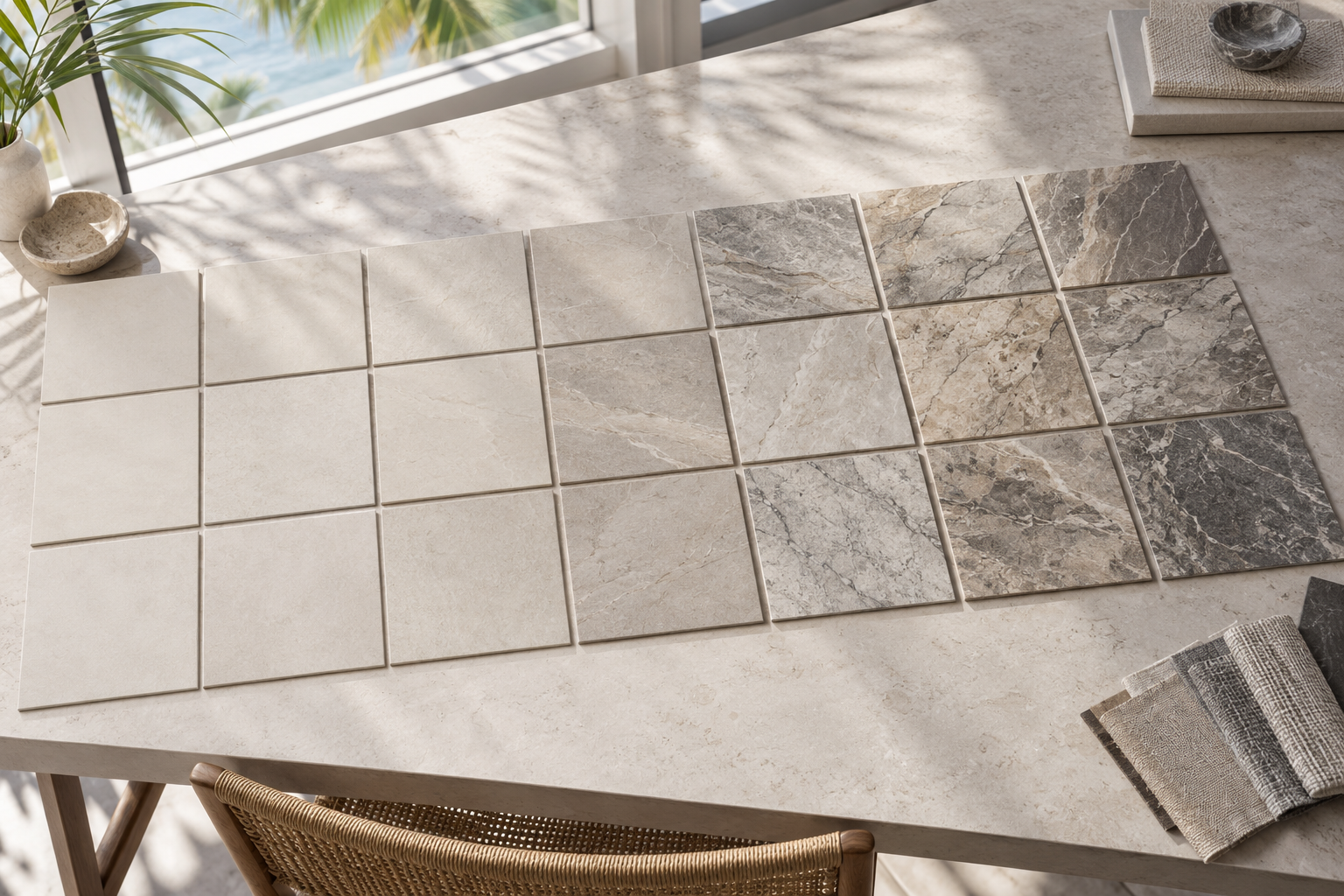
The V rating and the box markings answer different questions. One describes the intended range. The other identifies the material that actually showed up.
Check the labels before a single tile is set.
- Product code confirms the collection, color, size, and finish you ordered.
- Shade or tone code identifies the color grouping that batch belongs to.
- Lot or production code ties the boxes to one manufacturing run.
- Caliber code refers to tile sizing, which is a separate check from shade.
Photograph every label before the cartons go out with the packaging. Those photos are the fastest way to settle a question weeks later.
Watch Out: Later Orders May Not Match
A repeat order under the same product name can come from a different production run and read differently. Compare any top up against your retained samples before it goes down. CTEF covers this and other common tile installation problems worth raising early.
Work out the full quantity before you order, including the overage for cuts and spares. Our tile calculator gives you a starting figure, and our guide on how to calculate tiles required explains what to add on top.
For phased renovations, list every room that should share one batch. Then ask us to hold the full quantity rather than trusting that a matching lot will still be available in six months.
Blending Tiles Before Installation
Blending simply means spreading the approved range evenly across the floor. It is how the mix you chose ends up looking deliberate.
CTEF is direct about the method. Blend from four to five boxes at a time. Working from one carton at a time can leave a block of color that looks unnatural once the room is finished. You can read the full case for building a tile installation mockup on the CTEF blog.
- Agree on the viewing points first. Entries, hallways, and open sightlines between rooms.
- Look for clusters. Three dark pieces together will read as a stain from across the room.
- Confirm direction. Decide whether veins or grain should run one way or alternate.
- Set aside anything questionable rather than cutting it in.
- Walk the first section together before the rest goes down.
Separate two different problems while you review. An unwanted cluster is a layout issue your installer can fix by moving pieces. A chipped or off color tile is a product question for your supplier.
💡 Pro Tip: Name One Approver Before Work Starts
Installers lose hours waiting for a decision on a single odd tile. Agree who makes the call, and name a backup for the days the lead designer is on another site.
Writing A Clear Shade Variation Specification
A collection name and a color swatch leave too much open when the range is wide. A short written note closes the gap.
Record what actually governs the look.
What To Record In The Specification
- ✓Manufacturer, collection, color, finish, size, and the declared V rating.
- ✓The sample range or mockup that was accepted, with the date and the approver.
- ✓Grout product, color, and joint width.
- ✓The agreed layout pattern and direction.
- ✓Shade and lot details to be confirmed on delivery.
- ✓Who to call when a piece raises a question.
A Project Note You Can Adapt
For a V3 porcelain floor, a note along these lines gives everyone the same brief.
Check the delivered tile against the approved range before installation. Confirm the shade and lot codes match the approved order. Blend from four to five cartons per the manufacturer instructions and the approved mockup. Refer any unexpected color or pattern difference to the project contact before those pieces are set.
Hand the installer the same photos and samples the owner approved. One shared reference beats three versions of the truth.
For kitchens and baths, review suitability and installation requirements with the qualified trades on the job. A shade approval covers the look, nothing more. CTEF lists this among its top ten requirements for a quality tile installation.
How Natural Stone Variation Works Differently
The V scale was written for ceramic and porcelain tile. Natural stone does not fit it, because no one designed the range.
Marble is a case in point. The Natural Stone Institute notes that marble is a metamorphic rock, quarried mostly in India, China, Italy, and Spain, and its markings come from the geology of the block rather than a print cylinder.
So the review process changes.
- Ask to see material from the lot being supplied, not a generic sample.
- For slabs, view the actual pieces and agree the sequence before fabrication.
- Expect color, veining, and pitting to shift within one shipment.
Our marble, travertine, and limestone collections all carry that natural movement, and the selection conversation is different from a porcelain order. If you are weighing the two approaches, our comparison of natural stone against stone look porcelain is a good place to start.
One single piece of tile “cannot adequately represent the overall effect of a roomful” of that tile installed.
Scott Carothers, Ceramic Tile Education Foundation | How to Prepare for Tile Shade Variation
Ask AI About This Guide
Ask for a summary of the V0 to V4 ratings, sample approval, and batch checks covered here.
Why South Florida Designers Work With Cavastone
Connie Davalos founded Cavastone in 2006. Nearly twenty years on, we still sit with designers and homeowners and lay tiles out on the floor until the choice is obvious. Read our story for how the business started.
We stock materials sourced directly from Spain and Italy that you will not find at other South Florida suppliers. That matters here, because a wide V3 or V4 range needs to be seen in quantity, not guessed at from one cut piece.
- We pull multiple pieces so you can see the spread, not the best face.
- We send samples without hurdles on pricing or paperwork.
- We confirm availability and lot details before you plan a phased order.
- Trade pricing for professionals, retail pricing for homeowners, and the same service either way.
We supply the material and support the selection. Your qualified installer confirms the method, the substrate, and the finished result with your design team. If something looks off on delivery, we will come and look at it with you.
Visit us at 646 Park of Commerce Way, Boca Raton, Florida 33487, or call 561-994-9100. See our Boca Raton showroom page for directions, or the full list of locations we serve. When you are ready, contact our team and bring your finishes.
Keep Exploring
- Porcelain Tile Collection
- Porcelain Slabs
- Mosaic Collection
- How To Choose Grout Color For Your Tile
- Tile Layout Patterns That Bring Spaces To Life
- How To Calculate The Tiles You Need
- Tile Material Types 101
- Porcelain Tile vs. Stone Tile
- Commercial Tile Flooring Trends For 2026
- Browse The Full Catalog
See The Full Shade Range Before You Order
Bring your cabinet doors, countertop samples, and paint chips. We will pull the range so you can approve what the whole room will look like.
FAQ: Common Tile Shade Variation Questions
What Does V3 Mean For Porcelain Tile?
V3 means moderate variation. The colors on one piece tell you what to expect on the others, but the amount of each color can vary widely from tile to tile. CTEF recommends viewing the range before you select at this level. Ask to see the quietest face and the busiest face together. Approve the combination rather than the single piece you liked first.
How Is V4 Different From V3?
V4 allows random differences, so one tile can look completely unlike another and the finished floor ends up one of a kind. V3 keeps a shared palette and varies how much of each color shows. The practical difference is how you review it. At V4 you judge the whole composition from across the room, because no single tile represents the result.
Does V1 Mean Every Tile Looks Identical?
No. V1 means differences between pieces from the same production run are minimal, not absent. It also says nothing about how one batch compares to another. If a consistent field matters to you, compare the delivered tile against your approved samples before installation starts, and consider V0 if the floor needs to sit quietly under bolder finishes.
How Many Samples Should I Look At?
Enough to show the collection’s full spread rather than a fixed number. Include the palest pieces, the darkest pieces, and the busiest pattern. For a wide range, ask your installer about a loose layout or a mounted mockup before final approval. One cut piece on a sample board cannot show you what a whole room will look like.
Can I Mix Tile From Different Batches?
Only after your supplier and installer compare the actual material side by side. Shade codes and production runs exist because batches can differ. If the comparison looks right to everyone, record the approval in writing before anything is set. If it does not, ask about sourcing the balance from the original lot.
Does High Variation Tile Hide Dirt Better?
A busy surface can disguise crumbs and dust between cleans, but treat that as a side effect rather than a reason to choose a rating. The V scale describes appearance only. Wear resistance, stain resistance, and cleaning needs come from the body, the finish, and the glaze, so review those separately against the product data.
Does Natural Stone Use The Same V1 To V4 Scale?
No. The scale was written for ceramic and porcelain tile. Natural stone carries whatever range the quarry block produced, and marble, travertine, and limestone all vary within a single shipment. Ask to see material from the lot being supplied, and for slabs, review and sequence the actual pieces before fabrication begins.
What Should I Do If The Delivered Tile Looks Wrong?
Stop work on the pieces in question before they are set, and keep the cartons, labels, and approved samples together. Photograph the tile next to your approved range under consistent light. Then ask your supplier and installer to review it with you. Start by comparing against the approved range rather than assuming a defect, since some difference is expected and some is not.
Where Does The V Rating Come From?
Shade ranges appear on most sample boards and product literature, drawn from the aesthetic classes in the TCNA Handbook and the ANSI A137.1 specification for ceramic tile. The scale runs from V0, where no shade range is visible to the average eye, through V4. Manufacturers assign the rating to their own collections, so always confirm it on the current product sheet.
Sources
- Ceramic Tile Education Foundation. How to Prepare for Tile Shade Variation.
- Ceramic Tile Education Foundation. Why a Tile Installation Mockup is Really Necessary.
- Ceramic Tile Education Foundation. Tips for Specifying Tile, Stone and Glass for Kitchen and Bath Installations.
- Ceramic Tile Education Foundation. How to Deal With Tile Installation Problems.
- Ceramic Tile Education Foundation. The Top Ten Requirements for a Quality Tile Installation.
- Natural Stone Institute. Marble, Onyx and Serpentine.
- Tile Council of North America. 2026 Handbook for Ceramic, Glass, and Stone Tile Installation.
Getting tile shade variation right starts with seeing the whole range in person, so bring your project to our Boca Raton showroom before you place the order.

Owner, Cavastone Group
With years of perseverance and pride in what we do we have become a very well known and positioned company in the Architectural and Design industry. The same perseverance, pride and attention to detail that made us become who we are, are the same qualities we strive to provide to all our customers.