Thinking about upgrading your floors? You’re not alone.
A lot of homeowners (and even business owners) are turning to porcelain tile flooring. It’s one of those flooring materials that checks all the boxes: stylish, tough, low-maintenance, and incredibly versatile.
So, what makes porcelain tile such a popular choice over other flooring materials like ceramic tile, wood, or even natural stone? Let’s break it down.
Key Takeaways:
- Porcelain tiles are incredibly durable, making them ideal for high-traffic and commercial areas.
- They are fully waterproof when properly installed, perfect for bathrooms, kitchens, and outdoor spaces.
- Maintenance is simple—just regular sweeping and mopping thanks to their non-porous surface.
- Porcelain offers stunning design flexibility, mimicking wood, stone, and other styles for a custom look.
- While installation can be tricky and the cost higher upfront, porcelain’s long-term value is hard to beat.
First Things First: What Exactly Is Porcelain Tile?
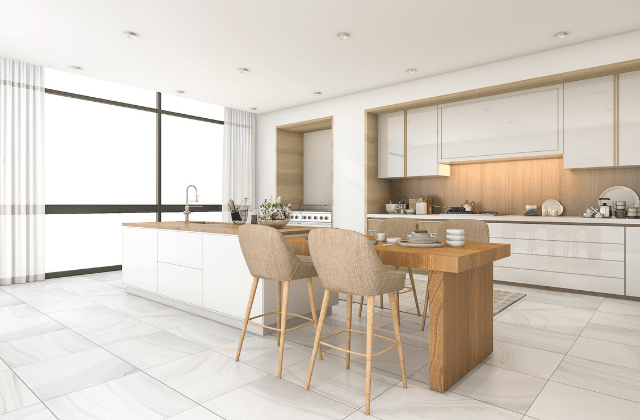
Porcelain is actually a type of ceramic, but it’s made from a super-fine clay and fired at way higher temperatures.
That makes it denser, harder, and way more durable than your average standard ceramic tile.
Because of this, porcelain floor tiles are highly resistant to water penetration, stains, and even harsh chemicals.
This is exactly what you want in places like bathrooms, kitchens, and high-traffic areas.
Let’s Talk Pros (Because There Are a Lot)
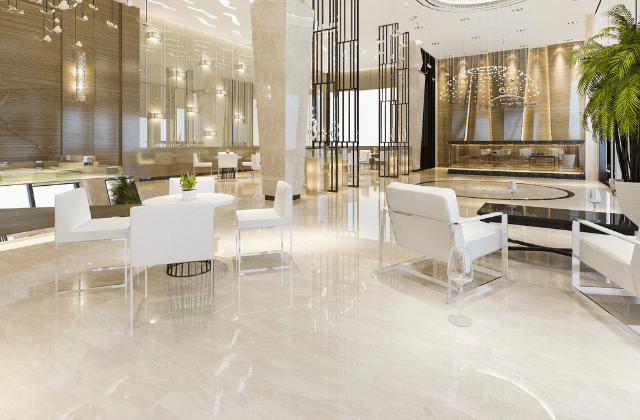
1. Tough as Nails (Well, Almost)
When we say porcelain tiles are durable, we mean it.
These bad boys can take on extra weight, foot traffic, harsh chemicals, and whatever else your life throws at them.
Great for commercial spaces, bathrooms, entryways, and even mudrooms.
2. Water? No Problem
If you want under-floor heating or need flooring in a wet area (like a bathroom, laundry room, or outdoor patio), porcelain tile flooring is your best friend.
It’s not just water resistant, it’s completely waterproof when installed correctly.
No sealing needed like with natural stone or some other flooring materials.
3. Easy-Peasy Maintenance
A quick regular sweeping, followed by a mop with mild cleaner, and you’re golden [source].
That non-porous surface keeps out dirt, stains, and germs.
It’s perfect if you don’t want to spend weekends scrubbing your floors.
4. Gorgeous Looks
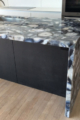
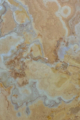
Want the look of wood, marble, or even concrete, but with the strength of porcelain? No problem.
Porcelain tiles come in stunning designs, from sleek and modern to rustic and earthy.
Plus, there are options for wall coverings, not just floors. The possibilities are endless.
5. Customization? Absolutely.
You can really create something special with porcelain tile installation.
Want a herringbone layout in your kitchen? A bold, patterned entryway? A spa-inspired bathroom?
The flexibility in porcelain floor tiles lets you make your space totally unique.
But Wait… Are There Any Downsides?
Sure, nothing’s perfect. Here are a few things to keep in mind:
- Initial investment: Porcelain tile can cost more per square foot than other flooring materials, but its durability makes it worth it. [source]
- Installation: These tiles are heavy, so you’ll want a pro to install them. DIY might not be your best bet here.
- Cold underfoot: In cooler climates, they can feel a bit chilly – unless you use that underfloor heating we mentioned.
- Slippery when wet: Especially if you choose a polished finish. Go for a textured finish in wet areas for extra grip.
Installing Porcelain Tile? Here’s What You Should Know
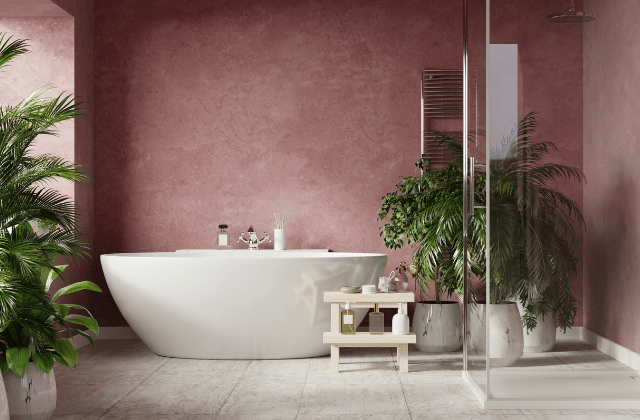
If you’re going to go with porcelain (great choice, by the way), proper installation is key.
Because the tiles are so hard, cutting and laying them takes special tools and expertise.
You’ll also want to pay attention to the grout lines.
Tight, clean lines not only look better but also help prevent water penetration over time.
Planning to install it on your walls too? Totally doable! Just keep in mind that porcelain tiles can be a bit heavy, so that’s something your installer should plan for.
Where Porcelain Really Shines

You can use porcelain just about anywhere, but here are some spots where it really stands out:
- Bathrooms – Say goodbye to soggy floors. It’s waterproof, resistant to moisture, and looks amazing.
- Kitchens – It can take spills, splashes, and splatters without staining.
- Outdoor spaces – Withstand the elements like a champ, from rain to higher temperatures.
- Living areas – Those textured finishes and wood-look styles can totally elevate your space.
- Commercial spaces – It’s built to survive high traffic, heavy equipment, and daily wear and tear.
Porcelain vs. Other Types of Tile
Let’s compare tile flooring options, just for fun:
| Feature / Property | Porcelain Tile | Natural Stone | Ceramic Tile |
| Durability | Highly durable, withstands heavy use | Durable but can chip/crack under heavy impact | Less durable, more prone to cracks and chips |
| Water Resistance | Completely waterproof, ideal for wet areas | Water resistant, but may require sealing | Water resistant, not fully waterproof |
| Maintenance | Low maintenance, easy to clean | Requires regular sealing and extra care | Moderate maintenance, can stain more easily |
| Installation | Needs a skilled installer due to the hardness | Heavier and trickier to install | Easier to cut and install |
| Grout Lines | Thin, precise grout lines are needed | Can have wider grout lines due to variation | Standard grout lines, easy to manage |
| Cost | Higher initial investment, long-term value | Often expensive, depending on the stone type | Budget-friendly option |
| Aesthetic Variety | Huge range of stunning designs and finishes | Naturally beautiful, unique patterns | Many design options, but fewer than porcelain |
| Suitability for High Traffic | Excellent for high-traffic areas and commercial spaces | Suitable, but may show wear faster | Best for low to moderate traffic areas |
| Excellent high-traffic & Chemicals | Highly resistant, great for kitchens/bathrooms | Can stain if unsealed, sensitive to chemicals | Somewhat resistant, less so than porcelain |
| Suitability for Outdoor Space | Perfect for patios, pools, and areas exposed to moisture | Can be used outside, but depends on the type | Not ideal outdoors due to moisture risk |
| Under Floor Heating Firendly | Ideal for under-floor heating setups | Compatible, but may retain cold longer | Suitable for heating, warms quickly |
So, while other materials may win in some areas (like comfort or ease of installation), porcelain tile flooring really shines when it comes to durability, waterproofing, and easy maintenance.
Final Thoughts
Whether you’re redesigning your dream bathroom, updating your kitchen, or creating a wow-factor entryway, porcelain floor tiles are one of the smartest flooring options out there.
They’re beautiful, practical, and built to last, plus, they’re a great way to add value to your home.
Want help picking the perfect tiles for your space, or not sure if porcelain is the right fit?
Let’s chat. Here at Cavastone, we can walk through the pros and cons, explore some gorgeous designs, and help you make a decision you’ll love for years to come.
Frequently Asked Questions:
What are porcelain tiles made of?
Fine clay, minerals like quartz, and fired at super high temperatures—that’s what gives them their strength and durability.
Are porcelain tiles really waterproof?
Yes! Proper porcelain tile installation = completely waterproof floors. Perfect for wet areas.
Can they handle high traffic?
Absolutely. They’re made for it. Bring on the kids, pets, and parties.
What about grout?
Good question. Use quality grout and sealing where necessary to keep those grout lines looking fresh.
Are they worth the cost?
In a word—yes. Their durability, easy care, and looks make them a long-term win.

Owner, Cavastone Group
With years of perseverance and pride in what we do we have become a very well known and positioned company in the Architectural and Design industry. The same perseverance, pride and attention to detail that made us become who we are, are the same qualities we strive to provide to all our customers.