Grout color has the power to turn a run of porcelain tile into one quiet, continuous surface, or into a bold graphic pattern. It is usually the last decision made before a project wraps. Get it right, and the tile does the talking. Get it wrong, and the grout lines compete with the material you worked hard to select. Our team at Cavastone helps architects, designers, and homeowners across South Florida choose grout color that fits both the design and the space, project after project.
Quick Answer: How to Choose a Grout Color
Grout color changes how a tile installation looks and how well it holds up over time, more than almost any other finishing decision. Match your grout to your tile for a calm, expansive look, or choose a contrasting shade to highlight pattern and layout. This guide covers how to choose the right grout color for a new installation. It also looks at how color behaves in wet areas and natural stone, and how to recolor grout that has already been set.
Not sure which direction fits your project? Our team can help you choose.
square feet of ceramic tile installed in the US each year, per the ANSI installation standard
grout joints should be at least three times a tile’s facial dimension variation, per ANSI A108.02
Should Grout Color Match or Contrast My Tile and Grout Lines?
- Matching grout color creates a calm, continuous surface and works well with patterned or busy tile; with wood-look tile, a close grout match also helps mimic natural wood joints.
- Contrasting grout color highlights the shape and layout of each tile, which suits simple layouts like subway tile or large-format porcelain.
- A shade in between the two, often called complementary grout, defines the grid without erasing it completely, letting you choose the look based on the desired level of definition.
Does Grout Color Affect How Much Maintenance I Will Need?
- Lighter grout colors show dirt, soap residue, and mineral deposits faster than darker shades.
- Darker grout hides daily wear well but can become a darker color over time in wet areas like showers from dirt, mildew, or mold.
- Medium tones, like warm gray and greige, tend to hide wear while still looking clean, so future discoloration is often less obvious.
Can I Change Grout Color After It Is Installed?
- Yes. A successful grout color change can be achieved with a grout colorant or permanently changed with an epoxy-based stain.
- Recoloring is almost always faster and less expensive than removing and replacing grout. However, you can still replace it if recoloring will not perform well or the grout is too damaged.
- Colorants adhere best to grout that has not been sealed, so check your installation history first, since sealed grout can make recoloring more difficult because adhesion is harder to achieve.
Should Floors and Walls Use the Same Grout Color?
- Using one grout color throughout a room ties the surfaces together and can make a small space feel larger.
- Floors typically benefit from a slightly darker or medium tone since they see more foot traffic and spills.
- Walls carry more flexibility, since they are not exposed to the same wear.
Is Epoxy Grout Worth the Extra Cost?
- Epoxy grouts are the higher-performance option for color consistency and stain resistance, resisting stains and holding their color far longer than standard cementitious grout.
- They perform well in kitchens, wet areas, and with porous materials like natural stone or large-format slabs, and they cure differently than cementitious grout, which helps support more uniform color.
- The higher price and more demanding application usually make sense for high-traffic or high-visibility spaces, but they are not typically recommended for submerged applications unless the manufacturer says otherwise.
In this guide
- Grout as a design tool: contrast vs matching
- How to choose grout color by tile color
- Light vs dark grout: practical pros and cons
- Room size, function, and lighting
- Different types of grout and how they affect color
- Testing grout colors before your final decision
- Visit the Cavastone showroom
- FAQ: common grout color questions
Grout as a Design Tool: Contrast vs Matching Grout
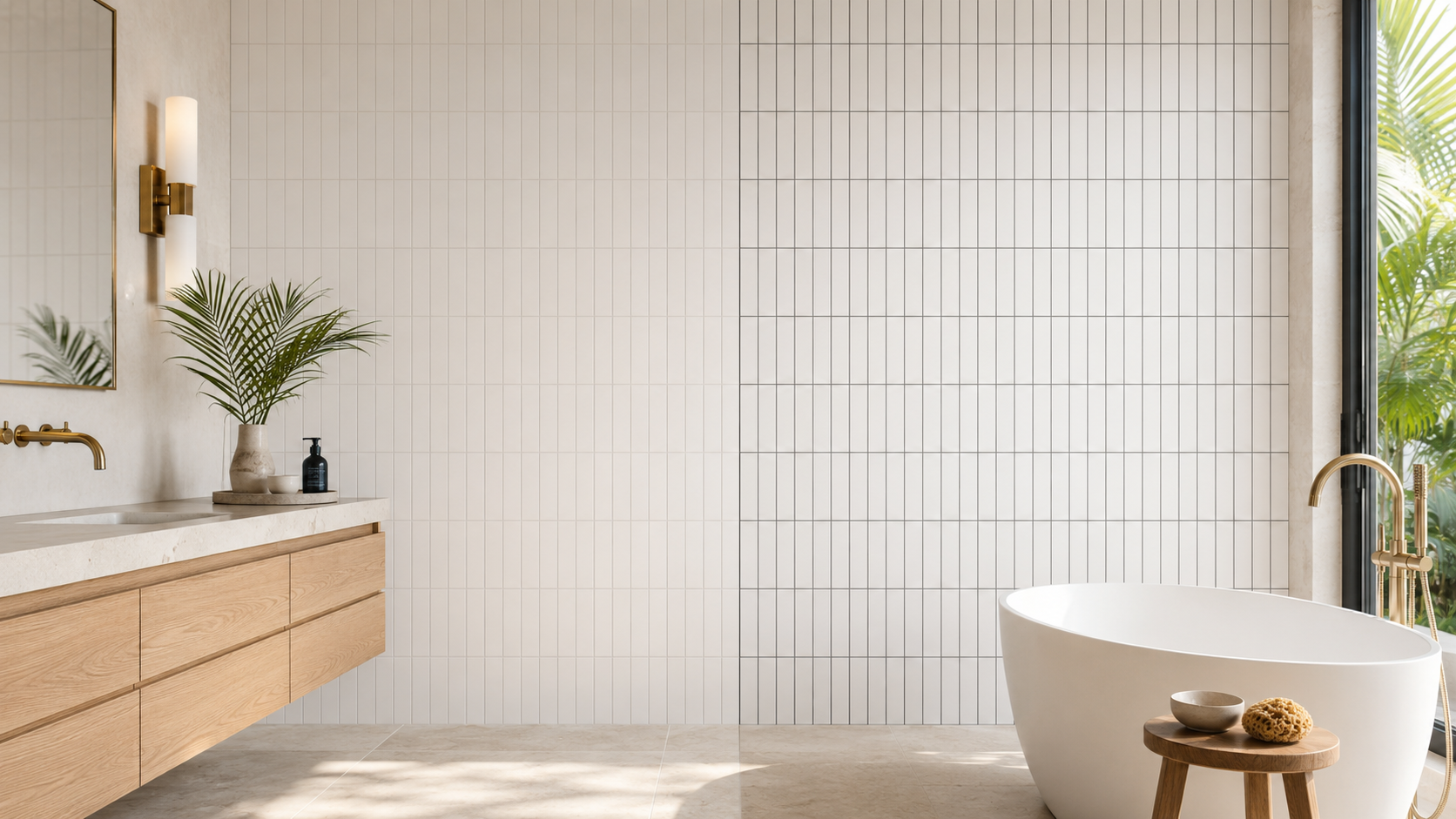
Grout looks like a small detail until it is installed, and then it becomes the grid that holds your entire tile design together.
That single decision shapes more of a room than most people expect before they start shopping for grout. Before you settle on a shade, it helps to know what grout color actually controls:
- The overall style of a room, from clean-lined and modern to warm and layered
- How much a tile pattern or layout stands out
- How easily a floor or wall shows dirt, soap scum, or mineral deposits
- How the space reads under natural versus artificial light
It also shapes how a space is maintained and how forgiving the floor or wall stays with everyday dirt and moisture. Choosing the right shade early, before the tile is set, saves the cost and disruption of recoloring or replacing grout later.
How to Choose the Right Grout Color for Your Tile
Most grout color decisions come down to three approaches: matching, contrasting, or landing somewhere in between.
Matching grout color keeps the tile as the star of the room
- When grout color sits close to the tile shade, the joints recede, and the surface reads as one continuous plane.
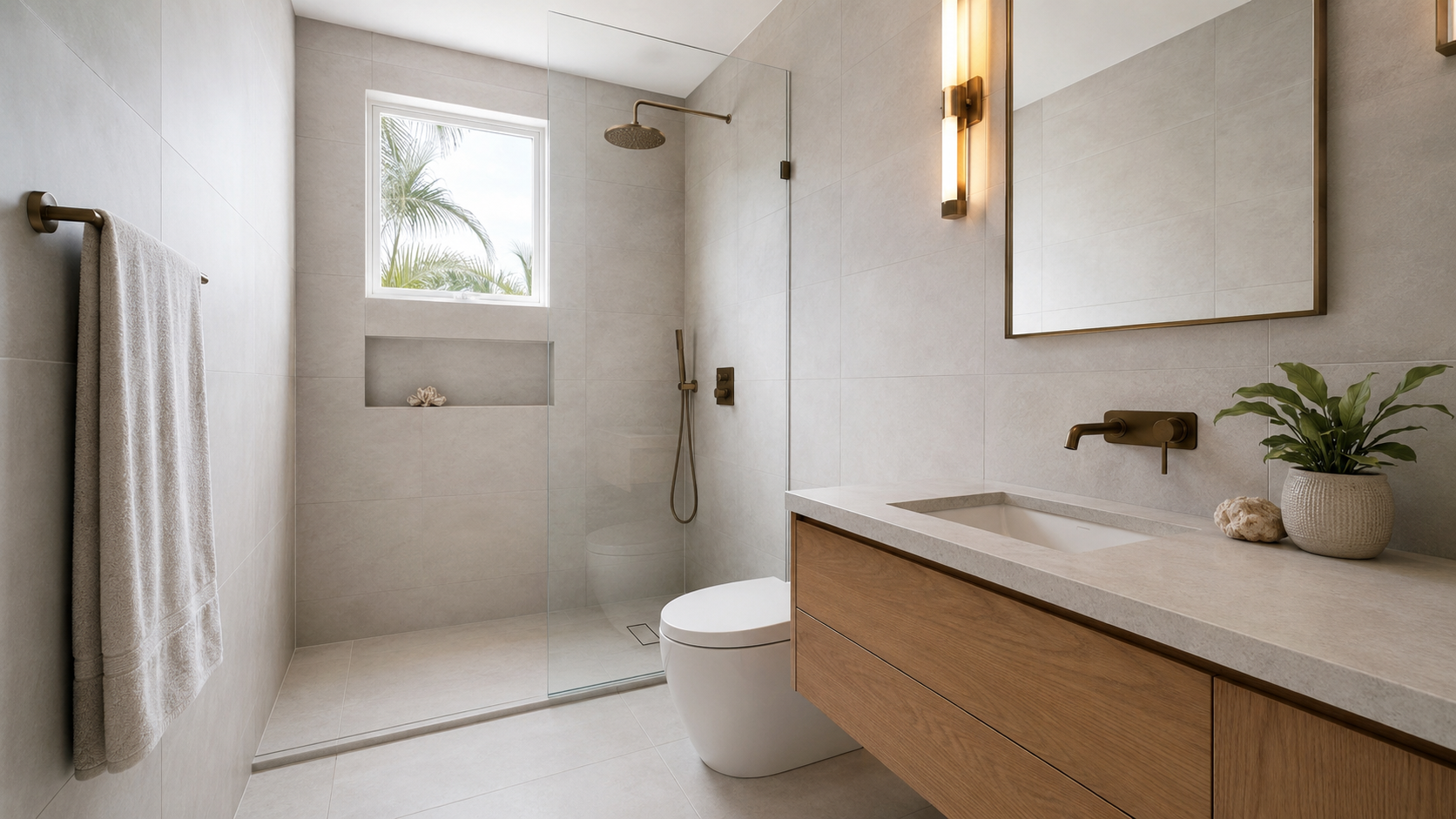
- This works especially well with large-format porcelain slabs, where fewer, thinner joints already keep the grid quiet, and with patterned or busy tile that does not need extra visual noise competing with it.
Contrasting grout does the opposite.
- A grout line noticeably lighter or darker than the tile outlines every piece and turns the layout itself into part of the design.
- Classic white subway tile with charcoal grout is the best-known example, and it works because the tile shape stays simple enough to carry the extra attention.
- Contrasting grout on a busy pattern, mosaic, or heavily veined stone can start to look cluttered rather than intentional.
Complementary grout splits the difference.
- A tone a few shades lighter or darker than the tile, within the same color family, defines the grid without overpowering it.
- Designers often reach for this approach on herringbone, hexagon, or other layouts where the pattern should stay visible without shouting.
Whatever direction you lean, pay attention to undertones as much as depth of color. A warm gray grout can look muddy next to a cool-toned porcelain, even when the two shades sit close in lightness.
Our team at Cavastone can help identify those undertones and narrow your options with physical samples. Joint width plays a role too, wider grout lines make the color you chose more prominent, while thinner lines let it fade into the background.
See these pairings in person. Visit our showroom in Boca Raton, Florida.
Grout Color by Room, Light, and Traffic
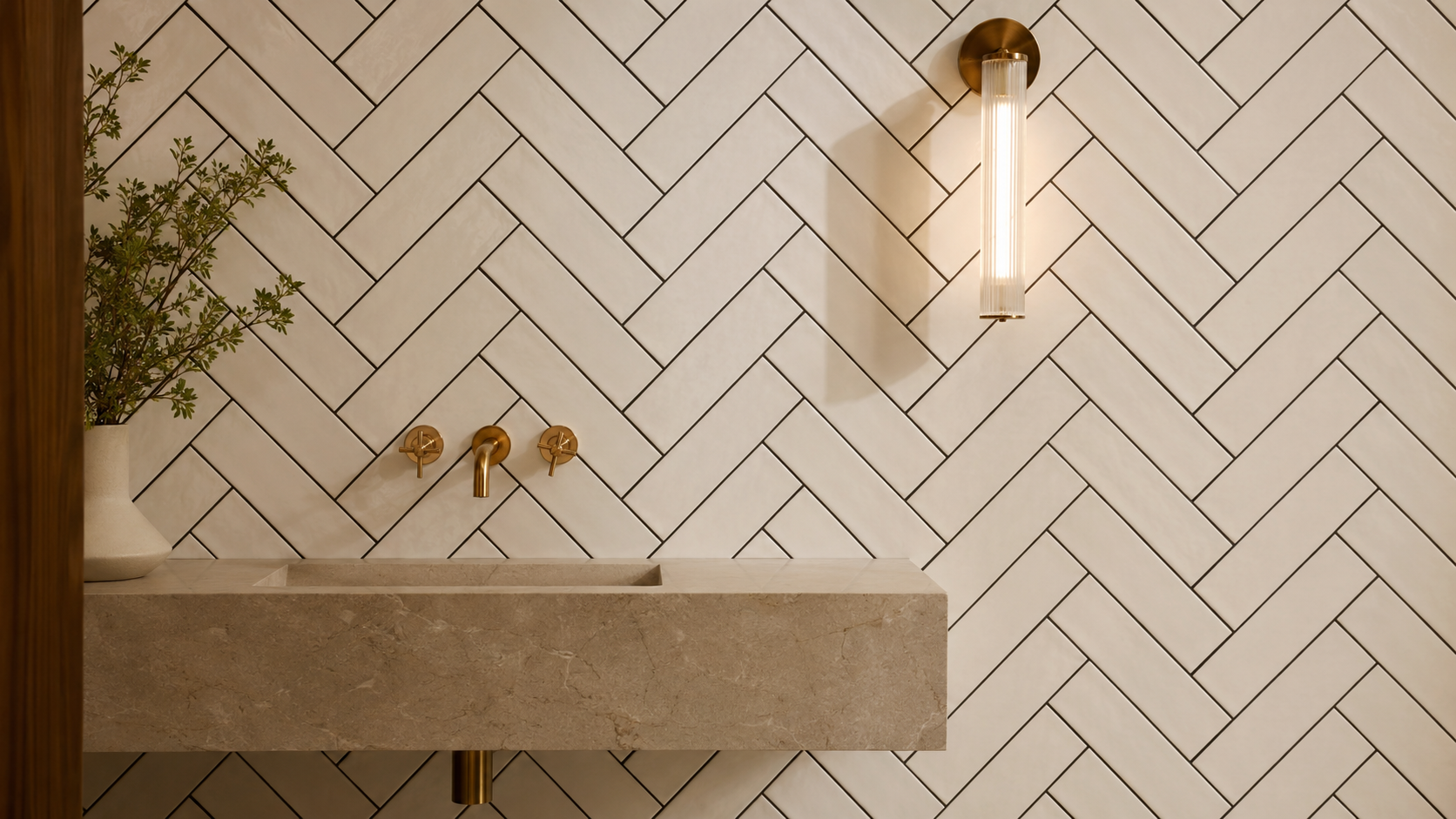
The same grout color can look different depending on where it goes and how the space is lit.
Floors versus walls
- Floors take more abuse than walls, from foot traffic to dropped pans to tracked-in dirt, so medium to darker grout color tends to hold up better visually over time.
- Walls do not carry that burden, which gives you more freedom to go lighter or bolder based on style alone.
Wet areas
- In a shower or around a tub, darker grout hides soap scum and daily grime well, but it can show mineral deposits and hard water buildup more than a mid-tone would.
- Lighter grout in wet areas looks crisp when new but needs more frequent cleaning and sealing to stay that way.
Light exposure
- Natural light tends to make grout colors look more vibrant and true to their actual tone.
- Artificial lighting, especially warm bulbs, can shift a neutral gray toward yellow or push a beige toward pink.
- If a room gets mostly artificial light, test your grout sample under that same lighting before you finalize a color.
Room size
- Lighter grout can help a small bathroom feel more open, since it reflects more light and keeps sightlines uninterrupted.
- Darker grout in a larger room can add depth and make the space feel more grounded.
The Cavastone design team, with 20+ years serving South Florida
Popular Grout Colors and What They Communicate
A handful of grout colors show up again and again in high-end tile work, each for a good reason.
- White grout creates the cleanest, most classic look, especially with white or light tile, but it is also the least forgiving. It shows dirt and staining faster than any other color and needs regular sealing to stay looking fresh.
- Warm gray and greige are among the most versatile choices available. They read as close to neutral with almost any tile, hide daily wear better than white, and rarely clash with warm or cool undertones.
- Medium gray and beige are considered the easiest grout colors to work with. The pigments in these mid-tones are more forgiving of small application errors and the natural color variation that comes with any cement-based grout. According to the Tile Council of North America, certain colors are harder to control than others. That is one reason mid-tones remain the default recommendation for most projects.
- Dark and black grout delivers a graphic, architectural look and hides everyday dirt exceptionally well. In wet areas, it can make mineral deposits and hard water spots more visible than a mid-tone would.
- Colored grout, in shades like blue, green, or terracotta, adds a distinct design touch but needs to be chosen alongside the tile, not after it, since the wrong pairing can clash instead of complement.
Choosing Grout Color for Natural Stone vs Porcelain
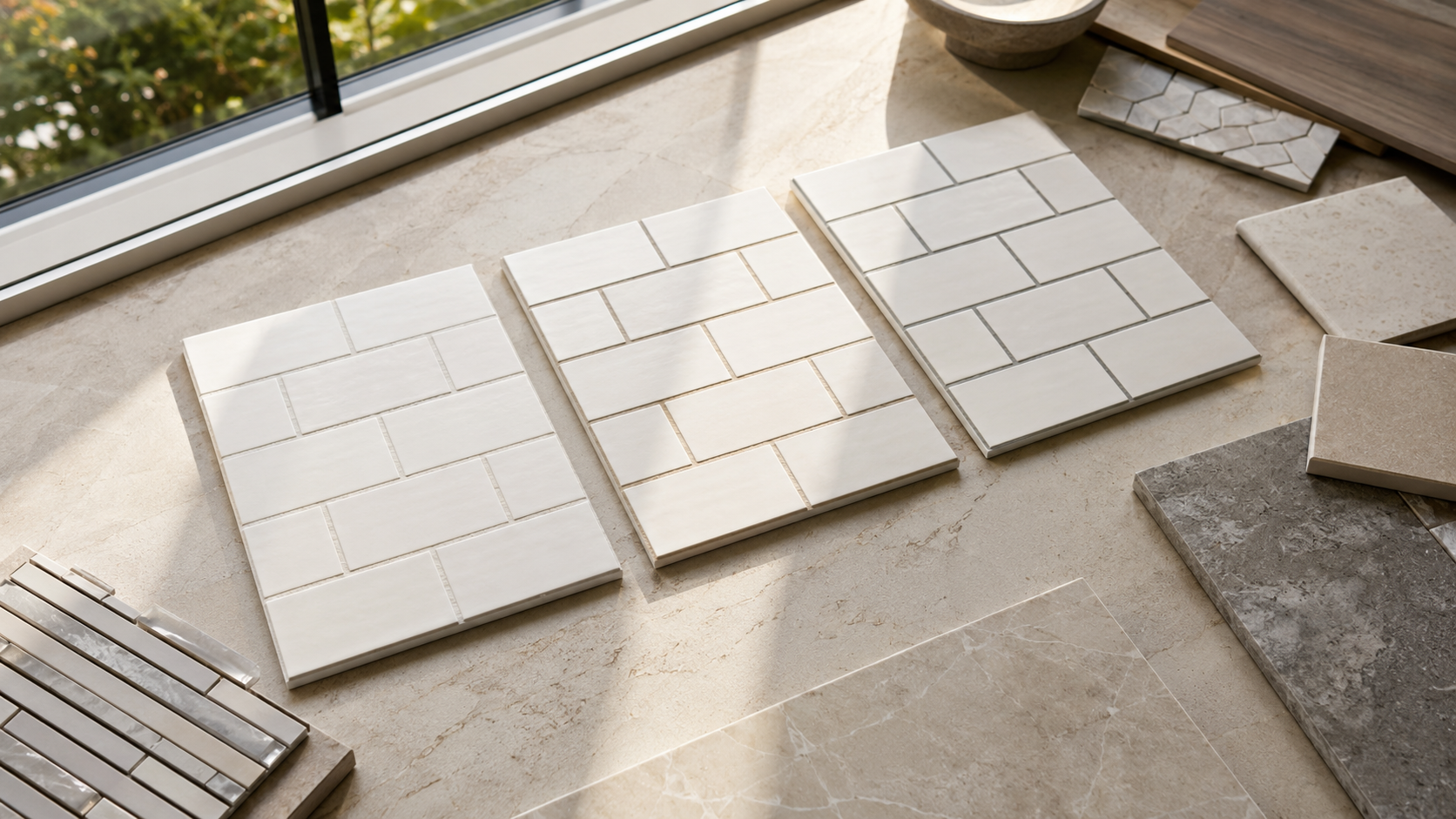
Porcelain and natural stone behave differently when it comes to grout, and the color decision should follow the material.
Porcelain
- Porcelain tile has a dense, low-porosity surface, which means grout color reads predictably and stays close to the sample you tested.
- This makes porcelain a forgiving choice if you want to experiment with a bolder or more contrasting grout color, since the tile itself will not shift the outcome.
Natural Stone
- Natural stone, including marble, travertine, and limestone, is porous by nature, and that changes the process.
- Before grouting any natural stone, the surface needs a penetrating sealer to keep grout pigment from staining directly into the stone.
- The Natural Stone Institute’s education programs teach installers to seal porous stone ahead of grouting, which prevents this kind of staining and reduces grout haze on the finished surface.
- Skip this step, and even a well-chosen grout color can leave a permanent mark on the stone around it.
- Stone also tends to favor a narrower color palette.
- Light-colored marble generally calls for a lighter grout to reduce the risk of staining.
- At the same time, travertine’s warm, earthy tones pair naturally with beige, taupe, or warm gray grout that echoes the stone rather than competing with it.
Cementitious vs Epoxy Grout: Which Fits Your Project
Cementitious grout
- Cementitious grout is the most common option and comes in sanded and unsanded formulas, depending on your joint width.
- It offers the widest color range and the lowest cost.
- Standard cementitious grout can vary in color from batch to batch, though, and will pick up stains over time unless it is sealed and resealed on a regular schedule, if recommended.
- Pre-mixed, single-component formulas address some of this by controlling pigment consistency during manufacturing, which reduces labor and avoids manually adjusting the mix after the addition of water or colorant.
- It is also crack-resistant, helps control shrinkage, and works best with cleaners that are compatible with the product.
Epoxy grout
- Epoxy grout costs more and takes more skill to install, but it holds its color far longer, resists stains, and does not require sealing at all.
- It stands as the standard choice for commercial kitchens, high-traffic hospitality floors, and porous materials like natural stone or large-format porcelain slabs, where consistency and durability matter more than upfront cost.
- Color-consistent, fast-setting epoxy formulas are common specifications on commercial and luxury residential projects for exactly this reason.
For most residential projects, a quality cementitious grout with proper sealing gets the job done well. For commercial specifications, wet environments, or any space where the grout color needs to hold up under heavy use, epoxy is worth the investment.
How to Change or Refresh the Color of Existing Grout
Grout color is not fixed forever.
Good results are possible when the grout is sound, and the surface is prepared correctly, so your tile might still be in good shape even when the grout looks dated, stained, or simply wrong for a refreshed design. In this case, recoloring is almost always faster and less expensive than tearing it out and starting over.
Grout colorants are pigmented sealants applied directly over existing grout lines. They work best on grout that has not already been sealed, since a sealed surface will not absorb a new colorant evenly.
Before applying any colorant, the grout needs a thorough cleaning to remove dirt, soap residue, and old sealer, since several things left on the grout surface can interfere with even color.
For a more permanent change, epoxy-based grout stains bond to the grout surface and resist wear, moisture, and cleaning products far better than a standard colorant. Testing a small section first helps confirm how the product will perform, which makes this route a smart choice for high-traffic floors or wet areas where the new color needs to last for years, not months.
Recoloring will not fix cracked, crumbling, or missing grout.
If grout damage is the real problem, no amount of colorant will hold, and the joints need repair or replacement before a color change makes sense.
A qualified tile professional can assess whether your existing grout is a good candidate for recoloring or whether replacement is the better option.
Keeping Your Grout Color Looking Its Best
Grout color is only as good as the maintenance behind it, and a few habits make a real difference over time.
Seal on a schedule
- Sealing slows how quickly grout absorbs stains and helps the original color hold longer, especially in kitchens, bathrooms, and other high-moisture areas.
- Most cementitious grout should fully cure for a few days before sealing, or only as recommended by the manufacturer, and resealing every twelve to eighteen months in high-traffic spaces can help. However, the right interval depends on the sealer and the location.
- Our post on common grout sealing myths covers a few misconceptions worth knowing before you skip this step.
Clean with the right products
- Harsh acidic cleaners can strip color and sealer from grout over time, especially on natural stone installations.
- A pH-neutral cleaner that is compatible with the grout and surrounding tile helps protect both, and our guide to cleaning porcelain tile walks through a routine that keeps both looking new.
Get the installation right the first time.
- Blotchy, inconsistent grout color is often caused by too much water, rushed cleanup, or improper mixing, and uneven discoloration is not normal.
- Working with an experienced installer who mixes grout to manufacturer specifications and follows proper cleanup timing goes a long way toward protecting the color you chose.
Why Cavastone
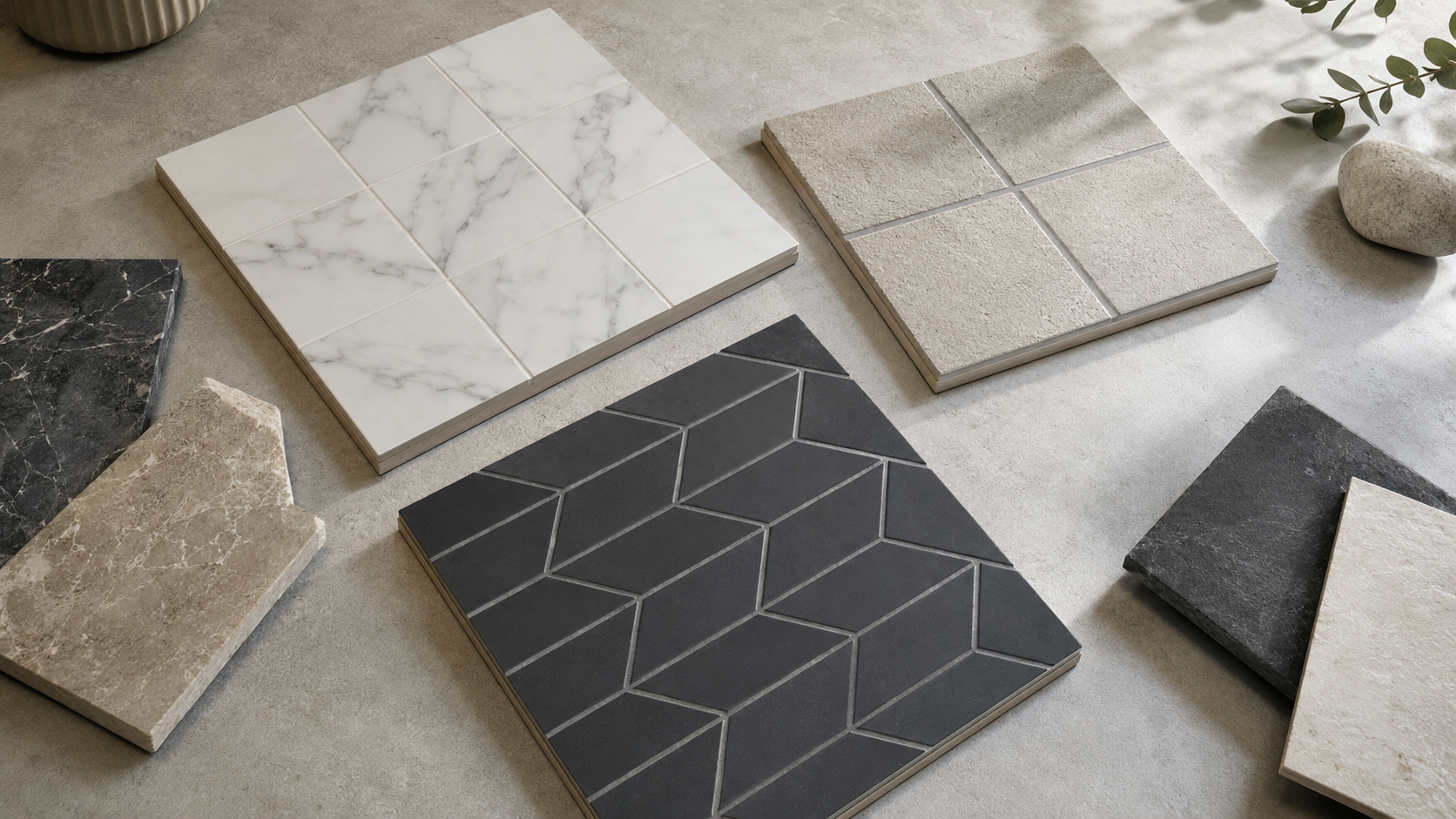
If you are still choosing tile or stone and want to know which grout color belongs in the mix, our team is on hand to help. With two decades spent guiding architects, designers, contractors, and homeowners across South Florida, we have the eye and the expertise to help you land on the right tile and grout color choice for your space.
Cavastone has sourced porcelain, marble, and natural stone for that same audience since Connie Davalos founded the company in 2006. Many of our collections come directly from quarries and workshops in Spain and Italy. Several are not available anywhere else in the South Florida market, which means the tile you choose and the grout that frames it stay genuinely your own.
Visit our Boca Raton showroom, where seeing tile and grout samples side by side makes the decision easier, call us at 561-994-9100, or reach out to our team to get started.
Ask AI about this guide
Frequently Asked Questions About Grout Color
What Is the Best Grout Color for a Bathroom?
Warm gray and greige are the most popular grout colors for bathrooms because they hide daily wear without looking dark or heavy. White grout looks classic but can turn a darker color over time from soap scum, mildew, or mold buildup, so it needs more frequent cleaning and sealing in a wet space. If you want a small bathroom to feel larger, a lighter grout color that is close to your tile shade will keep the surface looking open and continuous.
Should Grout Color Match the Tile or Contrast With It?
It depends on the effect you want. Matching grout color keeps the tile as the focus and works well with busy patterns, mosaics, or large-format porcelain slabs. Contrasting grout highlights the shape and layout of each tile, which suits simple formats like subway tile or hexagon patterns where the grid itself becomes part of the design.
Can Grout Color Be Changed Without Removing the Tile?
Yes, and good results can be achieved without removing tile when the existing grout is clean, porous enough, and structurally sound, making it one of the most cost-effective updates you can make to an existing tile installation. A grout colorant can refresh the shade, though sealed grout can make the process more difficult, while an epoxy-based stain offers a more permanent color change with better resistance to wear. Both routes require the existing grout to be clean and structurally sound before any color is applied.
What Grout Color Hides Dirt the Best?
Medium to dark grout colors, such as warm gray, greige, or charcoal, hide everyday dirt and grime far better than white or very light shades. In wet areas like showers, darker grout can still reveal mineral deposits over time, so a mid-tone often ends up being the most practical choice for both dry and wet locations.
Is Epoxy Grout Better Than Cementitious Grout for Color?
Epoxy grout holds its original color longer than standard cementitious grout because it resists staining and does not require sealing. Cementitious grout costs less and offers a wider range of colors, but it can shift in tone over time without regular sealing and cleaning. For commercial kitchens, hospitality floors, or natural stone installations, epoxy grouts are usually the better long-term choice for color retention.
How Often Does Grout Need to Be Resealed to Protect Its Color?
Most cementitious grout should be allowed to cure for several days before the first sealing, as recommended by the manufacturer, and it usually benefits from resealing every twelve to eighteen months in high-traffic or high-moisture areas, and less often in low-traffic spaces. Epoxy grout does not need resealing at all, which is part of why it holds its grout color so consistently. Checking your grout with a simple water-drop test, where beading water means the seal is still working, is an easy way to know when it is time to reseal.
What Is the Easiest Grout Color to Keep Looking Consistent?
Medium grays and beiges are widely considered the easiest grout colors to work with. Small variations are often caused by differences in mixing, water, or curing conditions, and they are far less noticeable in these mid-tones than they would be in bright white or jet black grout. These mid-tones also tend to hide the natural color drift that happens as cement-based grout ages and gets cleaned over the years.
Does Grout Color Matter for Natural Stone Tile?
Grout color matters even more with natural stone than with porcelain, since porous materials like marble, travertine, and limestone can absorb pigment directly from unsealed grout. Sealing the stone before grouting protects it from staining and keeps your chosen grout color true to the sample you tested. Whether you are working with porcelain or natural stone, taking the time to test samples in your own space, under your own lighting, remains the best way to choose the right grout color.
Keep exploring
Ready to choose with confidence? Book a consultation with the Cavastone team and we will help you pair tile and grout for a result you will love for years. Explore more at cavastone.com.

Owner, Cavastone Group
With years of perseverance and pride in what we do we have become a very well known and positioned company in the Architectural and Design industry. The same perseverance, pride and attention to detail that made us become who we are, are the same qualities we strive to provide to all our customers.