Quick Answer: Why Does Tile Grout Crack?
Tile grout cracks when the layers beneath it move or when the grout itself cured weak. The Tile Council of North America points to four frequent causes: substrate movement, joints not packed full, too much mixing liquid, and grout worked past its pot life. Cracks that keep returning signal movement that deserves professional assessment.
Planning a tile or stone project in South Florida?
Talk through materials, joint widths, and finishes before installation day.
Understanding why tile grout cracks starts below the surface, in the substrate and mortar that support your porcelain tile or natural stone. Grout rarely fails on its own. This guide explains what a cracked joint is telling you and how to keep the damage from coming back.
What You Should Know Before You Start
Is a Hairline Crack Cosmetic or Structural?
- One thin crack in fresh grout often traces to cure shrinkage and stays cosmetic.
- Cracks that widen, spread, or pair with hollow tile point to movement below.
What Does Repeated Cracking Usually Mean?
- Grout that cracks again after a clean repair almost always sits over something that moves.
Does Loose or Rocking Tile Change the Diagnosis?
- Yes. Loose tile shifts the question to the bond and the substrate.
- Thin mortar coverage lets tile shift under load, which breaks the grout above it.
When Should a Qualified Installer Inspect the Assembly?
- Call one for recurring cracks, moving tile, or moisture staining in wet areas.
- TCNA notes that a field inspection may be needed when the cause stays unclear.
Movement
Substrate deflection leads the TCNA list of crack causes.
Packing
Grout that bridges a joint instead of filling it cures weak, per TCNA.
Mixing Liquid
Extra water leaves pinholes and weak grout, per TCNA.
Recurring Cracks
TCNA advises a field inspection when the cause stays unclear.
In This Guide
- What Grout Actually Does in a Tile Assembly
- Why Tile Grout Cracks: The Most Common Causes
- How to Read Crack Patterns and Warning Signs
- Why Floor Grout and Shower Grout Fail Differently
- Why Tile Grout Cracks Again After a Repair
- How to Prevent Grout Cracks During Specification and Installation
- What Sealing and Maintenance Can and Cannot Fix
- Why Cavastone for Your Next Tile and Stone Project
- FAQ: Common Grout Cracking Questions
What Grout Actually Does in a Tile Assembly
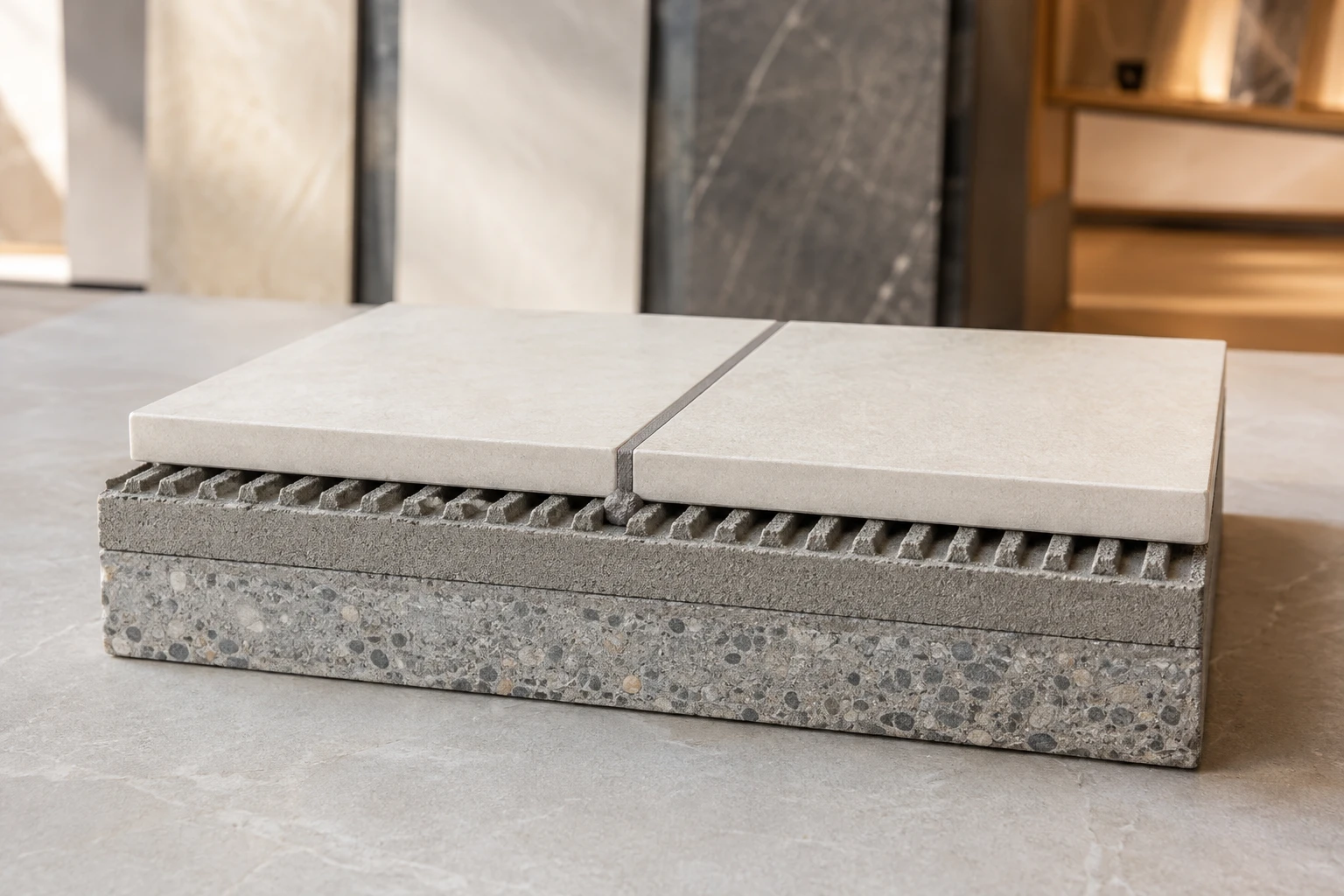
A tile surface is a stack of layers: the substrate, the mortar bed, the tile, and the grout. Mortar bonds the tile to the substrate. Grout fills the joints between tiles. Grout was never designed to hold anything in place.
Cementitious grout cures rigid. It finishes the surface and shapes the field as much as your grout color choice does. What it cannot do is flex. When the layers below shift, the joint splits to relieve the stress.
One boundary worth naming: grout resists surface moisture, but it does not waterproof an installation. Waterproofing depends on the full assembly behind the tile.
Why Tile Grout Cracks: The Most Common Causes
The Tile Council of North America names four common causes of cracked grout. Every one starts before the grout meets the joint.
- Excess substrate deflection. The floor flexes under load, and the rigid grout above it splits. Severe deflection can crack the tile itself.
- Joints not packed full. On wall tile especially, light pressure lets grout bridge the joint instead of reaching the back. The surface looks finished but has little strength.
- Too much mixing liquid. Extra water or polymer additive has to evaporate, which leaves pinholes and weak grout.
- Grout worked past its pot life. Cement begins curing in the bucket. Retempered grout still packs, but it cures crumbly instead of hard.
Schluter identifies movement stress and water penetration as the major drivers of damage in tiled floors, with thin mortar coverage leaving tile free to shift. TCNA adds that dry areas need at least 80% mortar coverage, and that a tile field needs movement joints to absorb expansion and contraction.
Good to Know: Grout type follows joint width. TCNA cautions that sand grains can bridge joints narrower than 1/8 inch, leaving a thin surface crust with little strength. Narrow joints call for unsanded grout.
How to Read Crack Patterns and Warning Signs
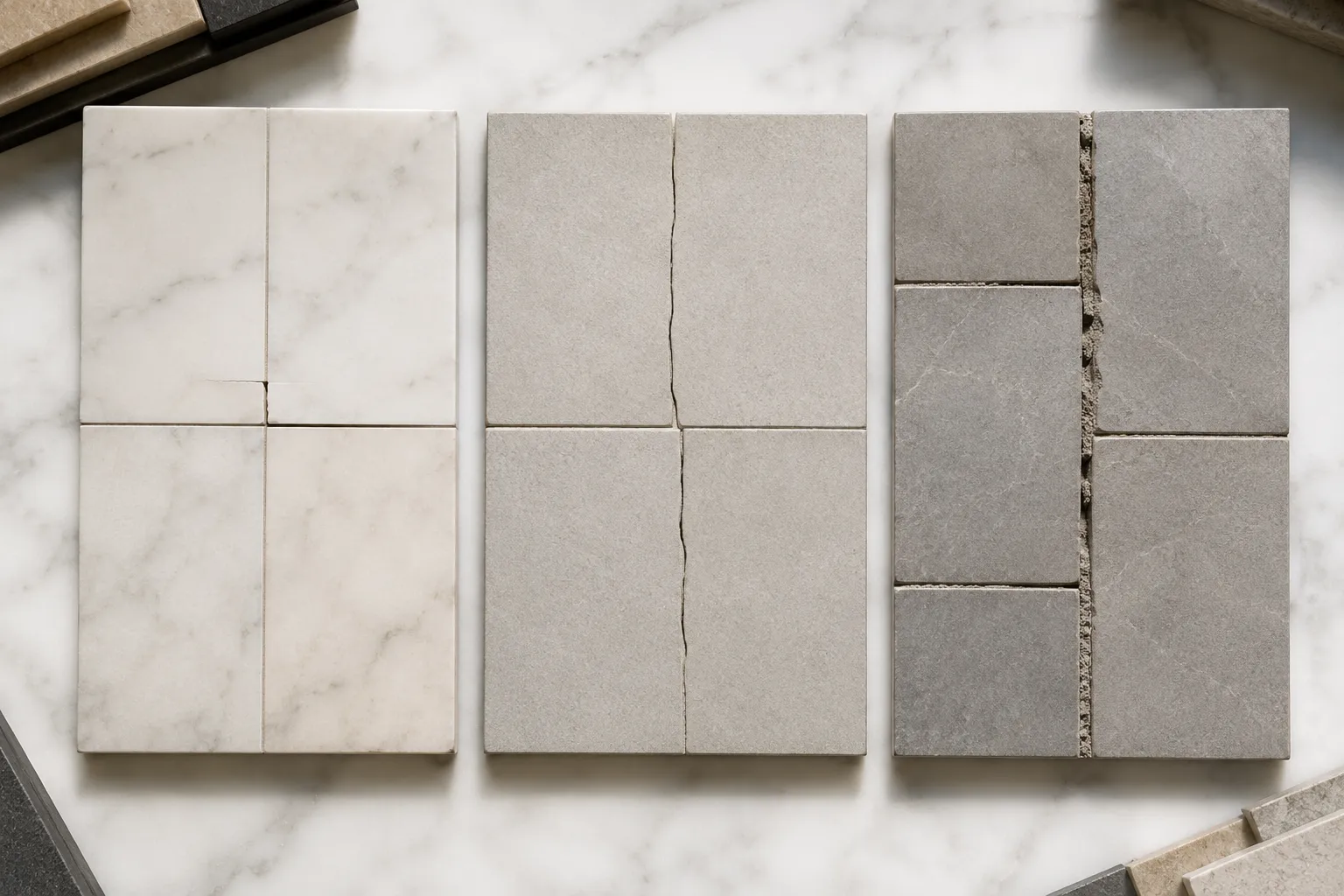
The crack pattern usually points to the cause.
- One hairline crack in fresh grout. Shrinkage during the cure. Often cosmetic. Watch it.
- A straight crack that reopens along one line. Movement concentrated there, often a subfloor seam or framing member below.
- Cracks at perimeters, doorways, and corners. A tile field expanding without movement joints to absorb it.
- Powdery, crumbling grout. A weak cure from too much liquid, retempered grout, or bridged joints.
- Hollow-sounding or rocking tile. A bond problem below the grout, which deserves assessment rather than a patch.
- Darkened joints or staining in wet areas. A possible moisture path worth checking.
Why Floor Grout and Shower Grout Fail Differently
Floors fail under load. Joist spacing, span, subfloor thickness, and traffic decide how much the assembly deflects underfoot. Add a heavy island, and a marginal floor telegraphs every flex into the grout lines.
Showers carry almost no structural load, yet their grout cracks constantly. The reason is geometry. Corners, curbs, and wall-to-floor junctions join planes that move independently. Movement joint guidance calls for flexible sealant at those changes of plane rather than rigid grout, which is why grouted corners split first.
A cracked shower joint does not automatically mean a leak. It does open a path. Treat staining or persistent damp as a signal to check further.
Why Tile Grout Cracks Again After a Repair
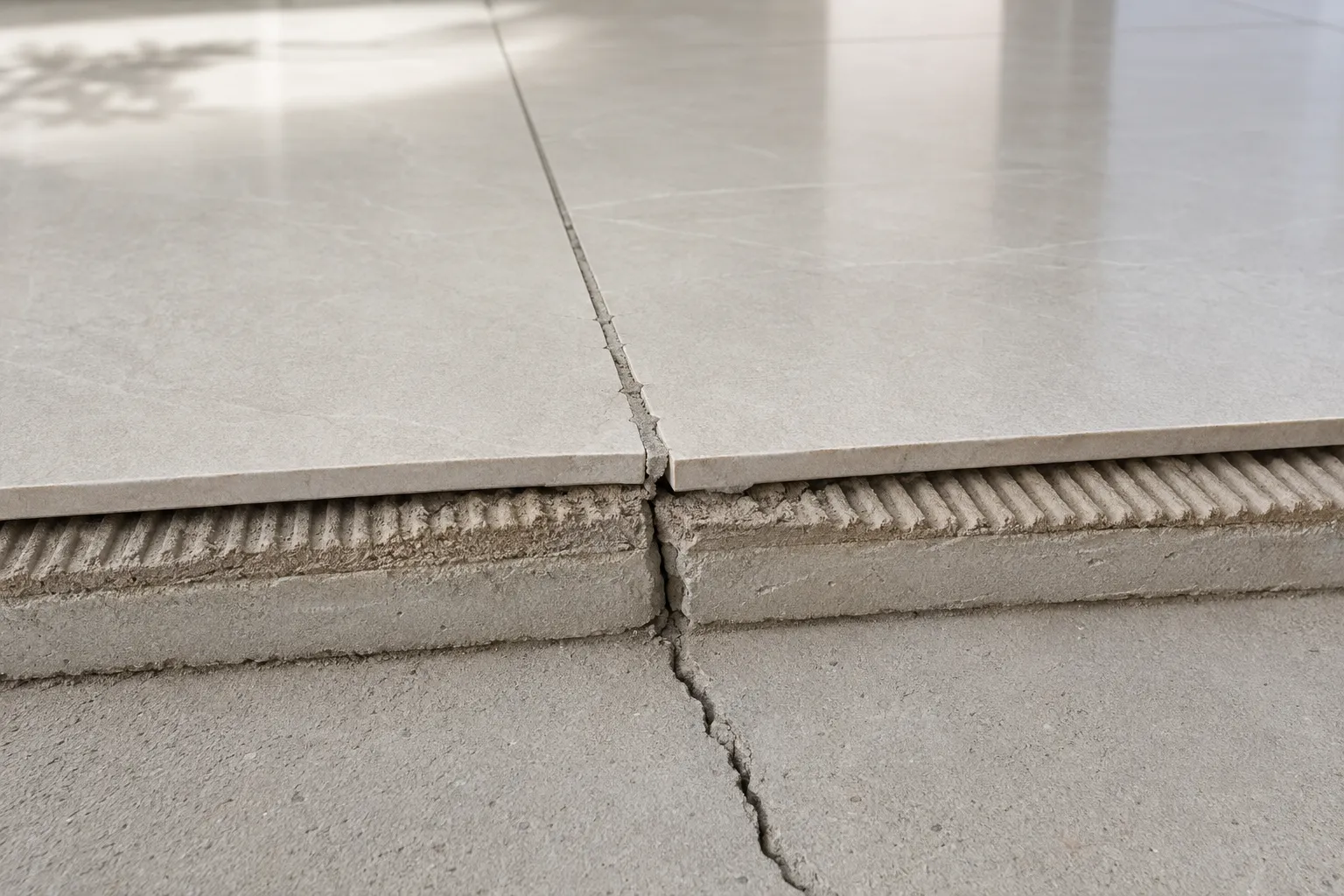
A recurring crack is a messenger. Fresh grout placed over a moving substrate recracks on schedule. The repair addressed the symptom and left the cause in place.
Preparation matters too. TCNA is direct here: joints cannot simply be grouted over. At least two thirds of the old grout depth must come out for the replacement to bond and cure as a solid mass.
The decision path is short. A stable, one-time hairline crack is a reasonable cosmetic fix, and our walkthrough on how to regrout tile covers that work. Recurring cracks, loose tile, or moisture signs call for a field assessment before anyone opens a bag of grout.
Watch Out: If tile sounds hollow, rocks underfoot, or sheds grout in chunks, stop patching. A cosmetic repair over a failing bond hides the problem while damage spreads. Bring in a qualified installer first.
How to Prevent Grout Cracks During Specification and Installation
Prevention happens on paper. Architects and designers hold more influence at specification than anyone holds on installation day.
Start with the structure. Confirm the framing meets the L/360 deflection standard and the substrate is flat and stiff, since large-format tile carries tighter flatness tolerances under ANSI standards. Specify full mortar coverage, with large-and-heavy-tile (LHT) mortar where the format demands it.
Then plan the joints. Locate movement joints at perimeters and changes of plane, match grout type to joint width and environment, and hold the crew to the manufacturer instructions for mixing ratios and pot life. A field of marble tile and slabs deserves joint planning as careful as the material itself.
Specification Checklist
- ✓ Confirm substrate stiffness and flatness before tile arrives
- ✓ Specify mortar coverage, with LHT mortar for large-format tile
- ✓ Plan movement joints at perimeters and changes of plane
- ✓ Match grout type to joint width and environment
- ✓ Hold manufacturer mixing ratios and pot life on site
Pro Tip: Decide the grout joint width when you select the tile, not on installation day. Reviewing tile, joint width, and grout type with samples in hand prevents mismatches that crack later.
What Sealing and Maintenance Can and Cannot Fix

Sealing manages stains and surface moisture on cementitious grout. It cannot restrain movement, so it cannot stop cracks driven by deflection or missing joints. We unpack the details in our guide to grout sealing myths.
Sensible care still earns its keep. Clean with gentle products, and avoid flooding joints with water, a habit TCNA warns against even during cleanup. Well-kept joints stay readable, so you spot a new crack early. Walk wet areas and high-traffic lines once a year.
Ask AI About This Guide
Why Cavastone for Your Next Tile and Stone Project

Cavastone has supplied tile and natural stone to South Florida architects, interior designers, contractors, and homeowners since 2006. We are a materials house, not an installer. Cavastone’s material expertise lives in helping you choose surfaces and joint plans that perform as beautifully as they look.
We help design professionals and homeowners select materials and plan grout joints early, so the finished surface holds up to the way the space is used.The Cavastone team, Cavastone
Compare Materials in Person
See porcelain, marble, and natural stone side by side at 646 Park of Commerce Way, Boca Raton, FL 33487 or call 561-994-9100.
FAQ: Common Grout Cracking Questions
Why Does Floor Tile Grout Crack?
The short version of why tile grout cracks on floors is movement. Undersized joists, long spans, or a thin subfloor let the floor flex under load, and rigid grout splits to relieve the stress.
Are Hairline Cracks in Grout Normal?
One hairline crack in fresh grout often comes from cure shrinkage and stays cosmetic. Watch it for a few weeks. If it widens, spreads, or returns after a repair, treat it as a movement signal.
Why Does My Grout Keep Cracking in the Same Spot?
A crack that reopens on the same line marks a place where the assembly moves. Solve the movement first, then regrout.
Why Is the Grout in My Shower Corners Cracking?
Corners join two planes that move independently, so rigid grout placed there tends to split. Movement joint guidance calls for flexible sealant at changes of plane instead of grout. A qualified installer can confirm the right treatment.
What Causes Grout to Crack and Come Loose?
Grout that cracks and crumbles usually cured weak. Too much mixing liquid, grout worked past its pot life, or bridged joints all leave a fragile joint that powders and releases in chunks.
Do Cracked Grout Lines Mean Water Is Getting Under the Tile?
Not automatically, since waterproofing depends on the full assembly rather than the joint alone. A crack does open a path. Watch for darkened joints, staining, or persistent damp.
Why Do Tile Installations Need Movement Joints?
Every tile field expands and contracts, and movement joints give that motion a soft place to go. Without them, stress concentrates at perimeters, doorways, and corners, and the grout cracks there first.
When Will a Grout Repair Not Hold?
A repair fails when the cause stays in place. TCNA notes that joints cannot simply be grouted over. At least two thirds of the old grout depth must come out, and even a clean regrout reopens over movement.
Keep Exploring
Plan Your Next Surface with Confidence
Solve the cause first, then choose a material worthy of the space. Now that you understand why tile grout cracks, our team can help you plan the right tile, stone, and joints.

Owner, Cavastone Group
With years of perseverance and pride in what we do we have become a very well known and positioned company in the Architectural and Design industry. The same perseverance, pride and attention to detail that made us become who we are, are the same qualities we strive to provide to all our customers.