
Quick Answer: Real Timelines by Room, Material, and Prep
How long does tile installation take? For an average-sized room, plan on 2 to 5 days from tear-out to grout, plus 24 to 72 hours of cure time before the space handles regular use. A small bathroom often wraps in 1 to 2 days, while a whole-home renovation with multiple rooms, custom patterns, or natural stone can stretch to two weeks or more. Homeowners, architects, designers, contractors, and anyone planning a renovation all care about those timeframes, since they affect scheduling, material deliveries, trade coordination, and how soon you can use the floor without risking the finish. This guide breaks down tile installation timelines by room size and type, the prep issues that change the schedule, grout drying and curing windows, the difference between natural stone and porcelain tile, and the practical steps that help avoid delays.
What You Should Know Before You Start
Will Your Subfloor Add Extra Days?
- A cracked, uneven, or moisture-damaged subfloor adds prep time before checking whether tile can go over an existing floor and before any tile goes down.
- Concrete slabs need a moisture test and, in older homes, a crack-isolation membrane.
- Wood subfloors often need an uncoupling membrane to meet deflection standards.
- Budget an extra 1 to 3 days whenever the subfloor needs repair.
Does Your Tile Size Change the Schedule?
- Large-format tile covers more square footage per piece, so crews set it faster in open rooms.
- Small mosaics and intricate patterns take longer because of the added layout and cutting work, including cutting tiles for a clean fit at the edges.
- Natural stone often needs extra time for sealing before and after grout.
Should You Handle Demo Yourself?
- Removing old tiles or existing tiles yourself before the new install can shave a day off the schedule, but only if done cleanly.
- A rushed tear-out that damages the subfloor costs more time than it saves.
- Ask your installer whether they prefer to handle demo to protect the schedule and the warranty.
What About Plumbing and Fixtures?
- A toilet, vanities, and shower fixtures typically come off before tile goes down and go back on after grout cures.
- Wet areas need a waterproofing membrane before setting tile, which adds a full curing day.
- Coordinate your plumber’s schedule around the installer’s timeline to avoid a stalled bathroom.
How Far Ahead Should You Order Materials?
- Order tile, trim, and grout at least 2 to 3 weeks before your install date.
- Confirm the full quantity, including overage for cuts, arrives before demo begins.
- A mid-project material change ranks among the most common causes of delay.
Table of Contents
- Installing Tile Flooring Timeline: The Quick Breakdown
- What Affects Your Tile Installation Timeline: Cutting Tiles and More
- Tile Installation Timeline by Room
- How Long to Wait Before Walking on New Tile
- How Long Does Grout Take to Dry and Cure
- How Large-Format Tile Changes Your Installation Timeline
- Natural Stone vs. Porcelain: Timeline Differences
- How to Avoid Costly Tile Installation Delays
Free Download
The Complete Tile Installation Timeline Guide
Get this entire guide as a printable PDF. Inside, you will find a visual project timeline, a room-by-room comparison chart, a tile size and measurement reference, and a pre-installation planning checklist you can share with your installer.
Installing Tile Flooring Timeline: The Quick Breakdown
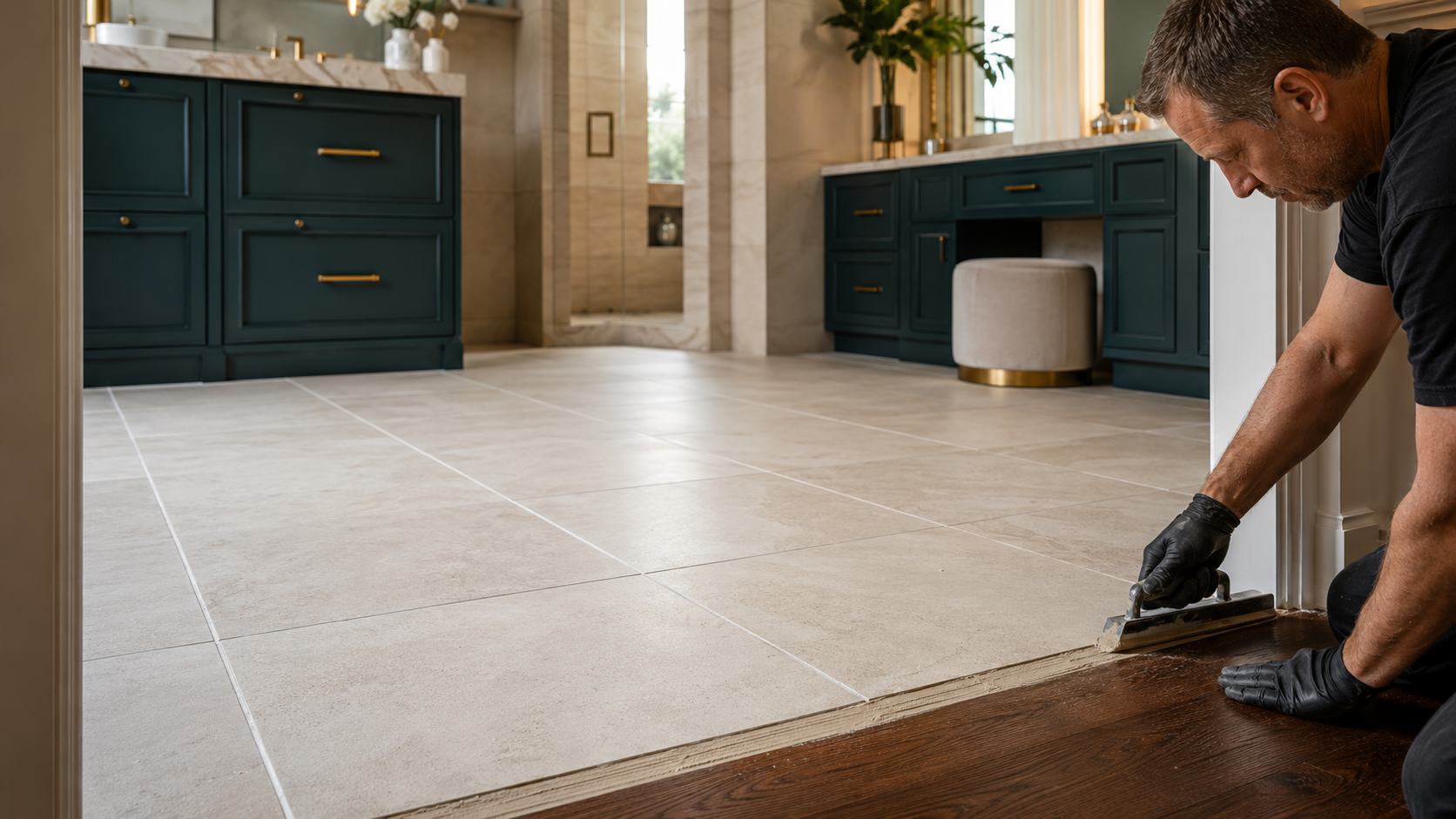 Tile installation takes 2 to 5 days for an average 100 to 150 square foot room, once you count tear-out, subfloor prep, layout, setting, and grout. That window covers active installation time only. Add another 24 to 72 hours before the room handles normal traffic, since adhesive and grout drying times control when you can use it again, and longer if you plan to seal natural stone.
Setting the tile itself, once the subfloor sits flat and ready, often takes about a day for a single average-sized room. Tear-out, prep, and grout curing fill the rest of that window. Two rooms of the exact same size can still finish on very different schedules.
A handful of factors slow this timeline, from custom cuts around cabinetry to a subfloor that needs leveling before a single tile goes down. A properly prepared, flat subfloor prevents cracking down the road, and skipping that step to save a day almost always costs more time later. A straightforward laundry room or powder room, with simple square footage and a basic layout, often lands on the faster end of the range.
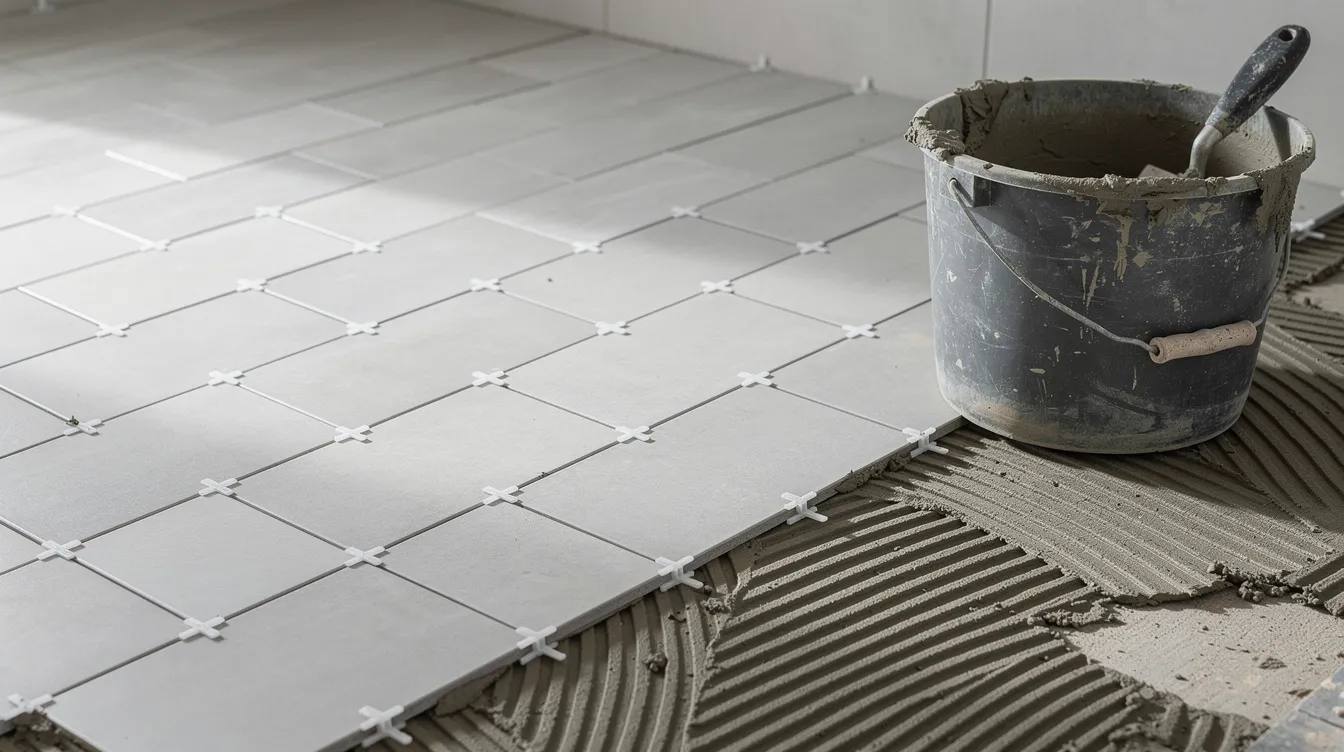
Pro Tip: Press and wiggle each tile into the thin-set rather than just setting it down flat. That motion forces full contact between tile and mortar, which prevents hollow spots that crack under weight later. Use spacers throughout to keep grout lines even before the mortar sets.
What Affects Your Tile Installation Timeline: Cutting Tiles and More
Several variables shape how long your project runs, and most of them show up before installers ever open a box of tile.
Poor subfloor conditions cause the most common delays. A subfloor with cracks, moisture, or more than 1/8 inch of variation over 10 feet needs leveling compound or a membrane before setting begins. That prep work alone can add a full day or more. Ceramic Tile Education Foundation guidance on tile underlayment treats a flat, stable base as the foundation of a lasting installation, not an extra step.
Complex tile patterns, like herringbone, basketweave, or a mixed-format layout, also require more layout time and precise measurements. Every cut has to line up correctly the first time. Room size matters less than most homeowners expect in small spaces, but larger areas still take more time simply because they offer more surface to prep, set, and grout. Two average bathrooms with different layouts can take noticeably different amounts of time, even at the same square footage, because corners, niches, transitions, walls, and stairs can all add cuts and labor in some layouts. Installer experience closes that gap. A seasoned crew that specializes in large-format porcelain slabs moves through an open floor far faster than a crew handling the format for the first time.
Tile Installation Timeline by Room
 Every room carries its own rhythm, driven by fixtures, moisture requirements, and how much square footage the crew covers in a day.
Small bathroom tile installation typically wraps in 1 to 2 days for the tile itself. A full bathroom renovation runs longer, often 5 to 10 days, once a new shower pan, waterproofing membrane, and fixture swaps join the schedule. Floor tile installation in a kitchen or living area usually takes 2 to 5 days for an average-sized room. Laundry rooms, given their small footprint, often finish in a single day.
Multiple rooms stretch the calendar quickly. A whole-home flooring installation that spans a kitchen, hallway, and two bathrooms with new flooring across connected rooms can run two to three weeks. Installers move sequentially through spaces to protect finished work and manage material staging. Ask your contractor for a room-by-room schedule instead of one blended number. It gives you a far clearer picture of when each part of your home comes back online.
Good to Know: A five-day tile installation and a five-day bathroom renovation mean two different things. The tile timeline covers setting and grout. A full renovation timeline adds demo, plumbing, and inspections on top.
How Long to Wait Before Walking on New Tile
 This ranks among the most common questions homeowners ask once tile goes down: how soon can they safely walk on it? Expect 24 hours of drying time after laying tile before anyone walks on it, and closer to 48 hours in a humid South Florida bathroom with limited airflow. That first window protects the thin-set mortar bond while it reaches initial set.
Grout needs a separate cure window. Light foot traffic usually works fine 24 hours after grouting, but heavy use, furniture, and rugs should wait a full 72 hours. Tile Council of North America installation standards treat this cure window as a firm rule, not a suggestion. Walking on uncured mortar or grout can shift tiles out of plane or crack the joint before it fully hardens.
This ranks among the common questions installers hear once grout goes in.
Showers and wet areas need the longest runway. Hold off on running water over new tile for a full 72 hours, and longer if you plan to seal natural stone. Moisture can interrupt the cure before it finishes.
Pro Tip: Mark the cure window on a shared calendar the day grout goes in. A clear stop date keeps contractors, movers, and family members from stepping on tile before it fully cures.
How Long Does Grout Take to Dry and Cure
Grout drying time depends on the grout type, room humidity, and ventilation, so treat any single number as a starting point rather than a guarantee. Actual drying times also vary by product and site conditions.
Standard cement-based grout reaches light-traffic readiness within 24 to 48 hours and full cure within 48 to 72 hours. Epoxy grout moves faster, often accepting light traffic in 8 to 12 hours, though installers still recommend a full day before heavy use. A mixed mortar or grout batch needs a peanut butter-like consistency for proper application, and rushing that step causes more problems than it solves.
Skip grout at corners and wall-to-floor transitions where natural movement occurs. In the field tile, grout fills the gaps, but those perimeter and movement joints need a flexible, color-matched caulk instead, since rigid grout cracks in exactly the spots designed to flex.
Sealing follows curing, not the other way around. Seal grout within 72 hours of installation in high-moisture rooms to protect it from soap scum and staining and help protect the tile surface, but only after it fully cures. Ceramic Tile Education Foundation reference materials cover this exact sequence, from substrate preparation through finished grout. Skipping a step here costs far more time later than following it does now.
Watch Out
Grouting too soon after setting tile disrupts the thin-set cure underneath and leads to hollow-sounding tile or cracked grout lines within months. Give mortar its full initial set before grout goes in, even if the schedule feels tight.
Pro Tip: Use a grout float to pack grout into the joints, then wipe excess grout with a barely damp sponge in the first hour after application, rinsing frequently. Waiting too long turns grout haze into a stubborn film that needs an acidic cleaner to remove. Acidic cleaners etch the surface of natural stone.
How Large-Format Tile Changes Your Installation Timeline
 Large-format tile, generally anything 15 inches or longer on one side, changes the math on your tile installation timeline in both directions.
On the fast side, fewer individual tiles mean fewer grout lines and less layout time across an open room. A straightforward floor installation using large-format porcelain slabs can move through a living area faster than the same square footage in a smaller format. On the slower side, large-format tile requires a flatter substrate and specialized setting tools. It often needs a second installer to handle and place each piece without cracking it.
Cutting large-format tile around outlets, corners, and thresholds also takes longer per cut than a standard 12-by-12 tile. A single mistake wastes an expensive piece instead of a small one. Budget extra time for layout planning before the first piece goes down, since large-format tile leaves far less room to adjust mid-installation.
Natural Stone vs. Porcelain: Timeline Differences
Natural stone and porcelain follow different installation timelines, even when the room size, layout, and choice of natural stone tiles match exactly.
Ceramic Tile Education Foundation guidance calls for a subfloor under natural stone that holds roughly twice the strength of a subfloor built for ceramic or porcelain. Stone lacks the flexibility of a manufactured tile. That standard alone can add a full day of subfloor reinforcement before a single slab of marble or quartzite goes down.
Natural stone also needs sealing before grout and again after, since porous stone, such as slate, absorbs grout haze and stains without that protective layer. Natural Stone Institute standards, built around ANSI A108, guide applying a sealer to the tile surface before grout and again after grout where required. They protect the stone’s finish long after installation wraps. Porcelain skips both sealing steps entirely, which explains why a porcelain floor often finishes a full day or two ahead of the same layout in natural stone.
Natural Stone Timeline Checklist
- Confirm subfloor deflection meets industry standards before delivery
- Schedule a pre-seal before grout goes in
- Budget a second sealing pass after grout cures
- Add 1 to 2 extra days versus a comparable porcelain layout
How to Avoid Costly Tile Installation Delays
 Most tile installation delays trace back to decisions made before the crew ever arrives on site.
Confirm every material order before demo begins. Include trim, transition strips, and extra tile for future repairs. Last-minute material changes rank among the most common causes of project delays. A swapped tile size or finish can send the whole order back to the supplier. Unexpected repairs during prep work extend timelines just as often. This shows up most in older South Florida homes, where a subfloor looks solid until installers pull up the old flooring and find water damage underneath.
Share your full schedule with every trade involved, including plumbing, painting, and cabinetry work. A tile crew that shows up before waterproofing cures, or a painter who touches trim before grout fully sets, creates rework. That rework costs more time than careful sequencing ever would. Professional help pays for itself here: an experienced installer flags subfloor and moisture issues before they turn into a stalled project.
Pre-Installation Checklist
- Confirm full material quantities, including overage, before demo
- Test the subfloor for moisture and level before ordering tile
- Lock plumbing and fixture timelines with every trade on site
- Ask your installer for a written, room-by-room schedule
Ask AI About This Guide
Why Choose Cavastone as Your Tile Supplier?
 A tile installation timeline only works when the materials show up on schedule and the guidance behind them holds up. That matters whether you are comparing tile with laminate or planning around the longer acclimation and layout demands of hardwood flooring.
Founded in 2006 by Connie Davalos, Cavastone has spent nearly 20 years serving South Florida. We help architects, designers, contractors, and homeowners plan tile projects around materials that perform as promised. Every collection in our showroom, from porcelain to marble, ships from trusted mills in Spain and Italy. Many collections stay exclusive to South Florida. We also help clients compare schedules, since laminate flooring and hardwood flooring installation often follow different timelines than tile.
Two warehouses hold more than 600 SKUs in stock. That keeps most materials available within 24 to 48 hours, instead of the 10 to 12 week wait common with special-order tile. That kind of availability protects your installation timeline, since your crew never sits idle waiting on a delayed shipment. Our team also visits job sites directly to resolve issues, even when the issue involves work outside our own materials. A stalled project costs everyone time and money.
Trade professionals receive trade pricing, and homeowners receive retail pricing, but every client works with the same knowledgeable team and the same frictionless sample process. Stop by our showroom at 646 Park of Commerce Way, Boca Raton, Florida 33487, or call 561-994-9100. You can also request a consultation to talk through your project timeline before you order a single tile.
Frequently Asked Questions
How Long Does Tile Installation Take for an Average-Sized Room?
Tile installation takes 2 to 5 days for an average 100 to 150 square foot room. This covers tear-out, subfloor prep, setting, and grout. Add another 24 to 72 hours before the space handles regular foot traffic. Add more time if you plan to seal natural stone. A simple room with a basic layout lands on the faster end of that range. Multiple thresholds and custom cuts push it toward the slower end.
How Long Does a Small Bathroom Tile Installation Take?
Small bathroom tile installation typically wraps in 1 to 2 days for the tile itself. The footprint stays compact even with a shower or tub surround included, though working around a toilet can extend the schedule slightly even in a compact bathroom. A full bathroom renovation runs longer, often 5 to 10 days. Plumbing changes, a new waterproofing membrane, and fixture installation all add time to the schedule.
How Long Should Grout Dry Before I Walk on It?
Grout needs at least 24 hours of light-traffic drying time before anyone walks on it. Give it up to 48 hours in a humid room with limited airflow. Wait the full window even if the surface feels dry to the touch. The cure happens below the surface as much as on top of it.
How Long Does Grout Take to Fully Cure?
Standard cement-based grout reaches full cure within 48 to 72 hours. Epoxy grout cures faster, and rapid-set formulas cure faster still. Seal grout only after it fully cures. Plan on sealing within 72 hours of installation in high-moisture rooms like bathrooms and kitchens.
Does Large-Format Tile Install Faster than Smaller Tile?
Large-format tile often installs faster across an open floor. Fewer pieces mean fewer grout lines and less layout work overall. It also needs a flatter substrate and specialized tools. Any subfloor prep required beforehand can offset that speed advantage on an older or uneven floor.
How Long Does Natural Stone Tile Installation Take Compared to Porcelain?
Natural stone installation usually runs a full day or two longer than porcelain for the same layout. Stricter subfloor rigidity requirements add time, and stone needs sealing before and after grout. Porcelain skips sealing entirely, which keeps its timeline shorter and more predictable.
What Causes the Most Tile Installation Delays?
Poor subfloor conditions cause the most common delays. Last-minute material changes and unexpected repairs rank close behind, especially once old flooring comes up and reveals hidden damage. Confirming your subfloor condition and full material order before demo begins prevents most delays before they start.
Can I Speed Up My Tile Installation Timeline?
You can speed up your timeline by confirming your subfloor condition and full material order before demo begins. Choose a simple layout over an intricate pattern to save more time. Hiring an experienced installer helps too, since a crew familiar with your format and material moves through the job with fewer surprises.
How Soon Can I Shower in a Newly Tiled Bathroom?
Hold off on running water in a newly tiled shower for a full 72 hours after grouting. Wait longer if the stone needs sealing. Moisture introduced before grout finishes curing can weaken the joint and lead to cracking or discoloration down the road.
Whether you are planning one bathroom or a full home renovation, start with an honest look at your subfloor, your materials, and your layout. Our team stays ready to help you plan around real numbers before the first tile comes off the truck. How long does tile installation take? With the right prep and the right materials, that answer becomes a schedule you can trust.
Related Reading
If you want to go deeper before your project starts, a few more resources from our team can help. Learn how to lay porcelain tile step by step. Get guidance on choosing the right grout color for your space. Read why tile grout cracks and how to prevent it on your own project. If you plan to work over existing flooring, our guide on installing tile over tile walks through the tradeoffs. Our tile calculator helps you confirm exact material quantities before you place an order. Learn more about our story on our About Us page.
Ready to Plan Your Tile Installation Timeline Around Real Numbers?
Talk through your project with Cavastone before you order a single tile.

Owner, Cavastone Group
With years of perseverance and pride in what we do we have become a very well known and positioned company in the Architectural and Design industry. The same perseverance, pride and attention to detail that made us become who we are, are the same qualities we strive to provide to all our customers.