Quick Answer: What Are the Best Outdoor Tiles for a Patio?
The best outdoor tiles for patio spaces combine low water absorption, a slip rating of R11 or higher, and a thickness built for exterior use. Porcelain at 20mm or sealed natural stone such as travertine or quartzite are the top picks.
This guide covers materials, thickness, installation, and upkeep, plus what to check before you buy.
Not sure which outdoor tile fits your patio? Our team can help you choose.
Outdoor tiles for patio spaces are one of the highest value upgrades you can make to a South Florida home or commercial property. Choosing the right material from a curated porcelain tile collection determines whether that investment still looks great after five summers of sun and storms. A patio tile has to do more than look good. It needs to resist heat, shrug off rain, and stay safe underfoot around a pool. Below, we walk through how to choose a material, a thickness, and an installation method. The right fit depends on your climate, your budget, and how you use the space.
What You Should Know before You Start
What Makes a Tile Truly Outdoor Rated?
- Water absorption of 0.5 percent or less for porcelain, per the Tile Council of North America, or a sealed and rated natural stone
- A slip resistance rating suited to wet zones, ideally R11 or higher; the National Tile Contractors Association notes that a pitched, frequently wet pool deck needs more traction than a standard interior floor
- UV stability so color will not fade under direct Florida sun
- Resistance to thermal movement, since NTCA notes that exterior tile must accommodate far wider temperature swings than interior tile, which is why movement joints matter more outdoors
How Thick Should Patio Tile Be?
- 10mm for porcelain tile mortar set directly onto a concrete slab
- 20mm, often called 2cm, for porcelain pavers used in dry lay, sand set, or pedestal installation
- 1 to 2 inches for natural stone pavers set in sand or gravel
Can I Install New Tile over My Existing Concrete Patio?
- Yes, in most cases, provided the slab is stable, properly sloped, and free of major cracks
- A contractor should check for movement, drainage, and expansion joint needs before starting
- Older or uneven concrete may need a leveling layer first
Do Outdoor Tiles Need Sealing?
- Porcelain never needs sealing, since it is virtually nonporous
- Natural stone such as travertine, limestone, and quartzite should be sealed at installation and resealed every two to three years
- Grout lines benefit from a penetrating sealer no matter which tile material you choose
In this guide
- Why Outdoor Tile is the Smartest Upgrade for a South Florida Patio
- Comparing Porcelain and Natural Stone for Patios
- Outdoor Tile Thickness and Installation Methods Explained
- Slip Resistance and Safety: What an R11 Rating Really Means
- Best Tiles for Pool Deck Spaces in South Florida
- Design Ideas for Large-Format and Indoor-Outdoor Patios
- Caring for Outdoor Tile So it Lasts
- Why Cavastone?
- FAQ: Common Outdoor Tile Questions
Why Outdoor Tile is the Smartest Upgrade for a South Florida Patio
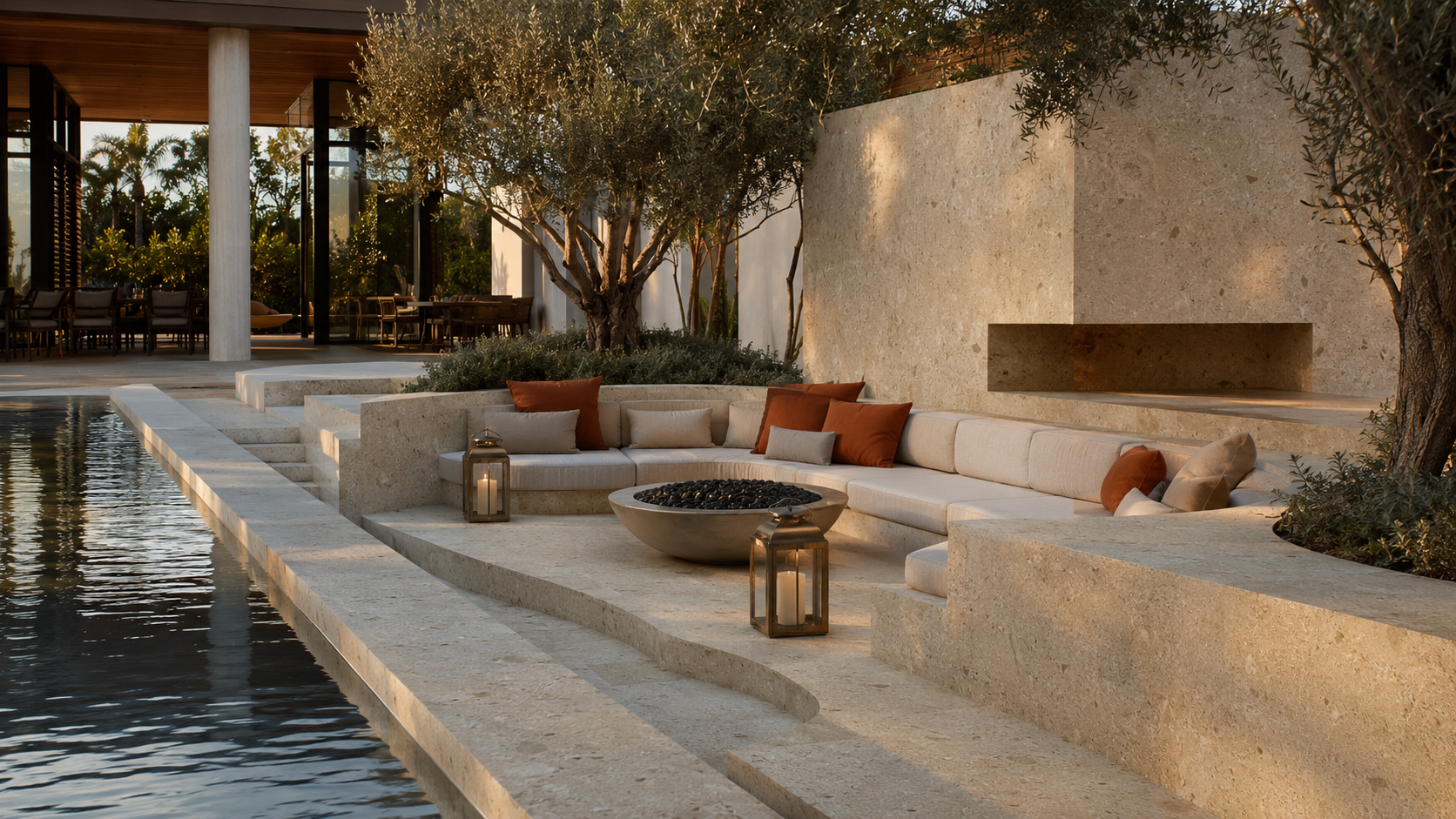 A patio absorbs more daily wear than almost any indoor room in the house. Direct sun, sudden rain, pool splash, and constant foot traffic all hit the same surface, often within the same afternoon. That is why outdoor tile continues to gain ground among homeowners, architects, and contractors across Boca Raton and the rest of South Florida.
The right outdoor tile for a patio space delivers real, measurable benefits:
- Strong resistance to fading under direct sun
- Low maintenance compared to wood decking or unsealed concrete
- A wide range of colors and finishes, from warm travertine tones to sleek concrete look porcelain
- Better long term performance in a hot, humid, storm prone climate
- Use across patios, pool decks, walkways, and outdoor dining areas
For high traffic commercial patios such as hotel pool decks or restaurant terraces, look for a PEI rating of 4 or 5. That is the industry scale for wear resistance in heavy foot traffic areas. Exterior installations face conditions interior tile never sees. The Tile Council of North America notes that proper slope to drain and a waterproof layer below the tile are not optional extras. They are the difference between a patio that lasts decades and one that fails within a few seasons.
Good to Know: Florida building code sets no minimum slip rating for most residential patios. Pool codes in many South Florida municipalities do, though, so confirm local rules with your contractor before you finalize a material.
Comparing Porcelain and Natural Stone for Patios
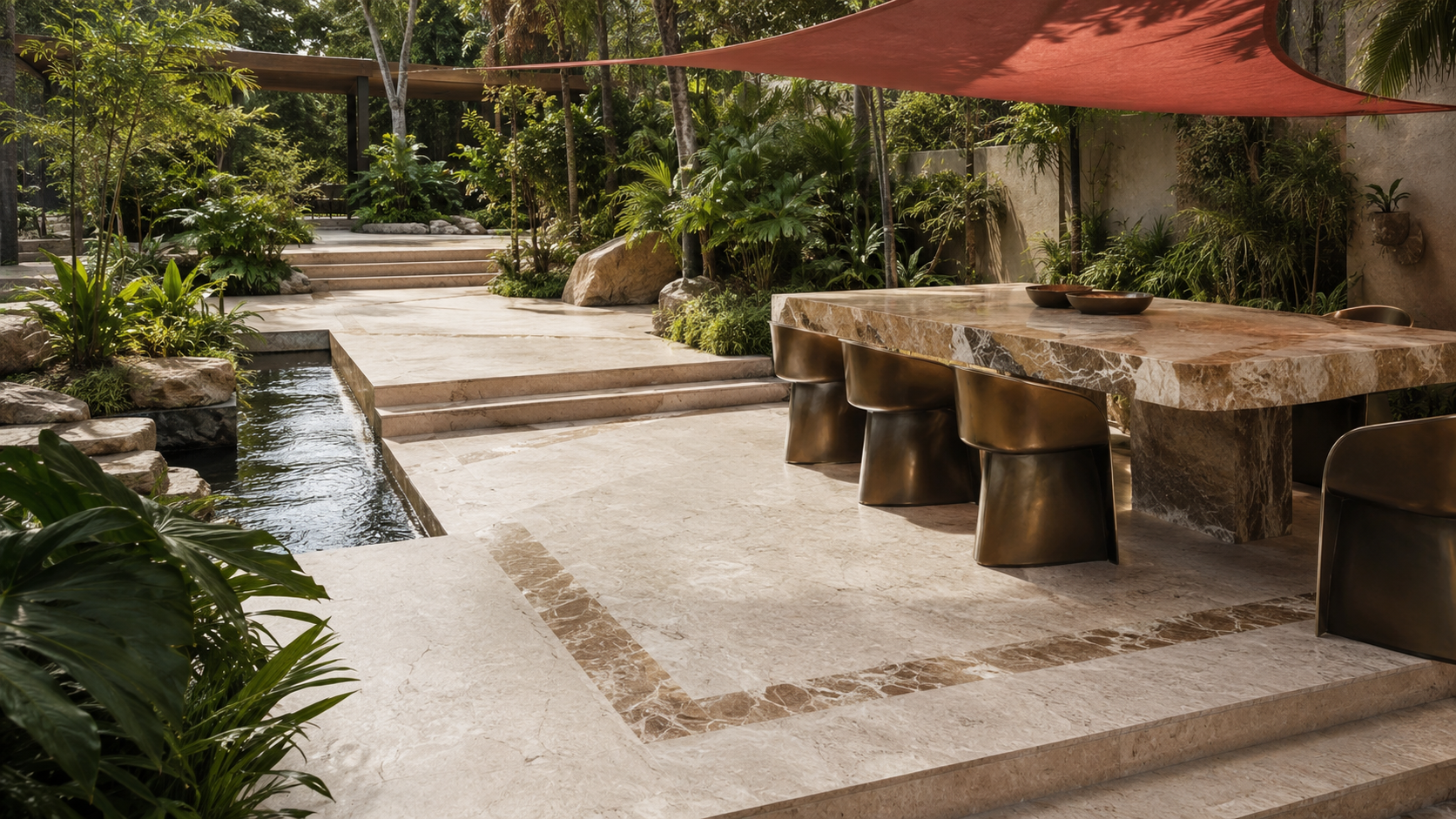 Two material families dominate outdoor patio projects: porcelain and natural stone. Both perform well outdoors, but each suits a different priority.
Outdoor Porcelain Tiles
Outdoor porcelain tiles remain the most reliable choice for a modern South Florida patio. Porcelain fires at extremely high temperatures, which creates a dense, nearly nonporous body that mimics stone, wood, or concrete without absorbing water. The Tile Council of North America defines true porcelain as tile with 0.5 percent water absorption or less, tested under ASTM C373. That density gives porcelain patio tiles strong resistance to staining, scratching, and frost damage. Finishes range from a honed concrete look to a convincing wood look plank.
Natural Stone for Patios
Natural stone, including travertine, quartzite, and limestone, brings warmth and texture porcelain cannot fully replicate. Travertine stays noticeably cooler underfoot in direct sun, which matters on a South Florida pool deck in July. Quartzite adds exceptional hardness and a crystalline surface. Limestone offers a softer, more classic look best suited to covered patios and drier terraces. Natural stone does require periodic sealing, since the Natural Stone Institute notes that sealing further reduces moisture migration into an already dense material. For any stone near a pool or in a low, splash prone area, ask your installer to confirm the sealer is rated for constant moisture.
Porcelain tends to win when low maintenance and consistent color matter most. Natural stone wins when authentic texture and a surface that develops character over time are the priority.
Outdoor Tile Thickness and Installation Methods Explained
 Thickness is not just a spec sheet number. It determines how a patio tile handles weight, movement, and the base it sits on.
For tile mortar set directly onto a solid concrete slab, a standard 10mm porcelain body performs well. For dry lay applications such as raised pedestal decks, gravel bases, or sand set patios, most manufacturers recommend a 2cm, or 20mm, porcelain paver instead. Some outdoor collections extend even further. They offer lighter 8mm and 9mm options for overlay use, plus heavier 20mm and 30mm pavers built for driveways or commercial walkways.
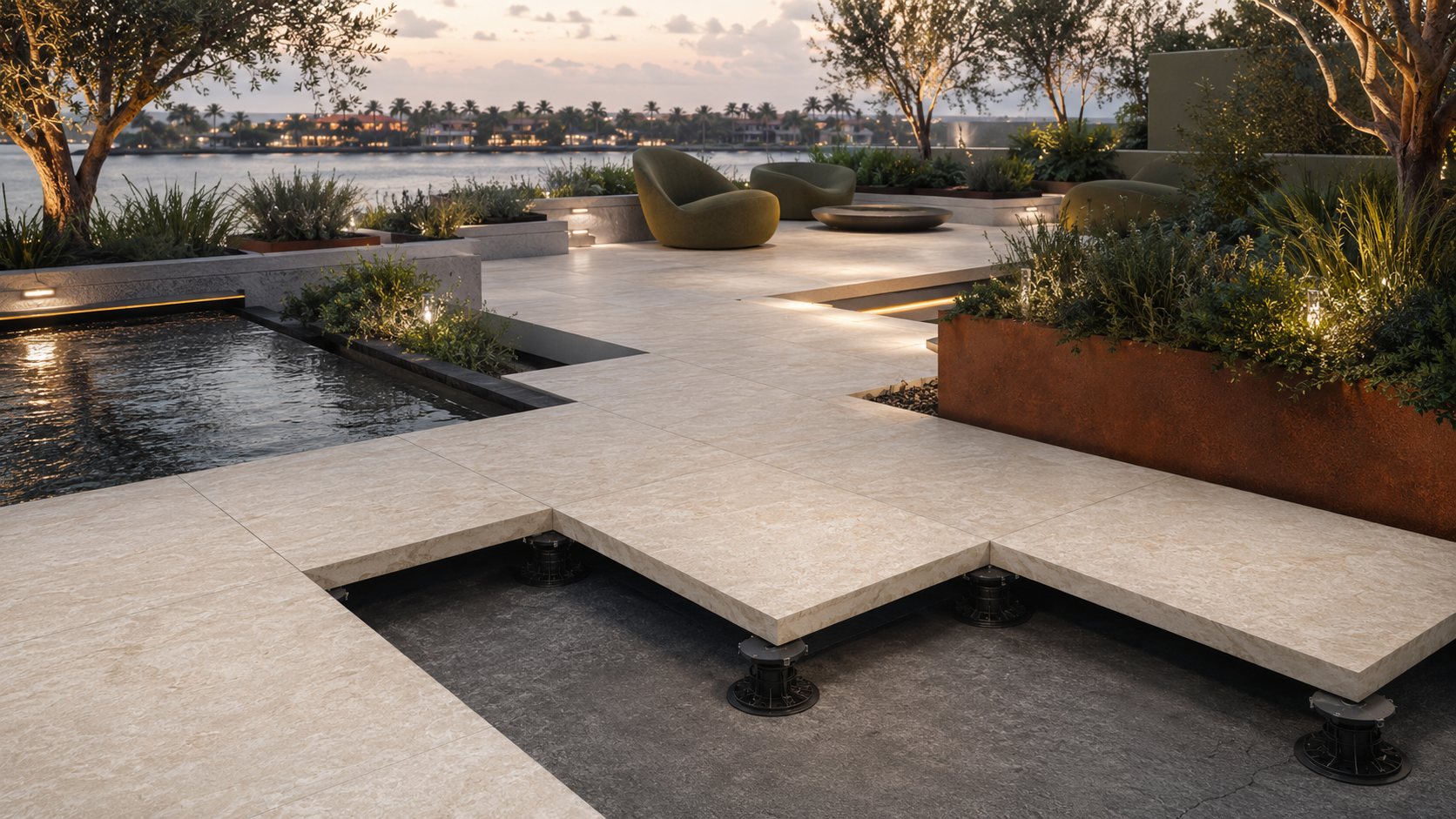
Outdoor tile can be installed over several different bases, including existing concrete, compacted gravel, sand, and even wood decking with the right underlayment. Pedestal systems raise porcelain pavers above the surface below, which lets water drain freely and keeps the patio cooler by promoting airflow underneath. This method works especially well for rooftop terraces, balconies, and decks where drainage is the top priority.
Pro Tip: Ask your installer about pedestal paver systems for any patio built over a living space, such as a covered garage. Pedestals create an air gap that protects the structure below from trapped moisture.
Slip Resistance and Safety: What an R11 Rating Really Means
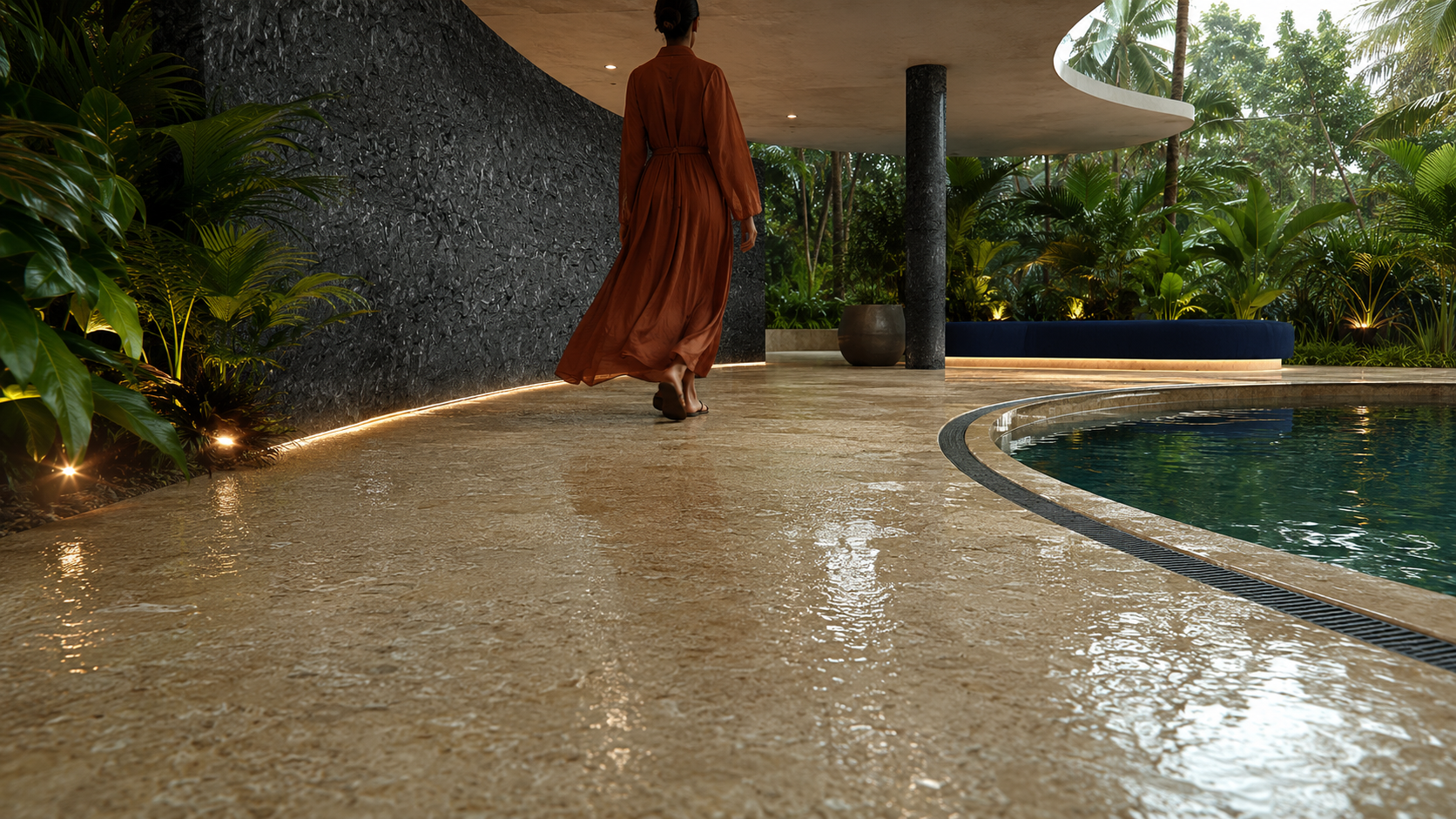 Slip resistance ranks among the most important safety factors in any outdoor tile project, and it deserves real attention rather than an afterthought.
The R-scale, common on European made porcelain, rates traction from R9 for dry areas up to R13 for high risk commercial zones. For a patio, walkway, or pool deck exposed to rain and standing water, aim for R11 or higher. Textured and structured finishes create that grip. A honed or polished finish, no matter how elegant it looks in a showroom, can turn dangerous the moment it gets wet.
North American manufacturers often reference the Dynamic Coefficient of Friction, or DCOF, alongside the R-scale. Either measurement points to the same goal: enough traction underfoot to keep family, guests, and staff safe. Manufacturers now build anti-slip coatings and structured surfaces directly into many outdoor porcelain lines. Slip resistant, non slip outdoor tiles no longer mean giving up on style. From subtle stone look textures to bolder wood look planks, plenty of finishes can match nearly any design direction.
Watch Out: Polished and high gloss finishes look striking indoors, but they lose most of their grip once wet. Save glossy porcelain for covered, dry areas only, and choose a textured or structured finish for anything exposed to rain or pool splash.
Related reading: Matte Tile vs Glossy Tile vs Textured Tile: Which Finish Is Best?
Best Tiles for Pool Deck Spaces in South Florida
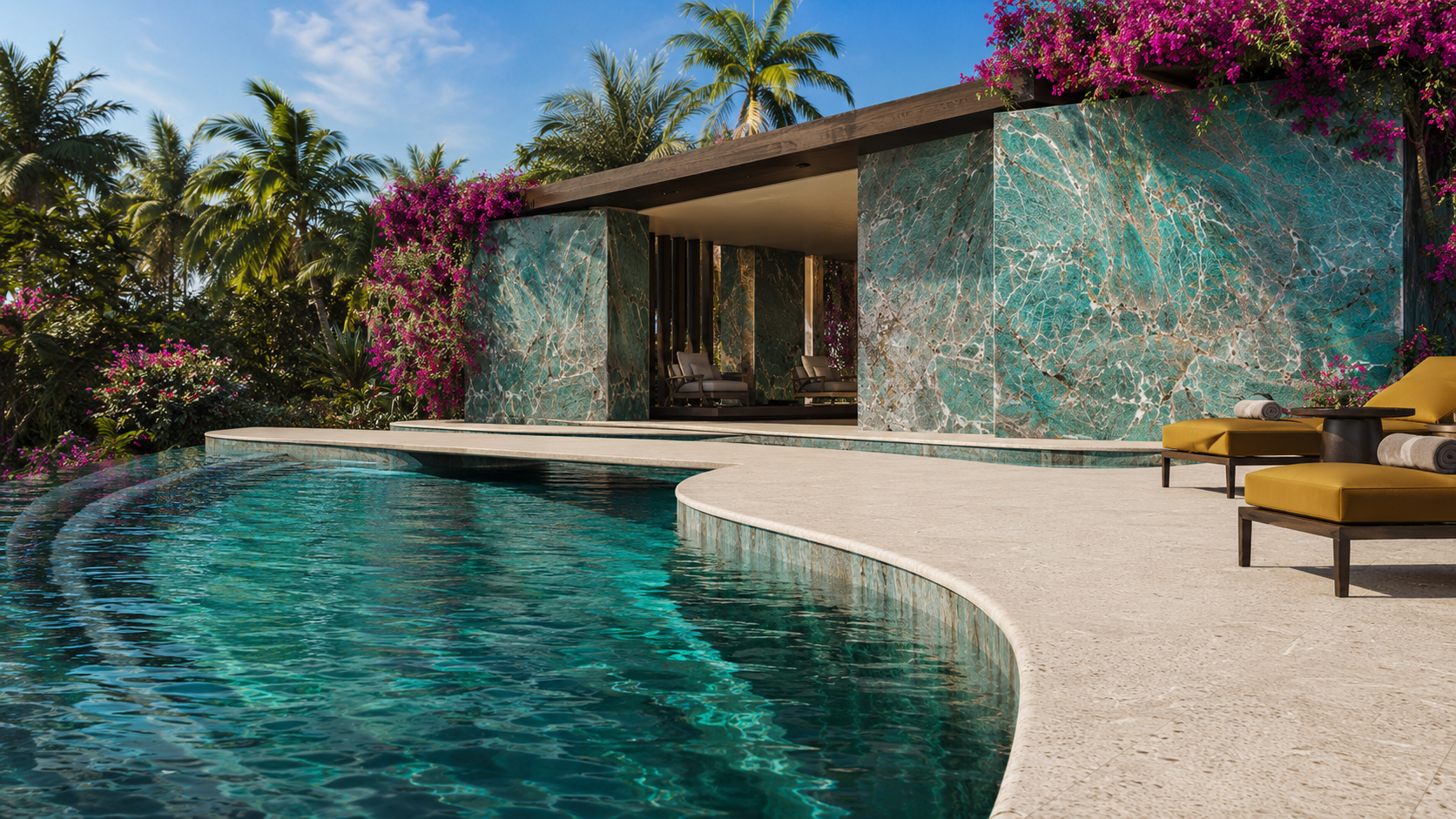 Pool deck tiles face a tougher test than almost any other outdoor surface. Between constant moisture, sunscreen residue, chlorine exposure, and bare feet moving quickly from water to concrete, a pool deck needs both grip and comfort.
Light colored tile performs best around a South Florida pool. Lighter surfaces reflect more heat than darker tones, which keeps bare feet comfortable even during peak summer sun. Porcelain pool deck tiles with a textured, R11 or higher finish handle constant splash without becoming slick. Their low water absorption also resists the staining that chlorine and pool chemicals can cause over time.
Natural stone remains popular around pools too, particularly travertine, thanks to its naturally cooler surface and classic resort feel. If you choose natural stone for a pool deck, confirm with your installer that the sealer is rated for constant water exposure. Not every sealer performs the same way in a pool setting.
For coping, the edge where the deck meets the water, choose a tile rated for that exact application. Coping tile typically needs a rounded or bullnose edge and an even higher slip rating than the surrounding deck.
Pool Deck Checklist
- ✓ R11 or higher slip rating
- ✓ Light or medium tone to stay cool underfoot
- ✓ Low water absorption, ideally under 0.5 percent
- ✓ Coping tile rated for direct water exposure
- ✓ Confirm sealer compatibility if using natural stone
Related reading: Top Tiles for Swimming Pools
Design Ideas for Large-Format and Indoor-Outdoor Patios
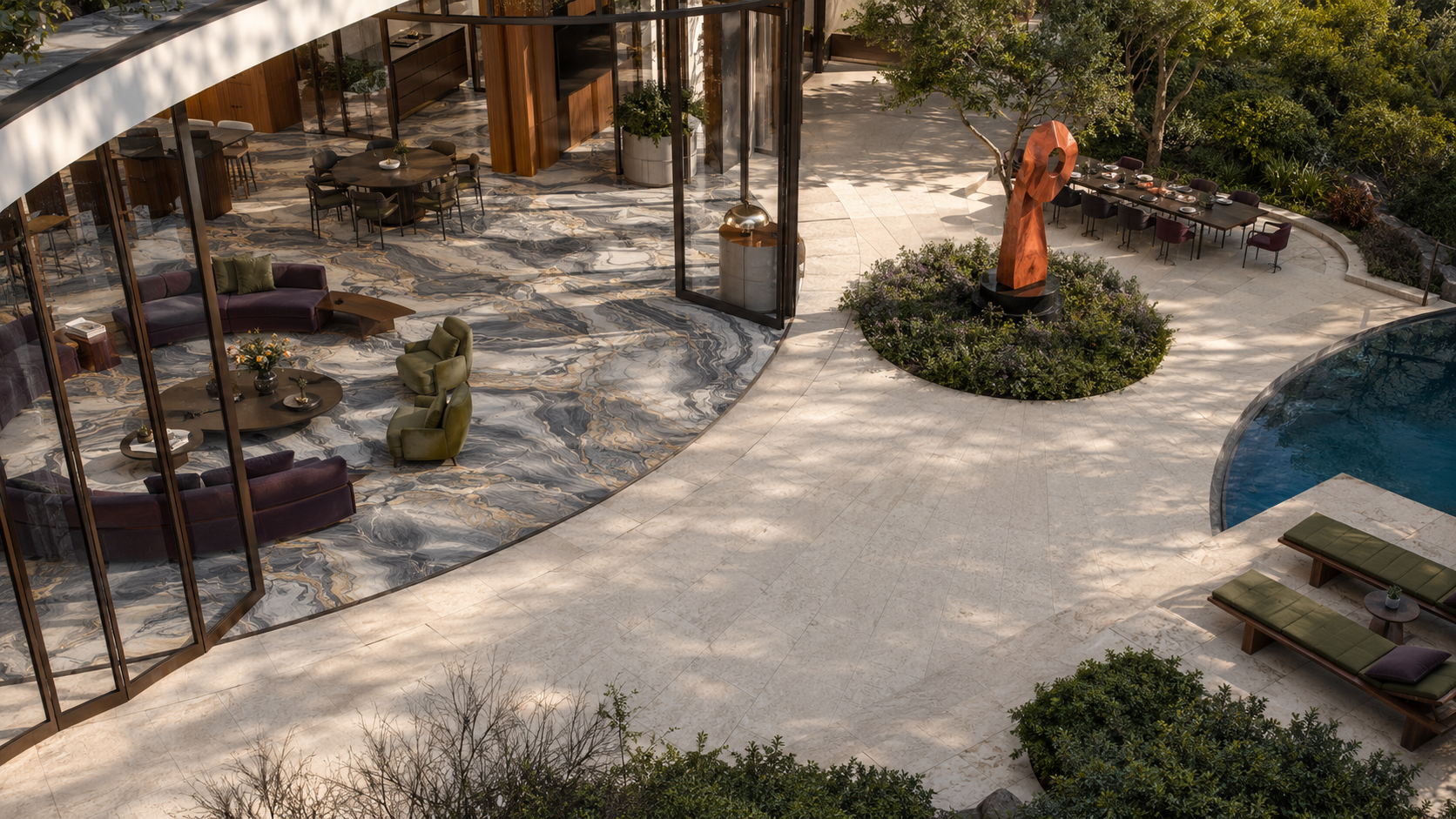 Once material and safety are settled, design becomes the fun part.
Large-format outdoor porcelain tile comes in sizes such as 24 by 24 inches or 24 by 48 inches. Fewer grout lines give a patio a cleaner, more open look, and fewer seams mean fewer places for dirt and moisture to collect.
Many South Florida homeowners and designers now carry the same material from an indoor living room straight out to the patio. This creates one continuous surface with no visual break at the threshold. Wood look porcelain makes this approach easy. It delivers the warmth of natural decking with none of the upkeep real wood demands outdoors. For more on this approach, see Create Transitions with Indoor-Outdoor Flooring and Indoor vs Outdoor Tiles: What Works Best for Each Space?
Pattern choice matters too. A herringbone or modular stone layout adds movement to a large patio, while a simple grid keeps a small courtyard feeling open. See Tile Layout Patterns That Bring Spaces to Life for more on which layouts fit which spaces.
Before you finalize a design, measure the space accurately. Our tile calculator can help estimate material needs once you know the square footage of your patio, walkway, or pool deck.
Caring for Outdoor Tile So it Lasts
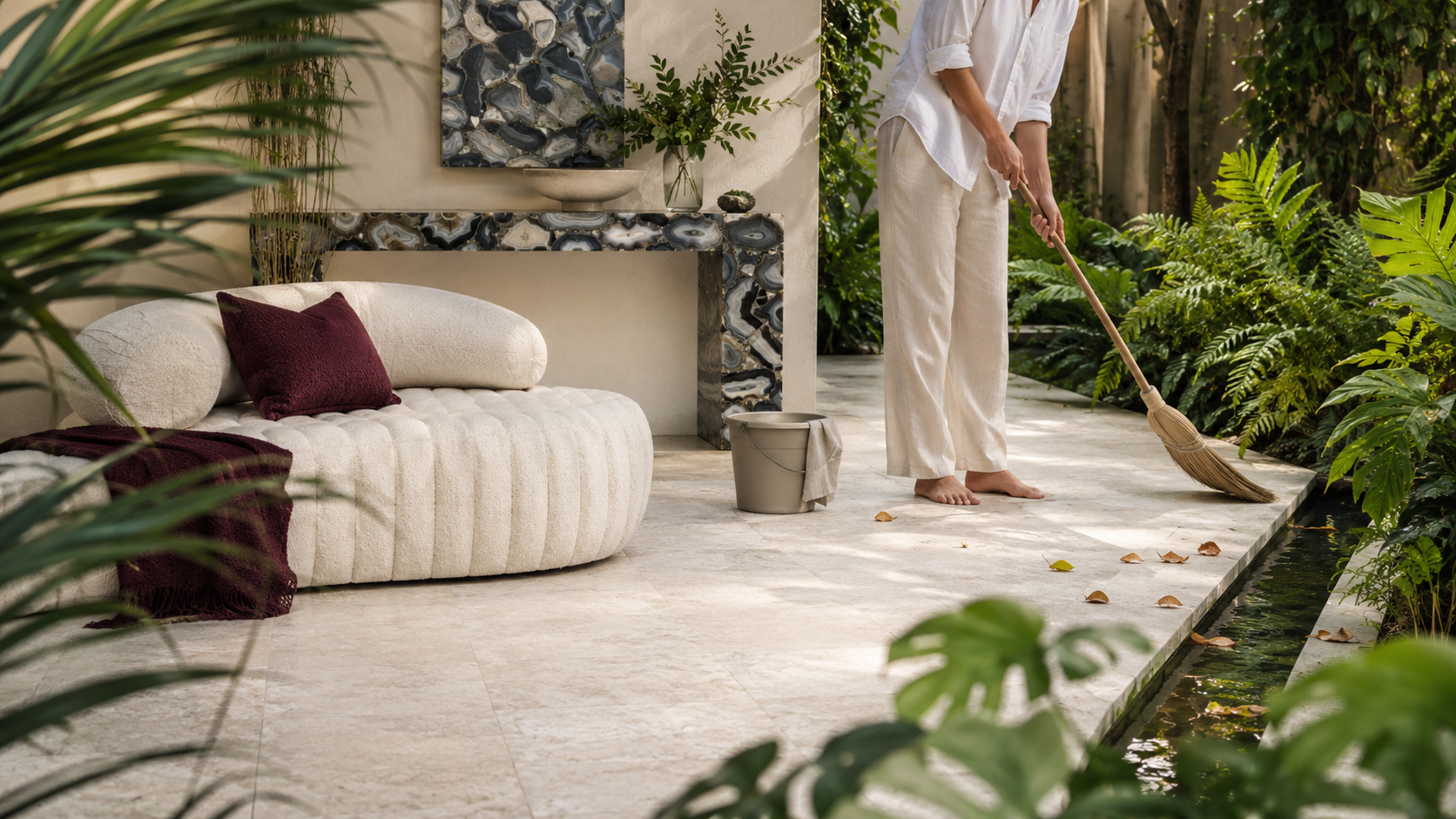 Outdoor tile maintenance is refreshingly simple compared to wood decking or unsealed concrete.
For routine care, a mild soap and water solution along with a soft bristle broom handles most dirt, pollen, and everyday grime. Rinse thoroughly and let the surface air dry. Avoid harsh acidic cleaners on natural stone, since they can etch the surface over time. Skip pressure washing on grout lines less than a year old too, since fresh grout needs time to fully cure.
Porcelain needs no sealing at all, one reason it stays the lowest maintenance option for a busy commercial patio or a family backyard. For a broader look at how materials hold up under heavy traffic, see Durable Flooring Tiles: Best Options for Busy Homes and Commercial Spaces.
A well chosen, well installed outdoor tile can perform for decades. Routine cleaning, and occasional resealing for natural stone, is often all it takes to keep a patio looking new.
Ask AI about this guide
Why Cavastone?
Choosing the right outdoor tile is easier with a partner who has specified thousands of South Florida projects across nearly 20 years. Connie Davalos founded Cavastone in 2006.
A few reasons trade professionals and homeowners return to Cavastone for outdoor projects:
- Exclusive porcelain and natural stone collections
- Two warehouses stocking more than 600 SKUs
- Frictionless sample and pricing requests, with trade pricing for professionals and retail pricing for homeowners
- Nearly two decades of hands-on experience with South Florida’s heat, humidity, and storm exposure
The Cavastone team, with nearly 20 years serving South Florida
Call 561-994-9100 to speak with the team directly, or contact Cavastone to start your patio project today.
See these materials in person. Visit our showroom at 646 Park of Commerce Way, Boca Raton, Florida 33487.
FAQ: Common Outdoor Tile Questions
What is the Best Tile for an Outdoor Patio in Florida?
Porcelain is usually the strongest overall choice for a Florida patio because it resists water, fading, and heat with almost no maintenance. Natural stone options like travertine and quartzite also perform well, especially when comfort underfoot and natural texture matter more than low upkeep. The right answer often comes down to how much maintenance you want to take on and the look you are going for.
Are Porcelain Tiles Good for Outdoor Use?
Yes, when they are rated for exterior use. Exterior grade porcelain has a water absorption rate of 0.5 percent or less, which makes it highly resistant to staining, cracking, and fading. Choose a textured, R11 rated finish for any patio, walkway, or deck that gets wet, including areas near a pool or in a rainy climate.
What is the Best Tile for a Pool Deck?
Textured porcelain with an R11 or higher slip rating tends to be the safest and lowest maintenance choice for a pool deck. Light or medium tones help the surface stay cooler underfoot in direct sun. Natural stone such as travertine also works well around pools as long as it is properly sealed and rated for constant water exposure.
How Do I Keep Outdoor Tile from Getting Too Hot?
Choose lighter colored tile, since light surfaces reflect more heat than dark ones and stay noticeably cooler in direct sun. Travertine also tends to feel cooler underfoot than darker porcelain, which is one reason it remains popular around South Florida pools. Shade structures and thoughtful landscaping around the patio help too.
Can Outdoor Tile Be Installed over Grass or Dirt?
Not directly. Grass and dirt need to be excavated and replaced with a compacted gravel or sand base before any tile installation begins. Skipping proper base preparation is one of the most common reasons outdoor patios fail early, so this step should never be shortcut.
What is the Difference between Outdoor Tile and Concrete Pavers?
Concrete pavers are cast from a cement mixture and tend to be more porous. That means more maintenance and a higher chance of staining over time. Outdoor porcelain and natural stone tile generally offer a denser surface, more design options, and better long term resistance to fading. Concrete pavers still remain a common choice for large scale hardscaping where cost per square foot is the top priority.
How Long Does Outdoor Patio Tile Last?
A well chosen, well installed outdoor tile can last several decades with only routine cleaning and, for natural stone, periodic resealing. Longevity depends on the material, the base it sits on, drainage, and how consistently it gets maintained. Porcelain in particular is built to handle Florida’s sun and storms with very little upkeep.
Is Natural Stone or Porcelain Better for a Patio?
Both perform well outdoors, so the better choice depends on your priorities. Porcelain wins on low maintenance and consistent color, while natural stone wins on authentic texture and a surface that develops character over time. Whichever direction you choose, working with a supplier who understands outdoor tiles for patio spaces in South Florida’s climate makes the decision much easier.
Keep exploring
Ready to choose the right outdoor tiles for your patio? Book a consultation with the Cavastone team and we will help you match material, thickness, and slip rating before you order a single tile.

Owner, Cavastone Group
With years of perseverance and pride in what we do we have become a very well known and positioned company in the Architectural and Design industry. The same perseverance, pride and attention to detail that made us become who we are, are the same qualities we strive to provide to all our customers.