

Yes, when the existing tiles stay firmly bonded, sit flat, and hide no moisture damage. A sound old floor saves you the demolition, the disposal fees, and days of dust.
Three checks settle it. Does the old surface hold fast? Will the floor below carry the extra weight? Does the added height still clear your doors and appliances? Fail any one of them and removal costs less than a floor that lifts a year later.
Not sure which materials suit your existing floor?
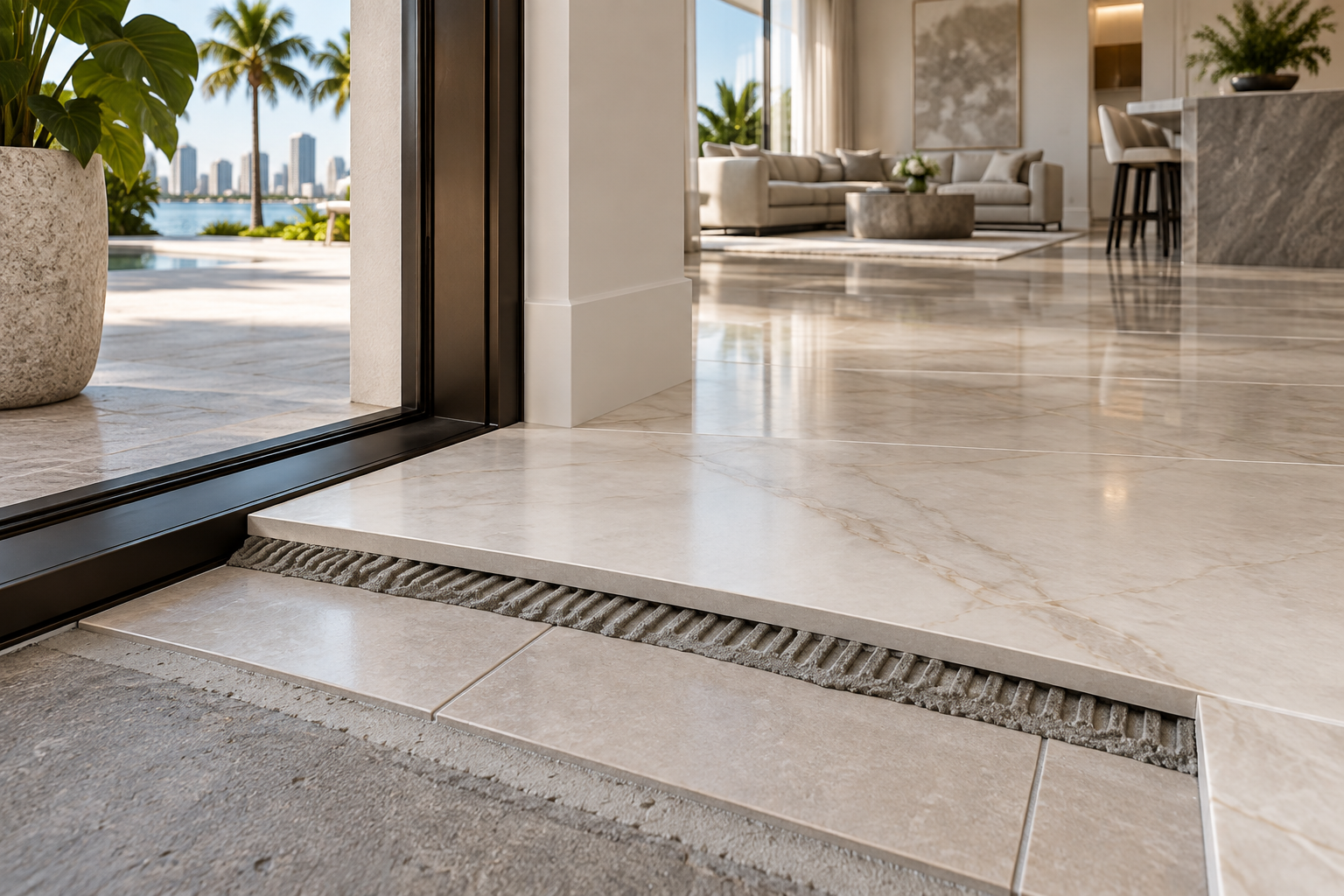
Can you tile over tile? Often yes. The answer rests far more on what sits underneath than on the porcelain tile you pick to go on top. We have supplied material for South Florida renovations since 2006. The jobs that go wrong nearly always skipped the check, not the technique.
This guide covers how to judge your existing surface and which new tiles suit a second layer. It also covers when removal wins. Cavastone supplies tile and stone, not installation labor, so what follows reflects what we see come back through the showroom.
What You Should Know Before You Start
Does Your Existing Surface Actually Qualify?
- Every tile must stay firmly stuck down, with no movement underfoot and no hollow sound when tapped.
- Cracks in the old tile travel up into the new layer, so repair or removal comes first.
- Grease, soap scum, and old sealers block the bond and need a thorough clean.
- Any sign of mold, a past leak, or soft wood below rules out covering.
How Much Height Can Your Room Give Up?
- A second layer adds the tile thickness plus the mortar bed beneath it.
- Interior doors, shower doors, dishwashers, and ranges all need measuring before you order.
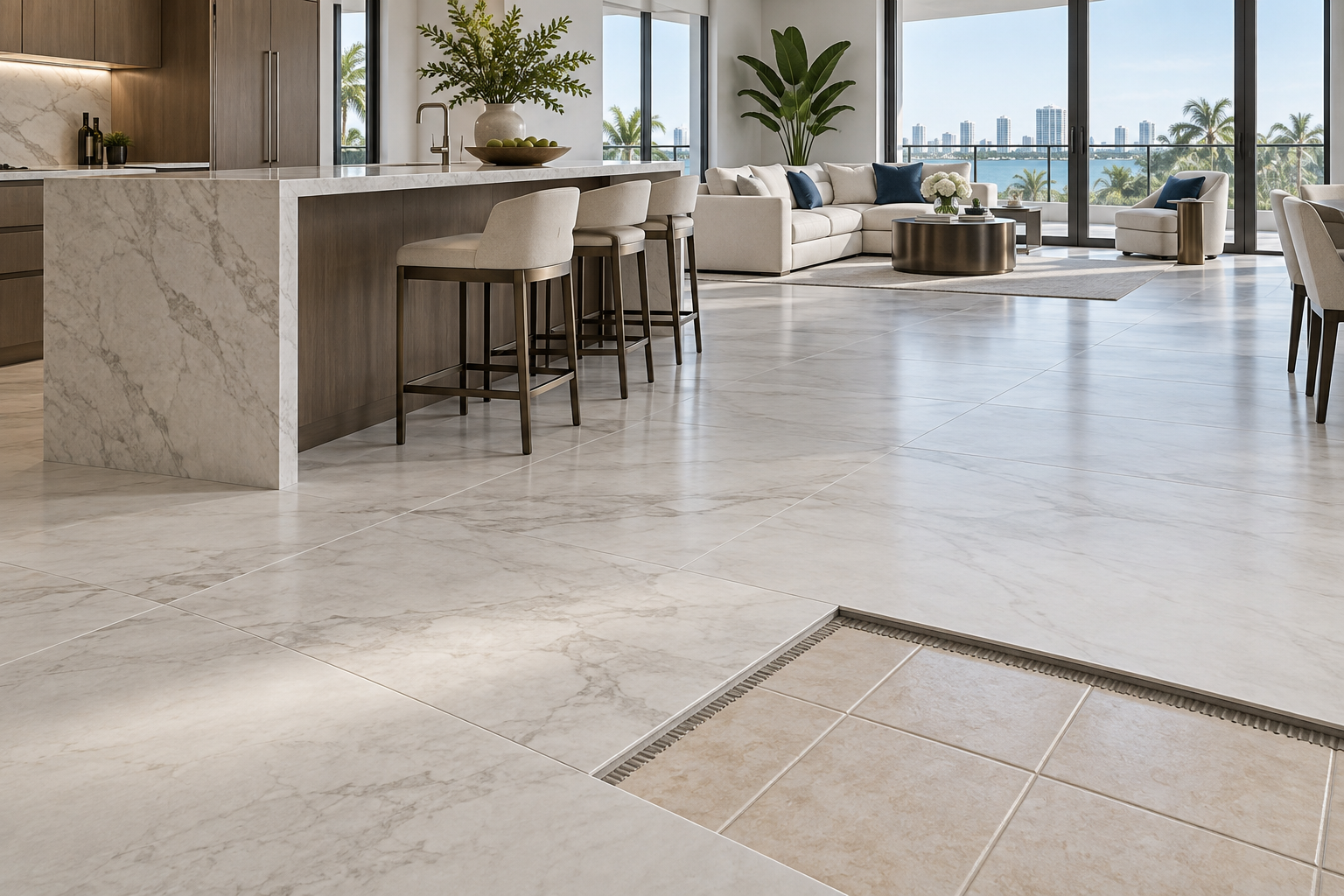
- A transition strip handles the step into an adjoining room with a different floor height.
- Bathrooms lose clearance fastest because fixtures and drains sit at fixed heights.
Will The Substrate Carry The Extra Weight?
- A tile floor over wood framing weighs 7 to 32 pounds per square foot, and a second layer adds to that load.
- Concrete slabs take the extra weight easily, and that covers most South Florida ground floors.
- Wood-framed floors need a stiffness check before anyone orders heavy material.
- Natural stone needs about twice the floor stiffness that porcelain does.
Where Does The Project Sit In Your Home?
- Dry floors in living rooms, hallways, and bedrooms make the best candidates.
- Kitchen floors work when the surface qualifies, though you must check appliance clearance early.
- Wall tile and a kitchen backsplash carry far less risk than any floor.
- Showers and other wet areas rarely justify covering, because the waterproofing ends up buried.
- Why Tiling Over Tile Appeals To So Many Renovations
- How To Tell If Your Existing Tile Can Take A New Layer
- When Removing The Old Tile Beats Covering It
- Substrate, Weight, And The Limits Most Guides Skip
- Choosing New Tiles For A Tile Over Tile Installation
- Height, Transitions, And Clearances
- Surface Preparation And Tile Adhesive
- Working With Your Installer
- Why South Florida Designers Work With Cavastone
- FAQ: Common Tile Over Tile Questions
Why Tiling Over Tile Appeals To So Many Renovations
Demolition costs money twice. You pay someone to break up the old floor. Then you pay again to haul the debris away, and the room sits unusable while it happens.
Tiling over tile removes both costs. The benefits stack up fast:
- You skip demolition labor, disposal fees, and the dust that spreads through the house.
- The job finishes faster, so a kitchen or bathroom comes back into use sooner.
- Less material heads to landfill, and fewer trips cut the hauling a renovation needs.
- The original floor stays intact as a base rather than becoming waste.
None of that helps when the surface underneath cannot hold a new layer. The saving only counts if the floor lasts.
How To Tell If Your Existing Tile Can Take A New Layer
The check takes an afternoon and settles the question. Work across the whole floor rather than testing one corner.
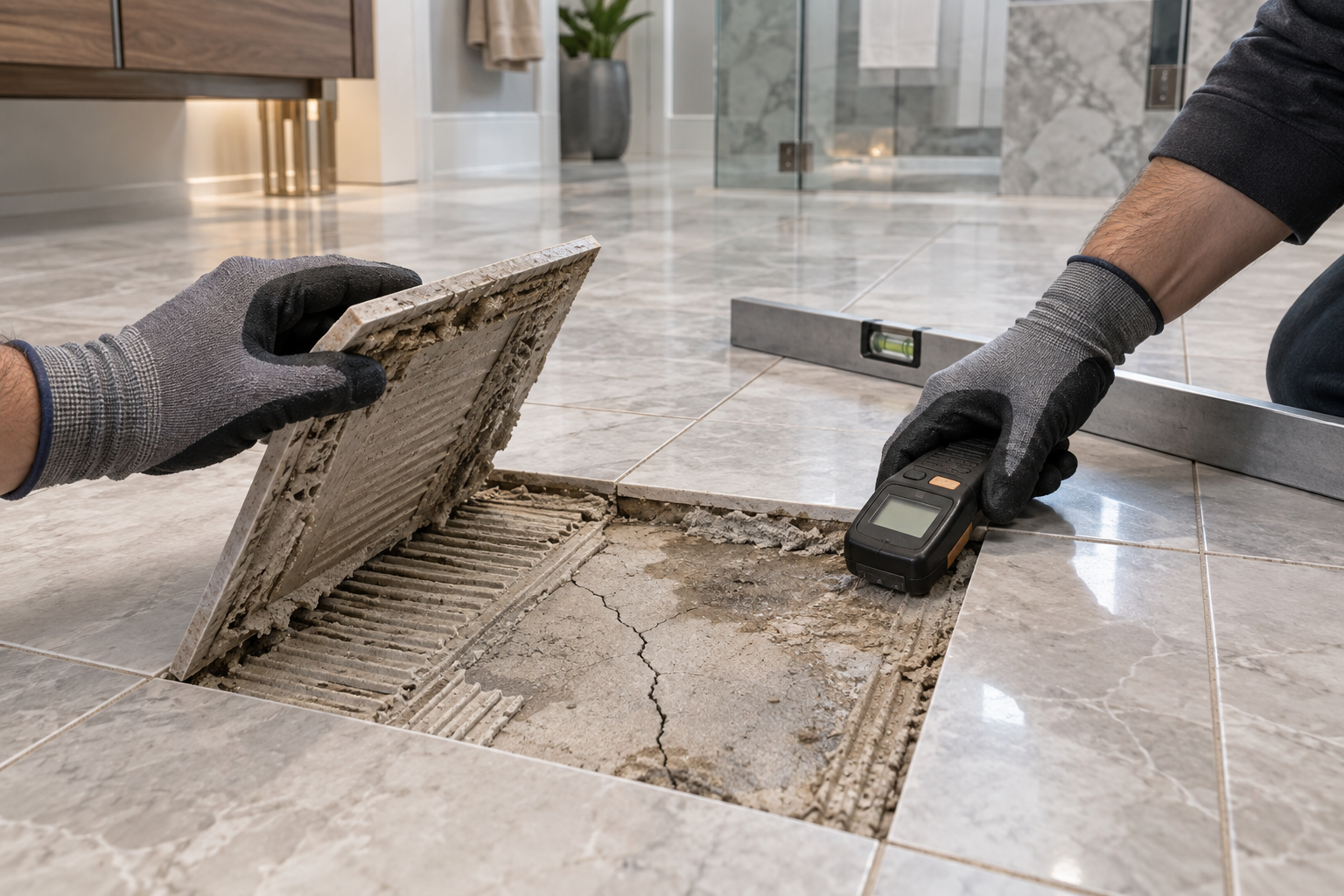
- Tap every tile with a wooden handle or a golf ball. A sharp knock means the tile holds. A hollow note means the bond below has failed.
- Walk the floor and feel for flex or rocking. Movement in the base travels straight through a new layer.
- Look for cracks, above all any that run along grout joints or carry across several tiles in a line.
- Run a straightedge across the floor and look for lippage, where tile edges sit higher than the ones beside them.
- Check the edges of the room, under the sink, and around the toilet base for stains, soft spots, or a musty smell.
- Clean a test patch and make sure grease and old sealer lift away.
Industry guidance calls for a floor flat within 1/8 inch across 10 feet. Lippage between tiles should stay near 1/32 inch, about the thickness of a credit card. The Ceramic Tile Education Foundation warns that thin set cannot flatten a floor as you go. An uneven surface needs a patch or self-leveling product first.
A floor that passes all six checks makes a real candidate. A floor that fails even one needs that problem fixed before anything new goes down.
When Removing The Old Tile Beats Covering It
Some conditions make covering the wrong call whatever your budget. Spotting them early saves you doing the job twice.
- Loose or drummy tiles across more than a small patch, which show a bond that already gave way.
- Water damage, mold, or rot, where a new layer traps the water and hides the cause.
- A floor that already carries two layers of tile, because each one adds weight and height.
- Cracks that follow one line across several tiles, which usually point to movement below.
- Underfloor heating, which a second tile layer muffles and works against.
- Showers and wet rooms, where the waterproofing needs to stay unbroken and open to checking.
Covering a floor hides whatever caused the first problem. A slow leak keeps working on the subfloor after the new layer goes down. The repair then means lifting two floors instead of one. Where the cause stays unclear, lift a tile and look before you commit.
Removal also buys you options. With the base exposed you can correct flatness, fix movement, and set heavier material such as marble or quartzite and granite that a covered floor could not support.
Substrate, Weight, And The Limits Most Guides Skip
Most articles on this topic stop at cleaning and adhesive. The question of what holds the floor up decides more outcomes than either.
Tile fails when the floor beneath it bends. The Tile Council of North America sets the minimum floor rigidity for tile at L/360. That means the joist span divided by 360 gives the most movement the floor should ever see. On a 10 foot span, that allows about a third of an inch at the center.
Natural stone asks for more. The Ceramic Tile Education Foundation cites a handbook figure of L/720 for stone over wood framing. That doubles the stiffness porcelain needs. The same source puts the weight of a tile assembly over wood framing at 7 to 32 pounds per square foot.
Ground-floor South Florida homes sit on concrete far more often than not, which works in your favor. Second stories, older wood-framed houses, and additions all deserve the check before anyone orders material.
Choosing New Tiles For A Tile Over Tile Installation
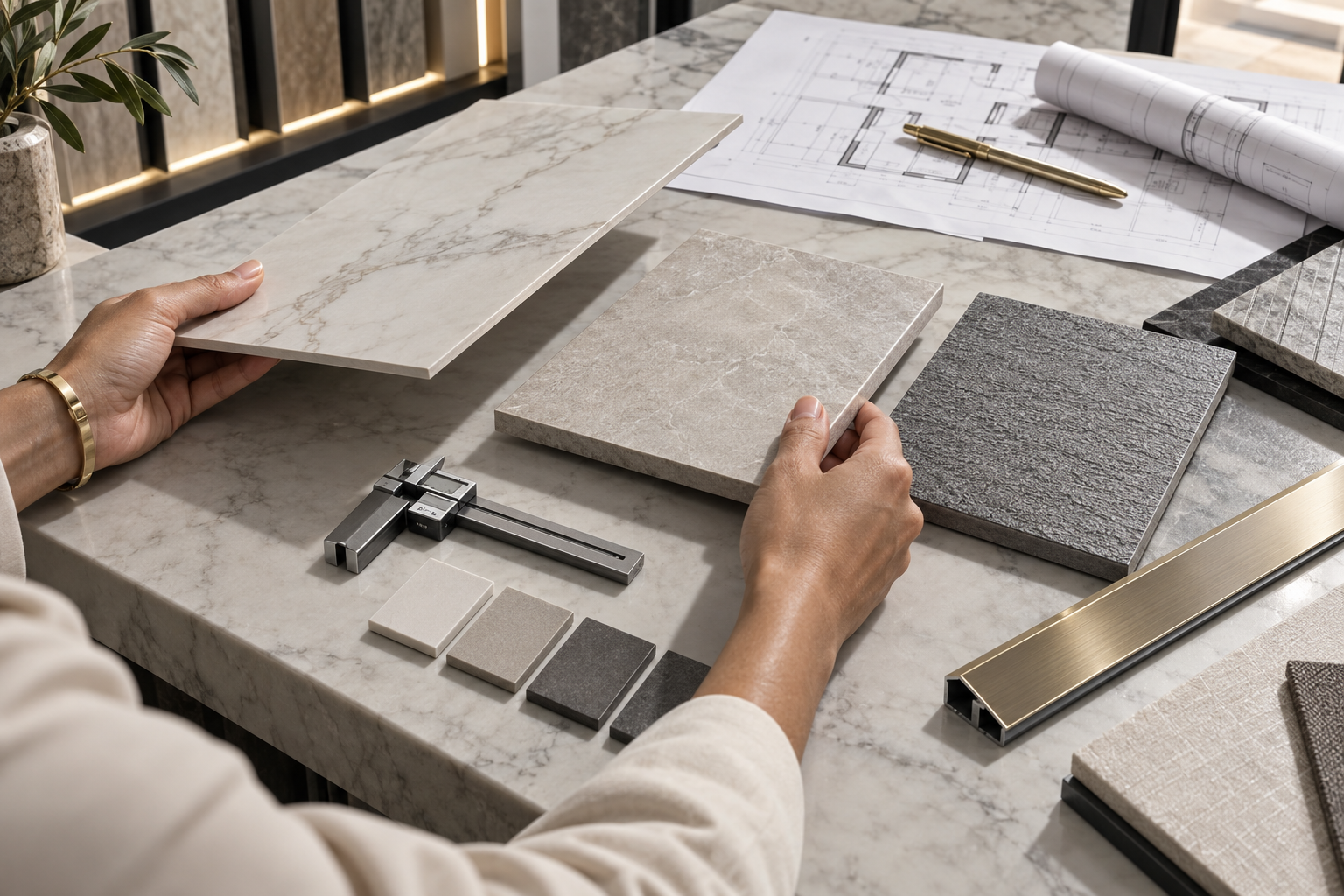
Material choice matters more here than on a normal floor. When you add a layer instead of replacing one, weight and thickness both count against you.
- Thin porcelain tile adds the least weight and height, which makes it the safest starting point over an existing floor.
- Standard porcelain tile suits most dry floors where the substrate has capacity in hand.
- Porcelain slabs and large format tile deliver fewer grout lines, and they demand a genuinely flat base, so lippage in the old floor rules them out.
- Natural stone carries the strictest rigidity requirement and the highest weight, which makes it a better fit for a floor taken back to the substrate.
- A mosaic or travertine backsplash on a wall raises none of the floor loading questions.
Bring a photo of your existing floor and the room measurements when you visit. Knowing the height you can give up narrows the choice fast. It also saves you falling for a slab format your floor cannot take. Our tile calculator handles the quantity once the material settles.
Grout deserves a choice, not a default. A grout color close to the tile plays the joints down and suits a large format layout. A contrasting color draws the pattern out on purpose. Stain-resistant grout earns its place on any floor that sees traffic.
Height, Transitions, And Clearances
Added thickness causes more day-to-day headaches than any other part of this job. Checking in advance costs nothing.
Measure before you order, not after delivery:
- Clearance under every interior door and under the shower door if the bathroom has one.
- The gap above the dishwasher and beneath the range, which a raised floor can trap.
- The height difference at each doorway into a room with a different floor covering.
- Toe kick depth under cabinets and vanities, which shrinks as the floor rises.
- Any plumbing or electrical access panel that needs to stay reachable.
Doors usually come off and get trimmed. A transition strip bridges the step into the next room. Appliances cause the real trouble. A dishwasher that no longer slides out from under the counter turns a floor job into a kitchen job.
Surface Preparation And Tile Adhesive
Preparation decides whether the bond holds. Glazed tile gives mortar almost nothing to grip. That one fact changes the products the job needs.
- Clean the whole surface with a multi-purpose cleaner, then rinse and let it dry fully. Grease and soap scum beat even the right adhesive.
- Repair or replace cracked and loose tiles, and secure anything that sounds hollow.
- Fill the old grout lines with thin set mortar. The new layer then meets a flat, even base rather than a grid of channels.
- Sand or prime the surface. A bonding primer made for smooth, glossy surfaces gives the mortar something to hold.
- Set the new tiles in a high-grade, polymer-modified thin set mortar approved for use over existing ceramic or porcelain.
- Let the mortar cure fully before anyone walks on it or starts to grout.
Coverage counts as much as the product. Standards call for mortar contact across at least 80 percent of the tile back in dry rooms. Wet and outdoor areas need 95 percent, and natural stone needs 95 percent everywhere. The Ceramic Tile Education Foundation advises lifting a set tile now and then to check, rather than assuming.
Standard mortar bonds poorly to glossy tile. It needs a surface that draws water in, and a glazed tile does not. The wrong adhesive gives you tiles that sound hollow within a season and lift within a year. Check the product data sheet for approval over existing tile before you buy.
- ✓Every tile tapped and confirmed solid
- ✓Cracked or loose tiles repaired or replaced
- ✓Surface degreased, rinsed, and fully dry
- ✓Old grout lines filled and flush
- ✓Bonding primer rated for smooth surfaces applied
- ✓Polymer-modified thin set approved for tile over tile
- ✓Door, appliance, and transition clearances measured
- ✓Cure time agreed before foot traffic returns
Working With Your Installer
Cavastone supplies material. We do not install tile, run demolition, or take on prep work. We say so plainly because it changes who you ask which question.
Bring us the material questions. Which porcelain suits the weight you can add. How a slab format behaves over an existing floor. What a stone needs from the floor below. How much to order for the layout you want.
Bring your installer the site questions. Whether that floor holds. What the framing will carry. Which mortar suits the surface. How the finished height lands against your doors. An installer standing in the room beats any general advice, including ours.
Where the two overlap, we will talk to your contractor directly. Our team visits job sites when something needs sorting out, including problems that have nothing to do with material we supplied.
Comparing Materials For A Second Layer?
Tell us the height you can give up and the room it goes in. We will show you what fits.
The projects that come back to us rarely failed on the tile. They failed on what nobody checked underneath it, and a half hour with a straightedge would have caught nearly all of them.
The Cavastone team, Boca Raton, Florida
Why South Florida Designers Work With Cavastone

Connie Davalos founded Cavastone in Boca Raton in 2006, after her family immigrated from Colombia. They built it into one of South Florida’s respected names in architectural surfaces. Nearly two decades on, the approach has not changed much.
We source collections directly from Spain and Italy, and many reach this market through us alone. That counts for more on a tile-over-tile job than it sounds. Thin formats and lighter bodies widen what a loaded floor can take.
- Trade pricing for architects, designers, builders, and contractors. Retail pricing for homeowners, with the same advice either way.
- No hurdles on samples or pricing requests.
- A team approach with no internal sales competition, so the advice follows the project.
- On-site visits when a job runs into trouble, including issues unrelated to our own material.
- Material supply only, with no installation services, which keeps our advice clear of any stake in the labor.
Professionals working across the region can check our South Florida service areas or visit the Boca Raton showroom to see full slabs under proper lighting.
Visit The Boca Raton Showroom
- How To Lay Porcelain Tile
- Large Format Tile: Sizes, Applications, And Installation
- Tile Material Types 101: From Porcelain To Marble And Beyond
- Why Tile Grout Cracks: Causes, Warning Signs, And Prevention
- How To Regrout Tile: A Step-By-Step Guide
- How Long Does Tile Installation Take?
- How To Use A Tile Calculator For Any Project
- Why Porcelain Slabs Keep Trending
- Reasons To Choose Natural Stone Flooring
- How To Clean Marble Tile
- Browse The Full Cavastone Catalog
Get A Straight Answer On Your Floor
Bring photos, measurements, and the height you can give up. We will tell you which materials work over your surface, and when removal serves you better.
FAQ: Common Tile Over Tile Questions
Can You Tile Over Tile On A Bathroom Floor?
Yes, when the existing tiles stay firmly bonded, sit flat, and show no water damage underneath. Bathroom floors raise two extra questions. The added thickness changes the height at the door and at any transition strip. A bathroom floor also hides plumbing that needs to stay reachable. Tap across the whole floor first and listen for anything that sounds hollow. If the room has a history of leaks, take the old tile up rather than sealing the problem under a new layer.
Can You Tile Over Tile In A Shower?
We advise against it in most showers. A shower relies on an unbroken waterproofing layer behind the tile. Tiling over the old surface leaves that layer buried and unchecked. Any moisture already tracking through the original tile gets trapped. Wet areas also demand 95 percent mortar coverage rather than the 80 percent allowed in dry rooms, and that gets harder over a glazed surface. For showers, a full tear-out and a fresh waterproofing system protects the work.
What Kind Of New Tiles Work Best Over Existing Tiles?
Thin porcelain tile works well because it adds the least weight and height per square foot. Standard porcelain tile suits most dry floors when the base has capacity to spare. Large format tile can work, but it needs a very flat start. Lippage in the old floor rules it out fast. Natural stone carries the strictest requirements of the group and the most weight, which makes it the hardest choice to justify over an existing floor.
Do You Need A Special Tile Adhesive To Tile Over Tile?
Yes. Standard mortar bonds poorly to glazed tile because it needs a surface that draws water in. A tile-over-tile job calls for a high-grade, polymer-modified thin set mortar. Many jobs also need a bonding primer rated for smooth surfaces first. Check the data sheet for wording that covers existing ceramic or porcelain, because not every polymer-modified product carries that approval. Moisture-resistant products matter in kitchens and laundry rooms.
How Much Height Does A Second Layer Of Tile Add?
Plan for the thickness of the new tile plus the mortar bed under it. On most floors that lands between a quarter inch and three quarters of an inch. Only your tile and trowel size settle the real number. Measure the clearance under every door, at the dishwasher and range, and at each transition before you order. Doors can often be trimmed, and a transition strip smooths the step between rooms.
How Long Does A Tile Over Tile Floor Last?
A well prepared tile-over-tile floor lasts as long as any other, because the weak points sit in the prep rather than the method. Bond strength, mortar coverage, and movement below decide the outcome. Floors that fail early almost always trace back to one of three things. A loose tile nobody found, grease left on the surface, or a mortar that never suited a glazed base.
Will New Tiles Crack Along The Old Grout Lines?
They can, and it ranks among the most common complaints we hear. Movement in the original floor gathers at the grout lines and travels up into the new layer. Filling those old grout lines with thin set during prep creates a flatter, more continuous base and cuts the risk. Where the original floor already shows cracking that follows its grout joints, treat that as a reason to remove rather than to cover.
Is It Worth Tiling Over Tile Instead Of Removing The Old Tile?
Tiling over tile saves the labor, disposal fees, and dust of a demolition, and it keeps waste out of a dumpster. That value holds only when the existing surface qualifies. Cover a floor with hidden moisture, movement, or loose tiles and you turn a one-time removal cost into a second failure and a second removal later. The honest comparison weighs the saving against the condition of what sits underneath.
Does Cavastone Install Tile?
No. Cavastone supplies tile and natural stone. We do not offer installation or demolition services. We help you work out whether your surface suits a new layer. We cover which materials fit the weight and height you have, and how much to order. Your installer then handles preparation and setting. If you want a second opinion on a surface before you commit, bring photos and measurements to the showroom and we will talk it through. That is the most useful answer we can give when someone asks can you tile over tile.
- The TCNA Handbook for Ceramic, Glass and Stone Tile Installation, Ceramic Tile Education Foundation
- Deflection, Tile Council of North America
- The Top Ten Requirements for a Quality Tile Installation, Ceramic Tile Education Foundation
- Never Assume You Have Sufficient Mortar Coverage. Check It., Ceramic Tile Education Foundation
- Is Your Floor or Wall Flat Enough for Large Format Tile?, Ceramic Tile Education Foundation

Owner, Cavastone Group
With years of perseverance and pride in what we do we have become a very well known and positioned company in the Architectural and Design industry. The same perseverance, pride and attention to detail that made us become who we are, are the same qualities we strive to provide to all our customers.